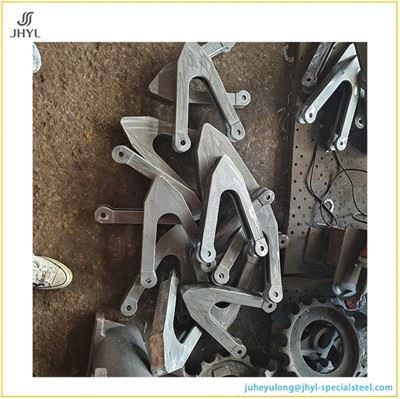
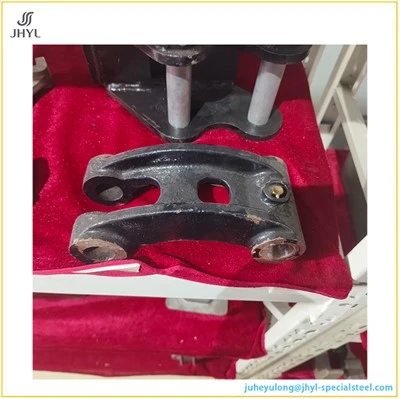
The material of Chain Grate Stoker Bars acts as the core foundation determining service life, operational stability and wear resistance, and exerts influence throughout the whole service cycle. Under identical working conditions and maintenance standards, Chain Grate Stoker Bars made of different materials have vastly different service lifespans, and material quality is a key criterion for distinguishing product performance. Chain Grate Stoker Bars work in harsh environments with sustained high-temperature exposure, material friction, repeated temperature swings and mechanical tension. Various material performance characteristics directly adapt to operational abrasion and determine product durability.
The first factor is high-temperature resistance and thermal fatigue resistance. Sustained high temperatures and frequent temperature fluctuations inside the furnace are the main sources of operational abrasion for the bars. High-quality materials possess outstanding thermal stability. They avoid softening, deformation and material embrittlement under long-term high-temperature exposure and can effectively resist thermal fatigue damage caused by cyclic expansion and contraction, preventing crack formation and fracture. Inferior materials have low high-temperature resistance limits. They age rapidly under prolonged heating with sharply reduced structural toughness. Slight temperature fluctuations easily trigger deformation and cracking, greatly shortening the service life.
Secondly, the wear resistance and impact resistance of materials are critical. During operation, Chain Grate Stoker Bars continuously bear friction and scouring from fuel and slag, as well as repeated impacts from bulk fuel and hard impurities. Material hardness, density and toughness play decisive roles. Dense and high-toughness premium materials feature strong surface wear resistance against long-term slag scouring, along with excellent impact resistance to avoid chipping, indentation and breakage under material collision. Bars made of loose and low-hardness materials thin quickly under continuous friction, gradually lose structural strength and finally fail completely.
Thirdly, material corrosion resistance and anti-clinker adhesion capability cannot be ignored. Ash residues and trace corrosive substances produced by fuel combustion continuously erode bar surfaces. High-quality materials with dense structures deliver reliable corrosion resistance and low surface adhesion, preventing firm clinker accumulation and simplifying cleaning work, thus reducing damage caused by clinker tension and heat accumulation. Inferior materials are prone to oxidative corrosion and have rough surfaces that easily trap clinker. Long-term clinker accumulation and local overheating accelerate deformation and cracking. In summary, material quality directly determines the anti-abrasion performance and final service life of Chain Grate Stoker Bars.