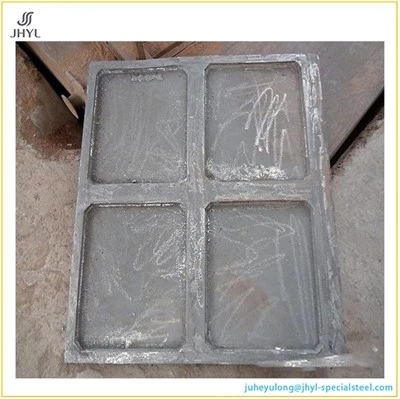
Global advancements in metallurgy and casting technologies are delivering significant improvements in the performance and longevity of heat resistant steel grates, critical components in waste to energy plants, cement production, and mining operations. From new alloy compositions that combat high temperature corrosion to advanced casting processes that ensure dimensional precision and structural integrity, these developments are setting new benchmarks for industrial efficiency and sustainability. Across China, Europe, and Japan, collaborative efforts between researchers and manufacturers are yielding grate components designed to withstand extreme thermal cycling, abrasive wear, and corrosive environments.
Grates and grate plates serve as essential components in a wide range of high temperature industrial equipment. In waste incineration plants, grate bars form the moving bed that transports and agitates municipal solid waste while allowing combustion air to flow through. In cement production, grate coolers rapidly cool clinker while recovering heat for the process. In sintering operations, grate bars support the ore burden while withstanding intense thermal stress. These applications demand materials that maintain strength at operating temperatures often exceeding 900 degrees Celsius while resisting oxidation, creep deformation, and chemical attack.
The material requirements for modern grate applications have become increasingly sophisticated. In waste to energy facilities, grate bars must endure not only high temperatures but also corrosive atmospheres containing chlorine and sulfur compounds released during combustion. Research indicates that grate segments operating in the combustion zone face temperatures between 650 and 950 degrees Celsius, requiring excellent high temperature strength and microstructural stability. They must also demonstrate superior wear resistance as waste materials and ash abrade the component surfaces during reciprocating motion. Furthermore, the oxidation resistance of the material is critical, as a continuous and adherent oxide layer protects the underlying metal from rapid degradation.
International leaders in waste incineration technology have long recognized the importance of advanced grate materials. German companies such as NOELL have developed specialized heat resistant duplex cast steels designed specifically for the high temperature corrosive environments found in municipal solid waste combustion. Danish and Japanese firms including Babcock & Wilcox Volund and Mitsubishi Heavy Industries have employed nickel based superalloys for grate components, achieving excellent performance and toughness though at considerable cost. These materials maintain their integrity at combustion temperatures up to 1000 degrees Celsius, providing service lives that make waste to energy economically viable.
Domestic Chinese manufacturers and research institutions have made significant strides in developing cost effective alternatives that meet the demanding requirements of modern grate applications. While early Chinese grate designs often employed chromium series heat resistant steels such as 3Cr18Mn12Si2N and 2Cr20Mn9Ni9, recent innovations have focused on optimizing alloy compositions to balance performance with affordability. Silicon series heat resistant cast irons including RTSi5, RQTSi4, RQTSi5, and RQT2Si4Mo have gained widespread acceptance due to their excellent casting characteristics, superior oxidation resistance up to 800 degrees Celsius, and relatively low cost.
A notable advancement in grate casting technology comes from Anhui Conch Kawasaki Equipment Manufacturing, which has developed a high wear resistant and heat resistant casting specifically engineered for grate cooler applications in cement plants. The companys innovative alloy design incorporates a carefully balanced composition including carbon between 2.3 and 2.8 percent, chromium from 23 to 28 percent, and strategic additions of molybdenum, copper, titanium, and yttrium. This sophisticated chemistry creates a microstructure that combines an oxidation resistant matrix with hard, thermally stable phases that resist abrasive wear at elevated temperatures.
The casting process developed by Anhui Conch Kawasaki represents a significant improvement over conventional sand casting methods. By utilizing automatic static pressure molding lines, the process achieves superior dimensional accuracy and surface finish compared to traditional techniques. The method begins with precise core making followed by mold preparation using advanced compaction technologies that ensure consistent mold density. Melting and refining operations employ strict control over temperature and composition, with argon blowing during molten metal treatment to remove dissolved gases and inclusions. After pouring, components undergo controlled cooling, shakeout, cleaning, and finally heat treatment to optimize mechanical properties and relieve residual stresses. The resulting grate plates exhibit dense microstructures free from shrinkage porosity and sand inclusion defects, delivering significantly extended service lives in high temperature cement clinker cooling applications.
In the field of waste to energy, researchers have focused on understanding and mitigating the complex degradation mechanisms that affect grate components. A detailed failure analysis of ZG30Cr20Ni10 heat resistant steel protective plates in a municipal solid waste incineration plant revealed critical insights into the interplay between material composition and service environment. The plates, which protect the furnace steel structure from high temperature corrosion, failed prematurely after only seven months of operation in the forward feeding section of the incinerator.
Chemical analysis of the failed components showed that while most elements complied with standard requirements, carbon content exceeded specification limits. This excess carbon promoted the formation of extensive carbide networks along austenite grain boundaries, creating preferential paths for corrosion attack. Metallographic examination revealed that both chemical corrosion from chlorine rich leachate and high temperature oxidation contributed to degradation, with attack propagating along the grain boundary carbides. The presence of microporosity in the castings further accelerated damage by providing additional sites for corrosion initiation.
Based on these findings, researchers recommended optimizing the alloy composition by reducing carbon content to minimize grain boundary carbides while adding molybdenum, copper, and titanium to enhance resistance to chlorine induced corrosion. Increasing nickel content was also suggested to stabilize the austenitic microstructure and improve high temperature performance. Furthermore, the adoption of lost foam casting combined with homogenization heat treatment and full solution annealing was proposed to ensure uniform microstructure and eliminate casting defects. These improvements directly address the dual challenges of chemical corrosion from leachate in the incinerator drying zone and high temperature oxidation in the combustion zone.
Lost foam casting has emerged as a particularly effective method for producing complex grate components with numerous small holes and intricate geometries. A patent granted to Quxian Jincheng Alloy Casting Company details an advanced expendable casting process specifically designed for perforated heat resistant steel grate plates. The method employs copolymer STMMA foam patterns that are precisely shaped to match the final component geometry. These patterns undergo a carefully controlled coating process involving multiple dips in specialized refractory coatings interspersed with baking cycles at temperatures between 45 and 60 degrees Celsius. The cumulative coating thickness of 0.8 to 1.5 millimeters provides sufficient strength to maintain mold integrity during casting while allowing for proper gas escape.
After coating, patterns are assembled into clusters of ten components each and embedded in negative pressure flask systems. Vibration compaction ensures uniform sand density around the complex pattern geometries, while vacuum application stabilizes the mold during pouring. The introduction of oxygen enriched combustion during pattern elimination creates hollow shells ready to receive molten metal. This approach effectively addresses the historical challenges of producing small hole castings, where conventional methods often resulted in sand sintering blocking the openings or sand inclusion defects compromising surface quality. The lost foam shell casting technique enables production of grate plates with clean, well defined holes and excellent surface finish while reducing labor requirements and production costs.
High chromium cast iron represents another important material class for grate applications, particularly in sintering operations where abrasion resistance is paramount. Jinggong Measuring Tools Producing Company has developed a comprehensive production process for heat resistant high chromium cast iron grate bars used in sintering table cars. The process begins with clay sand wet casting using closed gating systems designed to ensure smooth mold filling. Careful attention to sand coverage and mold sealing prevents debris from entering cavities and ensures casting integrity.
Melting operations employ medium frequency induction furnaces with charge compositions including pig iron, scrap iron, and micro carbon ferrochrome. Temperature control is critical, with superheating to approximately 1630 degrees Celsius followed by nickel additions to optimize properties. Pouring temperatures between 1450 and 1500 degrees Celsius are carefully controlled, with initial slow pouring to reduce flow pressure and prevent turbulence, followed by steady filling and final deceleration to complete cavity filling without defects.
A distinctive feature of this process is the timing of shakeout operations. Approximately ten minutes after pouring, when casting temperatures have cooled to around 1050 degrees Celsius, components are extracted from the molding sand. This elevated temperature shakeout reduces surface sand adhesion while the castings remain sufficiently hot for direct quenching. Controlled cooling to 650 degrees Celsius followed by natural cooling, combined with stacking and covering with casting sand, achieves effective tempering without separate heat treatment operations. This integrated approach to thermal processing optimizes microstructure and mechanical properties while minimizing energy consumption and handling costs.
Japanese suppliers have also maintained strong capabilities in heat resistant steel grate production, offering components that meet JIS standard SCH1 through SCH42 material grades. Companies such as Nishinippon Trading Company provide grates and related parts primarily for preheating and cooling equipment in ore smelting and refining, lime production, and cement manufacturing. These suppliers offer multiple casting methods including semi permanent mold, investment casting, lost foam, and shell molding, enabling production of components ranging from several kilograms to tens of tons. The ability to deliver both standard and special cast steels including stainless steels, low alloy grades, heat resistant alloys, and abrasion resistant materials demonstrates the breadth of manufacturing capabilities available in the global market.
The foundational standards governing heat resistant steel castings continue to evolve, providing essential guidance for material selection and quality assurance. International standards including ASTM, AISI, BS, DIN, JIS, and NF specifications define requirements for chemical composition, mechanical properties, and testing methods. Material designations such as GB/T 8263 grades including BTMNiCr2, BTCr9Ni5, and various BTMCr series, as well as DIN 1695 grades and ISO 21988 classifications, provide engineers with clear specifications for selecting appropriate materials for specific service conditions.
Looking forward, the trend toward hybrid and composite grate designs promises further improvements in performance and cost effectiveness. Emerging welding fabrication techniques combine high alloy wear resistant surfaces typically less than eight millimeters thick with conventional carbon steel substrates, achieving the required high temperature performance at reduced material cost. These composite grates, fabricated through overlay welding and structural welding of carbon steel rib supports, offer weight reductions while extending service life in the most demanding applications.
As global industries continue to pursue higher efficiency and lower emissions, the role of advanced heat resistant steel castings becomes increasingly critical. Waste to energy facilities require reliable long life components to maintain continuous operation and maximize renewable energy production. Cement plants seek extended campaign lives between maintenance outages to improve productivity and reduce costs. Mining and mineral processing operations demand wear resistant components that withstand abrasive ores at elevated temperatures. The ongoing innovations in alloy development, casting processes, and quality assurance described here directly address these industrial needs, providing the foundation for continued progress in high temperature materials technology.