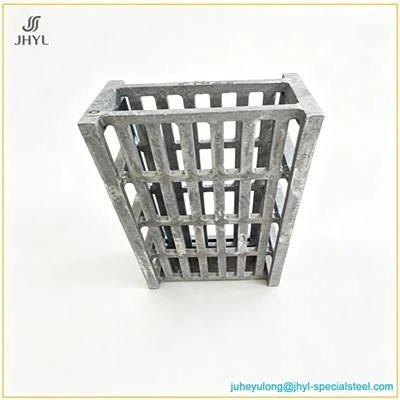
Global advancements in metallurgy are witnessing a significant turning point as researchers and manufacturers achieve breakthroughs in heat resistant steel casting technologies. These developments, ranging from high nitrogen rare earth alloys to advanced tool steels for die casting and large scale energy equipment components, are setting new benchmarks for industrial performance, safety, and sustainability. Across China, Europe, and Russia, collaborative efforts between industry and academia are yielding materials designed to withstand extreme temperatures, pressures, and corrosive environments, thereby supporting the global push for cleaner energy and more efficient manufacturing processes.
In a significant domestic development, a Chinese defense industry leader has announced a breakthrough in heat resistant steel technology, specifically targeting the energy sector. The company, in collaboration with several universities, has successfully overcome key technical hurdles related to material selection, composition matching, and smelting process optimization. The core achievement is a high nitrogen, high rare earth wear resistant steel casting, which is a critical component for large circulating fluidized bed boilers.
This new material is engineered to meet the high temperature demands of boiler operations, significantly enhancing the durability and performance of components subjected to constant thermal stress and abrasion. The success of this project not only solidifies the company position in the boiler industry market but also opens avenues for producing high temperature wear resistant parts for other heavy industries. The potential applications extend to mining machinery, nuclear power facilities, and chemical processing equipment, where components must endure similarly harsh operating conditions. This breakthrough is a direct result of a proactive industry-university-research collaborative innovation ecosystem, which the company has actively cultivated in recent years. By partnering with academic institutions and research facilities, they have successfully undertaken several major scientific research projects, leading to a stream of innovative outcomes with high technical value and practical applicability.
Further expanding the frontiers of large scale energy equipment manufacturing, another Chinese heavy machinery company has announced the successful delivery of an integrated ultra-high pressure inner cylinder project. This project marks a major technological breakthrough in the field of high-end cast steel production, representing a critical extension from core casting research and development to high-precision finishing.
The ultra-high pressure inner cylinder is a core component of large energy equipment, demanding exceptionally high material properties, performance, and precision. The product utilizes a high alloy heat resistant steel, which presents numerous challenges in casting, smelting, heat treatment, and precision machining. To address these, the company formed a special project team centered around a full process integrated precision manufacturing system. They systematically overcame key technical bottlenecks in casting process design, special tool development, program simulation, and process quality control. This holistic approach enabled the company to achieve a跨越式 breakthrough, transforming a rough casting into a precision machined component. This capability is vital for the future manufacturing of core components for million-kilowatt ultra-supercritical units and nuclear power plants, contributing directly to the high-quality development of the高端 equipment manufacturing industry and supporting national dual carbon goals.
On the international stage, the demand for more robust tooling materials is being driven by the evolution of high pressure die casting. A German tool steel specialist has launched a new high performance tool steel engineered to meet the extreme demands of modern die casting applications. This development addresses the needs of producing large structural components, giga-castings, and advanced e-drive applications.
As the industry moves towards larger shot weights and more complex geometries with greater functional integration, the thermal and mechanical loads on dies have intensified significantly. The new steel, designated MT1, is engineered specifically for these conditions. It offers exceptional toughness and homogeneity, ensuring reliable performance even in large dies or components with significant cross-section variations. The steel also exhibits excellent hardenability, which guarantees a consistent distribution of hardness throughout the large mold dimensions typical of structural and giga-cast applications. This uniformity is key to improving tool performance and ensuring predictable behavior throughout the die service life.
A key metallurgical advantage of MT1 is the significantly reduced risk of bainite formation during heat treatment. This is particularly crucial for dies with complex geometries, where variations in section thickness can make it difficult to achieve a stable, uniform microstructure. By minimizing bainite, the alloy design supports better dimensional stability, leading to lower scrap rates and reduced reworking during die manufacturing. Furthermore, the material demonstrates high resistance to tempering, allowing the tool to maintain its mechanical properties even under demanding thermal cycling. This ensures stable process conditions, longer maintenance intervals, and improved overall operational efficiency for foundries. As stated by the company Sales Director, the industry requires tool steels that combine high durability, reliable hardenability, and stability even in the largest dies, and this new product is a direct response to those needs.
Parallel to these developments in manufacturing and tooling, significant progress is also being made in materials for next-generation energy systems. In Russia, scientists have developed a new heat resistant austenitic steel specifically engineered for equipment used in lead-cooled fast neutron reactors. These advanced fourth-generation reactor systems operate at significantly higher temperatures than conventional designs, with operating conditions reaching between 500 and 600 degrees Celsius.
This development is part of a larger project focused on the industrial implementation of a closed nuclear fuel cycle using fast neutron reactors. The new steel provides essential corrosion resistance and thermal stability at these elevated temperatures, which are necessary for the reactor to function efficiently. According to the Director of the Institute of Materials Science involved in the project, the resulting material successfully combines the required radiation and corrosion resistance with thermal stability. Most importantly, it surpasses the long-term strength characteristics of the reference steel currently used in nuclear power plant structures that operate in contact with heavy liquid metal coolants.
In tandem with the material development, researchers have also been testing advanced laser welding technology for both austenitic and martensitic-ferritic steels. These tests, involving both homogeneous and dissimilar metal combinations, are critical for manufacturing the complex equipment required for these next-generation reactors. Laser welding significantly increases the production speed of welded structures compared to traditional arc welding methods, while maintaining the required weld quality. This combination of new high-tech materials and advanced welding technologies is expected to create a solid scientific and technical foundation for the successful implementation of fourth-generation nuclear energy projects. These advancements directly address the specific thermal and corrosive challenges posed by heavy liquid metal and helium coolants, paving the way for more efficient energy production cycles.
Complementing these direct industrial applications, the foundational standards that govern the production and classification of these materials are also evolving. A national standard for abrasion resistant heat resistant cast steels has recently been reviewed and is moving towards finalization. This standard, the first of its kind, is being developed to unify technical specifications and ensure material quality across the industry.
Abrasion resistant heat resistant cast steels are a class of materials that exhibit excellent performance under harsh conditions involving high temperatures, wear, and corrosion. They are characterized by high hardness, excellent wear resistance, and superior high temperature strength, oxidation resistance, and thermal fatigue resistance. These properties make them indispensable for critical components in industries like metallurgy, mining, power, and chemical engineering, including rollers, crusher hammers, grinding balls, high temperature furnace grates, and sintering trolleys.
The new standard will specify requirements for the designation, manufacturing, technical specifications, test methods, inspection rules, and marking of these cast steels and castings. By providing a clear technical basis for production, including chemical composition, mechanical properties, and microstructure, the standard aims to ensure the stability and reliability of casting quality. The formulation of such standards is instrumental in driving the industry towards higher performance, longer service life, and lower energy consumption. It facilitates a common language for communication among research institutions, manufacturers, and users, ultimately reducing equipment downtime and replacement frequency while improving operational efficiency. This standardization effort, alongside the technological breakthroughs in alloy development and manufacturing processes, solidifies the foundation for the continued advancement and reliable application of heat resistant steel castings in the global economy.