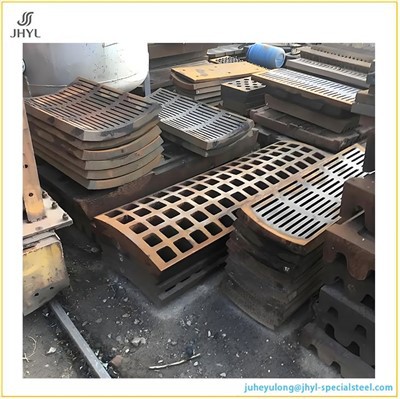
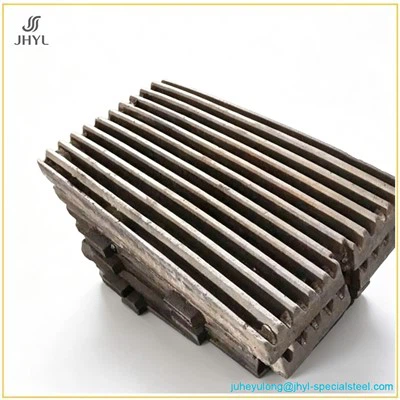
Global advancements in metallurgy and precision casting are delivering significant improvements in the performance and service life of heat resistant steel hearth plates, critical components that support and protect furnace loads in high temperature industrial heat treatment operations. From new alloy compositions engineered for exceptional high temperature strength to advanced casting simulations that optimize yield and eliminate internal defects, these developments are setting new benchmarks for reliability and efficiency in the global heat treating industry. Across research institutions and manufacturing facilities in Europe and Asia, collaborative efforts are yielding hearth plate technologies capable of withstanding extreme thermal cycling, heavy mechanical loads, and corrosive atmospheres.
Hearth plates, also known as furnace bottom plates, serve as the foundational support structure within a wide range of thermal processing equipment. In chamber furnaces for heat treatment, these plates must bear the weight of steel coils, forgings, castings, and other workpieces while maintaining dimensional stability at operating temperatures often exceeding 1000 degrees Celsius. In continuous annealing lines for silicon steel production, hearth plates carry sensitive electrical steel coils through precise thermal cycles that determine final magnetic properties. In bogie hearth furnaces used for post weld heat treatment of large pressure vessels and critical components, the plates must withstand both the mass of heavy parts and the thermal stresses of repeated heating and cooling cycles. These demanding applications require materials that resist creep deformation, oxidation, thermal fatigue, and chemical attack while providing a stable, flat surface for uniform heat treatment.
The material requirements for modern hearth plate applications have become increasingly sophisticated as industries demand higher processing temperatures, faster cycle times, and longer equipment campaign lives. In silicon steel production, for example, hearth plates used in roller hearth annealing furnaces must maintain yield strength above 30 megapascals at temperatures reaching 1200 degrees Celsius. This requirement pushes the limits of conventional heat resistant alloys and demands careful optimization of chemical composition and processing parameters. The plates must resist sagging and distortion under load while maintaining surface flatness to prevent marking of the valuable steel coils they carry. Furthermore, they must resist oxidation and scaling that could contaminate workpiece surfaces or require frequent maintenance shutdowns for cleaning and replacement.
Recent advances in alloy development have produced new generations of high temperature resistant stainless steels specifically engineered for hearth plate applications. A notable innovation from Chinese steelmaker Wuhan Iron and Steel involves a carefully balanced composition system that achieves exceptional high temperature strength through synergistic combinations of alloying elements. The patented alloy contains carbon between 0.05 and 0.08 percent, silicon from 0.40 to 0.80 percent, manganese from 1.00 to 1.60 percent, and critically low levels of phosphorus and sulfur each below 0.010 percent to minimize embrittling grain boundary segregations. Nitrogen additions between 0.02 and 0.09 percent combine with nickel from 10.0 to 12.0 percent and chromium from 22.0 to 24.0 percent to stabilize the austenitic microstructure that provides excellent high temperature strength and creep resistance.
Strategic additions of molybdenum between 0.10 and 0.50 percent, niobium between 0.02 and 0.05 percent, vanadium between 0.040 and 0.090 percent, and titanium between 0.01 and 0.04 percent create a fine dispersion of stable carbide and nitride precipitates that pin grain boundaries and impede dislocation motion at elevated temperatures. This precipitation strengthening mechanism is essential for maintaining mechanical properties during prolonged exposure to high temperatures. The production method developed for this alloy incorporates sophisticated secondary refining operations including LF furnace refining with bottom blowing nitrogen for inclusion control and VD vacuum degassing at pressures as low as 67 pascals to remove dissolved gases and minimize harmful inclusions. The result is a stainless steel plate that delivers guaranteed yield strength exceeding 30 megapascals at 1200 degrees Celsius, significantly extending service life compared to conventional materials.
For less extreme but equally demanding applications, high chromium heat resistant steels offer an excellent combination of performance and cost effectiveness. Researchers at the West Pomeranian University of Technology in Poland have conducted extensive studies on manufacturing technologies for hearth plates operating in chamber furnaces for heat treatment applications. Their work focuses on castings produced from G-X40CrNiSi27-4 heat resistant steel, a material that provides good oxidation resistance and mechanical properties at typical heat treatment temperatures. The research team employed advanced computer simulation techniques to predict the distribution of internal defects in castings produced with different riser configurations, comparing the effectiveness of bare risers against those coated with exothermic and insulating sleeves.
The computer simulations allowed the researchers to visualize solidification patterns and identify potential shrinkage porosity locations before committing to physical production. This virtual optimization approach significantly reduces development time and material waste while ensuring that final castings meet stringent quality requirements. The Polish study revealed that while the use of risers with exothermic sleeves does not dramatically affect the overall quality of hearth plate castings in terms of internal soundness, it does provide a substantial improvement in metal yield. By maintaining riser metal in a molten state longer than bare risers, the exothermic sleeves allow more effective feeding of solidification shrinkage, reducing the riser size required and minimizing the metal that must be removed and remelted. This finding has direct economic implications for foundries producing hearth plates, as improved yield translates directly to lower production costs and reduced energy consumption per finished casting.
The importance of proper riser design and placement cannot be overstated in hearth plate casting, as these components often feature large planar areas with varying section thicknesses that can create isolated hot spots prone to shrinkage defects. Computer simulation enables foundry engineers to evaluate multiple gating and risering strategies virtually, selecting the approach that minimizes defect risk while maximizing material utilization. This digital approach to process development aligns with broader Industry 4.0 trends in metal casting, where simulation and data analytics are increasingly integral to quality assurance and process optimization.
Material selection for hearth plates must consider not only the maximum operating temperature but also the specific atmosphere conditions within the furnace. In applications involving carburizing atmospheres or environments containing chlorine and sulfur compounds from heated materials, corrosion resistance becomes a critical factor. High nickel alloys such as those conforming to cast UNS N06006 and ASTM A297 specifications offer exceptional resistance to hot gas corrosion at elevated temperatures. These materials, sometimes designated as MTEK 15-65 in commercial classifications, find application in hearth plates, muffles, roller hearths, and carburizing boxes where severe oxidizing or reducing conditions would rapidly degrade conventional stainless steels. The high nickel content stabilizes the austenitic structure while providing a protective oxide layer that resists spalling and penetration by aggressive species.
The manufacturing processes for hearth plates have also evolved to meet increasingly demanding quality requirements. Lost foam casting has emerged as an effective method for producing complex hearth plate geometries with integrated features that would be difficult or impossible to achieve with conventional sand casting. In this process, expendable polystyrene patterns coated with refractory material are embedded in unbonded sand and vaporized by molten metal during pouring, creating castings with excellent dimensional accuracy and surface finish. The absence of parting lines and core assemblies eliminates potential mismatch issues while allowing design freedom for weight reducing ribbing patterns and optimized thermal response characteristics.
Centrifugal casting represents another specialized technique applicable to certain hearth plate designs, particularly those intended for roller hearth furnace applications where cylindrical or tubular geometries are required. This process uses centrifugal force to distribute molten metal against the inner surface of a rotating mold, producing dense, directionally solidified structures with excellent mechanical properties. The resulting castings exhibit superior cleanliness and soundness compared to statically cast alternatives, with aligned grain structures that optimize high temperature strength and creep resistance.
Quality assurance for hearth plate castings has advanced significantly with the adoption of non destructive examination techniques capable of detecting internal discontinuities that could compromise performance under thermal and mechanical loads. Digital radiography provides high resolution imaging of casting interiors, revealing shrinkage porosity, gas holes, and inclusions that might escape detection by traditional film based methods. Ultrasonic testing offers complementary capabilities for thickness measurement and flaw detection in sections accessible to sound wave transmission. These advanced inspection methods, combined with strict process controls throughout melting, refining, and heat treatment operations, ensure that hearth plates delivered to end users meet the demanding requirements of modern heat treating applications.
The thermal processing equipment that houses these hearth plates has itself evolved to maximize the benefits of advanced casting materials. Bogie hearth furnaces, also known as car bottom furnaces, represent a common configuration for heat treating large, heavy components such as forgings, castings, pressure vessels, and railway components. These furnaces feature a movable car or bogie that supports the hearth plate and its load, allowing convenient loading and unloading outside the heating chamber. Modern designs incorporate fiber insulation containing zirconium for temperatures exceeding 1200 degrees Celsius, ensuring temperature uniformity and energy efficiency throughout the furnace volume. Sealing mechanisms between the bogie and furnace shell have progressed from simple sand seals to sophisticated arrangements including flexible sand seals, labyrinth configurations, and motor driven push rod systems that maintain positive sealing despite thermal expansion and contraction cycles.
Electric and gas fired options accommodate different energy availability scenarios and cost structures, with natural gas firing gaining popularity in many regions due to favorable operating economics. Temperature control systems have advanced from simple on off controllers to sophisticated programmable logic controllers with multiple zone control, ensuring the precise thermal profiles required for critical heat treatment specifications such as AMS 2750 and NADCAP requirements. These control capabilities enable heat treaters to achieve the exact material properties specified by customers while minimizing energy consumption and cycle times.
The economic implications of improved hearth plate performance extend beyond the direct cost of replacement components. Extended service life reduces maintenance downtime, allowing heat treating facilities to operate more continuously and productively. Improved dimensional stability maintains proper load support and clearance within furnaces, preventing damage to heating elements and refractory linings that could result from warped plates contacting furnace internals. Enhanced oxidation resistance minimizes scale formation that could contaminate workpiece surfaces or accumulate in furnace corners, reducing cleaning requirements and improving product quality. These factors combine to deliver compelling returns on investment for advanced hearth plate materials, justifying their premium cost through measurable improvements in operational efficiency.
Looking forward, the trend toward hybrid and composite hearth plate designs promises further improvements in performance and cost effectiveness. Emerging concepts combine high alloy wear resistant surfaces with conventional carbon steel substrates through weld overlay cladding or roll bonding techniques, achieving required high temperature surface properties at reduced material cost. These composite plates offer weight reductions compared to fully alloyed alternatives while maintaining the oxidation and corrosion resistance needed at the hot face. Advanced modeling techniques enable optimization of rib patterns and structural geometry to maximize strength to weight ratios and thermal response characteristics.
Additive manufacturing technologies are also beginning to influence hearth plate production, particularly for complex geometries and small batch quantities where traditional pattern making would be prohibitively expensive. Binder jet printing of sand molds and cores enables rapid production of complex casting geometries without pattern tooling, while direct laser deposition of metal powders offers the potential for repairing damaged hearth plates rather than replacing them entirely. These emerging technologies complement rather than replace traditional casting methods, expanding the toolkit available to foundries and equipment manufacturers seeking optimal solutions for specific applications.
As global industries continue to pursue higher efficiency, lower emissions, and improved product quality, the role of advanced heat resistant steel castings becomes increasingly critical. Heat treaters require hearth plates that maintain flatness and strength through thousands of thermal cycles, supporting consistent processing conditions and reliable equipment operation. Steel mills need hearth plates that resist creep and oxidation while carrying valuable coils through precisely controlled annealing cycles. Foundries and forging shops demand plates that withstand the combined effects of heavy loads, high temperatures, and thermal shock. The ongoing innovations in alloy development, casting processes, and quality assurance described here directly address these industrial needs, providing the foundation for continued progress in high temperature materials technology and the thermal processing equipment that relies upon it.