Hey there! Today, I wanna chat about something super important in a generator system - the role of coupling. As a coupling supplier, I've seen firsthand how crucial these little gadgets are, and I'm stoked to share all that I know with you.

The Basics of Coupling in a Generator System
Let's start from the beginning. So, what exactly is a coupling in a generator system? Well, a coupling is a mechanical device that connects two shafts together to transmit power from one to the other. In a generator system, it plays a key role in linking the engine, which generates the mechanical power, to the alternator, which converts that mechanical energy into electrical energy.
Think of it like a bridge between two important parts of a city. Without that bridge, the two sides can't communicate, and the whole city's functionality goes down the drain. Similarly, without a coupling in a generator system, the engine and the alternator can't work together effectively, and you won't get any electrical power out of your generator.
Power Transmission
One of the most basic but vital roles of coupling in a generator system is power transmission. The engine in a generator produces rotational mechanical power, and this power needs to be transferred to the alternator. That's where the coupling steps in. It provides a reliable connection between the two components so that the rotational force can be smoothly transferred from the engine's output shaft to the alternator's input shaft.
There are different types of couplings, and each is designed to handle a specific amount of torque and speed. For instance, a Mechanical Device Drive Shaft Coupling is often used in heavy - duty generator systems where high torque needs to be transmitted. These couplings are built tough to withstand the stress and strain of the power transfer process.
Misalignment Compensation
Another super important role of couplings in a generator system is to compensate for misalignment. In real - world scenarios, it's almost impossible to align two shafts perfectly. There can be three types of misalignment: angular, parallel, and axial.
Angular misalignment occurs when the axes of the two shafts intersect at an angle. Parallel misalignment means the axes of the two shafts are parallel but offset. Axial misalignment is when the two shafts move along their axes relative to each other.
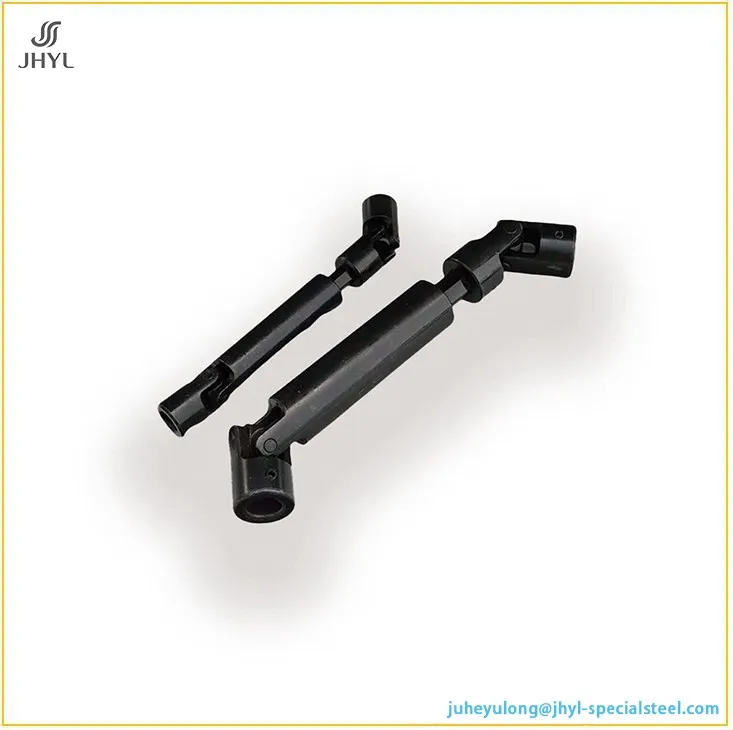
Couplings are designed to handle these misalignments without causing excessive wear and tear on the shafts or other components. For example, a Universal Joint Coupling can accommodate relatively large angular misalignments. It uses a series of joints that allow the shafts to move at different angles while still transmitting power smoothly. This not only protects the shafts but also extends the lifespan of the entire generator system.
Vibration Damping
Generators can produce a significant amount of vibration during operation. These vibrations can be caused by the engine's combustion process, the imbalance of rotating parts, or other factors. If these vibrations are not managed properly, they can lead to all sorts of problems, like premature wear of components, increased noise levels, and even structural damage.
Couplings can act as shock absorbers in a generator system. They are designed to dampen the vibrations and reduce the impact on the engine and alternator. For instance, some couplings are made with flexible materials that can absorb and dissipate the vibration energy. A Stainless Steel Universal Coupling often has some degree of flexibility, which helps in reducing the vibration transfer between the engine and the alternator.
Overload Protection
In a generator system, there's always a risk of an overload situation. An overload can occur due to a sudden increase in the electrical load or a malfunction in the system. When an overload happens, it can cause excessive torque on the shafts, which may lead to damage.
Some couplings are designed with built - in overload protection features. For example, certain types of couplings have a shear pin or a slip mechanism. In the event of an overload, the shear pin will break or the coupling will slip, preventing the excessive torque from being transmitted to the alternator or the engine. This helps to protect the expensive components in the generator system from damage.
Customization for Generator Systems
As a coupling supplier, I know that every generator system is unique. Different generators have different power requirements, operating conditions, and space limitations. That's why we offer customized coupling solutions.
For example, if you need a coupling that can withstand high temperatures in a generator system located in a hot environment, we can provide a Stainless Steel Custom Cross Universal Joint made from special heat - resistant materials. If you have strict size constraints, we can design a coupling that fits perfectly into your existing setup.
Our CNC Machine Galvanized Machined Connectors are a great option for those who need precision - made couplings. These connectors are machined using the latest CNC technology, ensuring high accuracy and a perfect fit for your generator system.
Why Choose Us as Your Coupling Supplier
We've been in the coupling business for a long time, and we've built a reputation for providing high - quality products. Our couplings are made from the best materials, and they go through strict quality control processes to ensure they meet the highest standards.
We also offer excellent customer service. Our team of experts is always ready to help you choose the right coupling for your generator system. Whether you need technical advice or just have some general questions, we're here to assist you every step of the way.
If you're in the market for couplings for your generator system, we'd love to hear from you. Whether it's for a small portable generator or a large industrial - scale one, we have the right solution for you. Contact us to start a conversation about your coupling needs and let's work together to find the perfect fit for your generator system.
References
- "Mechanical Power Transmission" by John Doughty.
- "Generator Systems Handbook" by various industry experts.