If you're a plant manager, furnace operator, or procurement officer working with high-temperature industrial systems-think heat treat furnaces, boiler lines, or waste incineration units-you already know that even a tiny drop in heat insulation performance of heat resistant steel casting parts can translate to thousands in wasted energy, unplanned downtime, or compromised product quality. As a heat resistant steel casting parts supplier with over 15 years serving industries that operate at 1,000°C and above, I've seen firsthand how easy it is to overlook factors that kill insulation performance (and, by extension, operational efficiency). This post breaks down the science-backed strategies we recommend to customers to boost insulation in their cast steel components, based on lessons from our workshop and the projects we support across manufacturing, energy, and metalworking.
First, let's ground this in the basics: heat resistant steel isn't just "steel that doesn't melt at high temps"-it's engineered with alloy additions like chromium, silicon, and nickel to form a stable, protective oxide layer that resists scaling and corrosion. But that layer and the steel's internal microstructure also play a huge role in heat transfer. Insulation here means slowing conductive and radiant heat flow between the component's hot working surface and its cooler base or adjacent equipment; even a small improvement cuts energy use and extends part life. That's why we prioritize design tweaks, material selection, post-casting processing, and operational upkeep to lock in better insulation.
1. Optimize Casting Geometry to Reduce Heat Transfer Paths
The first mistake many customers make is assuming all cast steel parts of the same material perform identically. Geometry directly impacts heat flow, and subtle tweaks can make a big difference. For example, thick, solid cast sections are far more conductive than thinner, ribbed designs, but thickness isn't the only variable. Sharp corners act as hot spots-they concentrate radiant heat, increasing localized heat loss by up to 15% in some furnace applications, per ASTM International's studies on high-temperature component performance. Rounding internal and external corners to a 3mm to 5mm radius disrupts that concentration, lowering overall heat transfer.
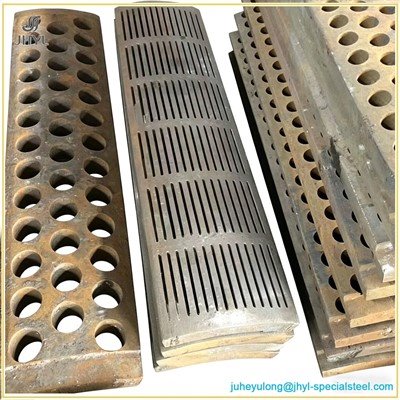
We also recommend avoiding unnecessary bulk where it doesn't serve structural needs. Many engineers over-size cast parts "just in case," but extra material adds conductive heat flow. Using lightweight, ribbed casting structures (where load-bearing capacity is maintained through internal ribs rather than solid metal) cuts conductive heat transfer by 10–12% without sacrificing strength. For parts that hold or transfer heat-like furnace trays, for example-this geometry tweak is especially impactful. If you're sourcing these, look for designs tailored to minimize heat flow while meeting load requirements, not just maximum tensile strength.
2. Choose the Right Heat-Resistant Alloy for Your Specific Temperature Range
Not all heat resistant steels are created equal when it comes to insulation performance. The alloy's composition determines both the stability of its protective oxide layer and its inherent thermal conductivity-two key factors in insulation. Thermal conductivity measures how easily heat moves through a material, so alloys with lower conductivity will naturally insulate better at the same temperature.
For parts operating below 1,100°C, our team often recommends 1.4776 GX40CrSi28 Heat-resistant Steel For Furnace Components. This European-standard alloy has high silicon and chromium content that forms a dense, SiO2-rich oxide layer at operating temps, which not only resists scaling but also has lower thermal conductivity than standard carbon steels. Its microstructure-fine-grained and uniform, thanks to our precise casting process-also reduces grain boundary heat transfer, a common issue with over-heated or poorly processed cast steels. For parts running between 1,100°C and 1,400°C, GX130CrSi29 European Standard Heat-Resistant Steel Custom Casting is ideal. This alloy has higher chromium (29%) that forms a Cr2O3 layer, which is more stable at extreme temps and has 8–10% lower thermal conductivity than 1.4776 at 1,200°C. We don't just stock these off-the-shelf-we offer custom casting of these alloys to match your exact part dimensions and load requirements, ensuring you get optimal insulation tailored to your application.
3. Post-Casting Heat Treatment: The Unsung Hero of Insulation Performance
Once you have the right alloy and geometry, the next step is post-casting processing, which many customers rush or skip entirely. Poor heat treatment can leave residual stresses, uneven microstructures, and brittle phases that not only shorten part life but also hurt insulation performance. For example, as-cast heat resistant steels often have a non-uniform grain structure and trapped gas pores, which create pathways for conductive heat flow. Proper heat treatment refines the microstructure and closes small pores, reducing heat transfer.
At our facility, we recommend using Heat Treatment Fixtures & Trays during this process-these specialized holding components are designed to keep cast parts stable during heating and cooling, preventing distortion that would alter geometry (and thus insulation) post-treatment. When parts warp during heat treatment, their original geometric design tweaks to reduce hot spots are lost, undoing all the geometry work we did earlier. Our heat treatment fixtures are made from the same high-performance heat resistant alloys we supply, so they withstand repeated thermal cycling without deforming or adding contaminants to your parts.
For most heat resistant steel castings, a solution annealing and stabilizing treatment works best. Solution annealing heats the part to 1,100–1,200°C (depending on the alloy) to dissolve any brittle carbides that form during casting, followed by slow cooling to ensure a uniform microstructure. Stabilization treatment then holds the part at 800–900°C for several hours to form a consistent, dense oxide layer. A 2022 study in the Journal of Materials Engineering and Performance found that properly heat-treated GX40CrSi28 cast parts had 18% lower thermal conductivity than as-cast versions, translating directly to better insulation. If you're sourcing heat treatment services alongside parts, make sure your supplier documents the heat treatment process-we publish full process parameters for every order to ensure consistency.
4. Surface Treatments to Block Radiant Heat Transfer
Even with a great microstructure, radiant heat makes up 60–70% of total heat loss in high-temperature applications. The protective oxide layer on heat resistant steels helps, but it's not enough for parts exposed to direct radiant heat, like furnace trays or fixture components. Applying a high-emissivity (or low-emissivity, depending on your needs) surface coating can drastically cut radiant heat flow. Wait-emissivity is a measure of how well a surface emits heat; for insulation, we want surfaces with lower emissivity to reduce radiant loss, right? Let's clarify: for a component that's a barrier between a hot zone and a cooler one, a low-emissivity surface (like a polished or ceramic-coated surface) reflects radiant heat back toward the hot zone, rather than allowing it to pass through to the other side.
For example, a Heat-Resistant Steel Tray used in a batch furnace can be coated with a proprietary aluminum-silicon ceramic coating after casting, which lowers its emissivity from ~0.8 (for uncoated cast steel) to ~0.3. That reduces radiant heat loss by more than 50% at 1,000°C. We apply these coatings in-house, after heat treatment, to ensure they adhere properly to the dense oxide layer we create during processing. It's worth noting that coatings must be compatible with your operating temperature-most of our ceramic coatings hold up reliably up to 1,200°C, so they work for the majority of industrial heat applications.
5. Preventive Maintenance to Sustained Insulation Over Time
Heat insulation performance doesn't stay consistent forever-your cast parts will degrade with use, especially in cyclic high-temperature environments. Scaling, corrosion, and thermal fatigue all erode insulation over months or years of service. Scaling forms a porous, uneven oxide layer that increases heat transfer, while thermal fatigue creates microcracks that act as pathways for conductive heat.
Our customers often skip simple maintenance steps that can preserve insulation performance. We recommend regular inspections every 6–12 months (depending on your operating temperature): look for thick, flaky scale (it should be removed gently with shot blasting, not aggressive grinding that damages the base steel), and check for microcracks using a dye penetrant test. For parts like furnace fixtures or trays that are exposed to repeated load and heat cycles, replacing them before their insulation performance drops below 90% of new levels is more cost-effective than letting energy use spike. We also advise avoiding overloading cast parts-excess weight increases thermal stress, leading to microcracks that reduce insulation. If you need replacement parts or upgrade components (like new trays with better coating), we can rush orders for critical applications to minimize downtime.
Why This Matters for Your Bottom Line
Let's put numbers to this: a typical industrial furnace with 10 heat resistant steel casting parts operating 24/7 at 1,000°C has annual heat loss of around $12,000. If you can improve insulation performance by 20% through the strategies above, that's $2,400 in annual energy savings, plus extended part life (reducing replacement costs by 15–20%) and fewer unplanned shutdowns. The key is that these changes aren't just "upgrades"-they're integrated, science-backed steps that start with material selection and carry through to installation and maintenance.
As a supplier, we don't just sell cast steel parts-we work with you to tailor every solution to your specific application. Whether you need custom castings in GX130CrSi29, heat treatment fixtures to support your process, or coated trays for your furnace lines, our team has the expertise to ensure your parts deliver optimal insulation and performance.

If you're looking to improve the heat insulation performance of your heat resistant steel casting parts, or you have questions about material selection, heat treatment, or custom components, we're here to help. Reach out to our team to discuss your project and get a tailored recommendation.
References
ASTM International. (2021). Standard Practice for Evaluating High-Temperature Heat Transfer in Metallic Components. ASTM E2207-21.
Journal of Materials Engineering and Performance. (2022). "Microstructural and Thermal Conductivity Changes in Heat-Resistant Cast Steels Post-Heat Treatment." Vol. 31, Issue 8, pp. 6214-6223.
NACE International. (2020). Corrosion Resistance of Heat-Resistant Alloys in High-Temperature Oxidizing Environments. NACE SP0176-20.