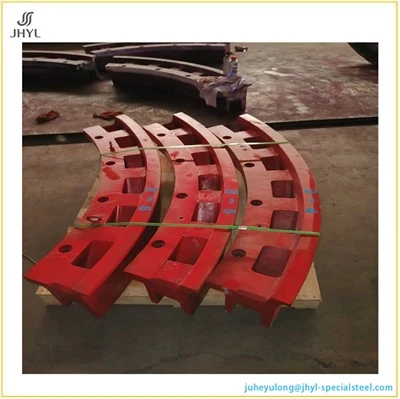
Industrial machinery generally operates under demanding conditions for extended periods. Its internal components may be exposed to mechanical loads, impact, friction, vibration, and temperature changes. Therefore, material selection directly affects equipment operating conditions and service life. Alloy Steel Casting Components are commonly used in industrial machinery manufacturing because of their material characteristics and casting advantages.
First, Alloy Steel Casting Components can meet the mechanical strength requirements of certain industrial equipment. In mining machinery, metallurgical equipment, and heavy construction machinery, some components must withstand continuous mechanical loads. If the material does not have sufficient strength, deformation, damage, or other problems may occur. Through appropriate alloy selection and manufacturing processes, alloy steel castings can achieve mechanical properties suitable for specific operating conditions, providing essential structural support for the equipment.
Second, Alloy Steel Casting Components offer flexibility in material selection. Different alloying elements, such as chromium, manganese, nickel, and molybdenum, can be added to steel according to specific application requirements. These elements influence the material's microstructure and properties, helping improve characteristics such as strength, toughness, wear resistance, and hardenability. Therefore, industrial equipment manufacturers can select suitable alloy steel materials according to the actual working conditions of different components.
Third, Alloy Steel Casting Components are suitable for certain applications involving continuous wear. Many industrial machines process ores, gravel, metal raw materials, and other abrasive materials. Components that remain in contact with these materials may experience continuous friction and wear. Selecting alloy steel castings with appropriate wear resistance can help components withstand demanding wear conditions and reduce equipment problems caused by excessive material loss.
Fourth, Alloy Steel Casting Components can be suitable for certain high-impact working environments. Components in crushers, mining conveyors, and heavy machinery may experience repeated impact during operation. Materials with insufficient toughness may be more susceptible to cracking or fracture. Through appropriate material selection and heat treatment, alloy steel castings can achieve a suitable combination of strength and toughness for certain impact-intensive applications.
Fifth, casting processes can meet the structural requirements of complex components. Some industrial machinery parts feature irregular shapes, complex surfaces, or special internal structures. Compared with certain other manufacturing methods, casting can produce the required basic shapes through molds, making it easier to manufacture complex mechanical components and potentially reducing subsequent machining operations.
Sixth, Alloy Steel Casting Components can contribute to overall equipment reliability. The operation of mechanical equipment depends not only on its power and control systems but also on the material performance of its critical components. Properly selected alloy steel castings help components adapt to their working environments and reduce problems caused by unsuitable materials, excessive wear, or structural damage.
In addition, suitable heat treatment and subsequent machining processes can improve the microstructure and performance of Alloy Steel Casting Components, helping them meet the application requirements of different types of industrial machinery.
It is important to note that not every industrial machinery component requires alloy steel castings. Material selection should be based on actual operating conditions, load characteristics, wear patterns, operating temperatures, and manufacturing requirements.
Overall, industrial machinery uses Alloy Steel Casting Components primarily to meet requirements for mechanical strength, wear resistance, impact resistance, and complex structural manufacturing. These components provide reliable support for the long-term operation of industrial equipment.