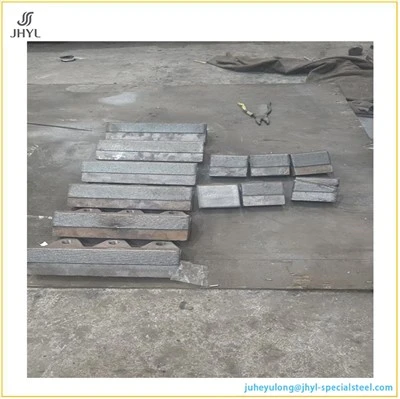
Crusher Wear‑Resistant Liner adapts to a full range of crushed materials with diverse types in practical operations. According to physical properties, hardness and application purposes, contacted materials fall into four categories: natural hard ores, natural sand‑and‑gravel aggregates, industrial solid waste and residues, and building‑material & chemical raw materials. Different materials have distinct physical and chemical features, bringing diverse wear modes and loss degrees to liners. Details of material types and characteristics are as follows.
The first category covers natural hard ores, which cause the most severe wear to Crusher Wear‑Resistant Liner. Mined from mines, these materials feature high hardness, high density and compact structures, generating tremendous impact force during crushing. Typical examples are granite, basalt, iron ore, quartzite, blue stone, gneiss, diabase and manganese ore. Among them, basalt, granite and iron ore are ultra‑hard ores widely used in mine coarse‑crushing and medium‑fine‑crushing processes. They bring high‑intensity impact and deep abrasion to liners, constituting major sources of liner loss. They set strict requirements on hardness and toughness of liner materials.
The second category refers to natural sand‑and‑gravel aggregates extensively applied in manufactured‑sand production and infrastructure stone processing. They have medium‑level hardness and relatively uniform particles, mainly causing continuous abrasive wear. Representative materials are natural cobblestones, river pebbles, crushed stones, limestone and dolomite. Cobblestones have smooth surfaces and firm textures, triggering rolling abrasive wear during crushing. Limestone has low hardness and high brittleness and tends to fragment in crushing processes, creating limited impact wear. Nevertheless, its high proportion of fine particles produces persistent scouring wear on liner surfaces and brings uniform wear losses after long‑time operation.
The third category is industrial solid waste and recycled aggregates with complicated compositions and miscellaneous impurities, representing the harshest working‑condition materials. They include construction waste such as cement blocks, bricks, crushed stones mixed with steel bars and iron wires, steel slag, mine slag, furnace slag and gangue. These materials have irregular shapes with mixed hard‑soft components and variable sizes. Heavy scraping wear from hard metal scraps and scouring wear from loose powder coexist. Some residues carry slight acid‑base corrosiveness, leading to combined wear‑and‑corrosion damage and accelerating liner aging and failure.
The fourth category contains building‑material and chemical raw materials with generally low hardness and moderate wear intensity, part of which are slightly corrosive. Major materials are coal, shale, gypsum, cement clinker and ceramic raw materials. Coal and shale have loose textures and low hardness and only cause mild abrasive wear. Cement clinker and gypsum produce weak corrosion under high‑humidity and high‑temperature conditions and gradually erode liner surfaces to weaken wear‑resistant performance. Such materials generate limited impact losses, yet cumulative wear will still occur after prolonged continuous operation.
On the whole, materials contacted by Crusher Wear‑Resistant Liner cover a broad hardness spectrum, ranging from soft coal and gypsum to medium‑hard limestone and cobblestones, and further to ultra‑hard iron ore and basalt. Both pure natural materials and impurity‑laden solid waste are included. Wear modes consist of impact wear, abrasive wear, scouring wear and corrosive wear. That explains why liners need high strength, high toughness and corrosion resistance to cope with diversified material losses and guarantee stable performance under various working conditions.