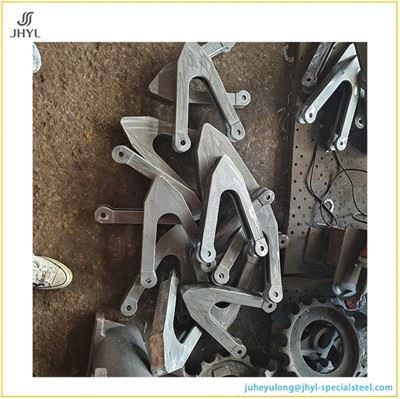
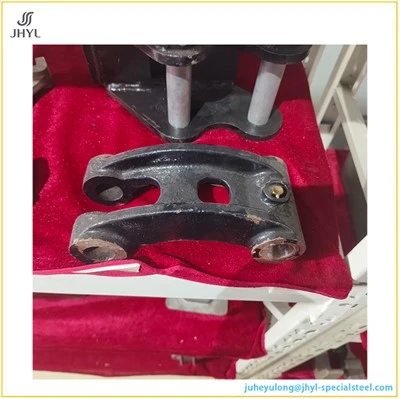
In daily production of sand‑stone crushing and ore processing, the High Manganese Steel Jaw Plate serves as a core wear‑resistant component for jaw crushers. Its wear and aging will directly affect the operating efficiency and finished‑product quality of the whole production line. Accurate identification of replacement time can not only prevent cost waste caused by premature replacement, but also avoid equipment failures and capacity decline resulting from extended over‑service. Judgement can be completed merely through production working conditions, component appearance and equipment running status, without the need for professional testing instruments.
First of all, changes in production working conditions offer the most intuitive reference. A brand‑new High Manganese Steel Jaw Plate features regular tooth profiles and strong biting force, delivering evenly crushed materials alongside stable production‑line capacity. After long‑term impact and extrusion wear, tooth crests wear down gradually and the crushing biting angle changes, which greatly weakens the splitting and extrusion effect on materials. The most obvious sign lies in a continuous drop of output per unit time and significantly reduced capacity with unchanged feeding volume. Meanwhile, finished materials show uneven sizes, increased flaky fragments and blurred edges on crushed stones, which lower the qualification rate and fail to meet material standards. Besides, material jamming and blocking happen far more often, frequently interrupting crushing procedures and requiring manual clearing, which heavily delays production progress. These conditions mean the jaw plate has reached its replacement limit.
Secondly, observe wear and damage conditions on the jaw‑plate surface. Normal wear starts from tooth crests. Once tooth profiles are completely flattened and turn into smooth planes without biting capacity, immediate replacement is mandatory. Under certain working conditions, improper feeding or uneven material hardness may cause abnormal damage including local depressions, substantial thickness reduction, edge chipping and cracks of varying lengths. In particular, cracks will expand rapidly under continuous impact loads and eventually lead to jaw‑plate fracture and unexpected shutdown. Uneven stress caused by one‑sided heavy wear will unbalance forces inside the crushing chamber, which also calls for prompt component replacement.
Thirdly, auxiliary judgement can be made via equipment performance. An intact High Manganese Steel Jaw Plate ensures even stress, stable crusher operation, low vibration and low noise. Excessive wear or damage will create unbalanced crushing forces, generating obvious abnormal vibration, harsh noise and amplified shaking. Continuous operation under faulty conditions accelerates jaw‑plate consumption and harms key parts such as bearings and frames, raising maintenance costs. To sum up, timely replacement of the High Manganese Steel Jaw Plate shall be carried out once capacity reduction, unqualified discharge, failed tooth profiles, surface damage or abnormal equipment vibration occurs, so as to secure stable and efficient production‑line operation.