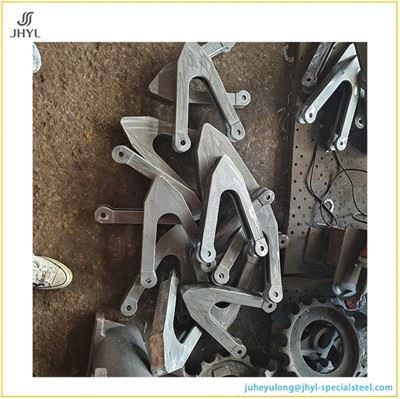
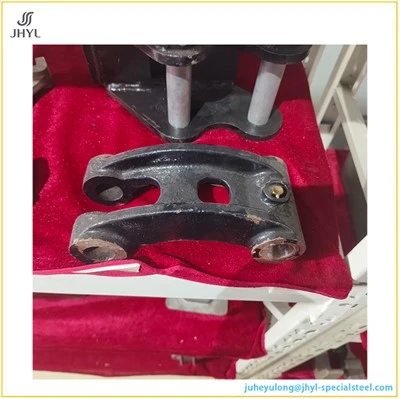
Chain Grate Stoker Bars are not components prone to cracking. If the boiler maintains stable operating conditions, standardized operation and routine maintenance, they can run steadily for a long time with few cracking failures. Most Chain Grate Stoker Bars are processed with technologies adapted to high-temperature furnace environments, offering excellent resistance to high temperatures and cyclic thermal expansion and contraction under normal continuous operation. In most cases, cracking stems from abnormal operating conditions and improper operation rather than inherent defects of the product itself.
Severe temperature fluctuations constitute the primary cause of cracking, and this failure is commonly seen in practical applications. Repeated boiler startup and shutdown along with fluctuating loads subject Chain Grate Stoker Bars to alternating intense heating and rapid cooling. Continuous cyclic thermal expansion and contraction build up cumulative thermal stress inside the metal components. Once the stress exceeds the bearing capacity of the material, tiny thermal fatigue cracks will form. These cracks gradually expand and connect as operation continues, and eventually lead to complete fracture.
Uneven temperature distribution inside the furnace is another key factor. Flame deviation and concentrated local open flames often occur during boiler operation. Some Chain Grate Stoker Bars suffer prolonged overtemperature heating while adjacent bars remain relatively cool, resulting in drastically uneven heating. Local overheating causes partial expansion and deformation of the bars, generating squeezing and pulling forces against neighboring components and directly triggering cracking. At the same time, molten clinker produced by fuel combustion adheres to the bar surfaces and hardens into rigid lumps after cooling, tightly wrapping the Chain Grate Stoker Bars.
Clinker has poor thermal conductivity, trapping heat on the covered sections of the bars and causing local overtemperature, which further worsens uneven heating. Moreover, clinker expands and contracts repeatedly with changes in furnace temperature, constantly pulling the surface of Chain Grate Stoker Bars and slowly damaging the structural integrity of components. Besides, hard clumps and slag lodged in the gaps between bars during operation cause jamming. Mechanical extrusion and friction generated during equipment operation continuously act on partial areas of Chain Grate Stoker Bars, which may also induce cracks and fractures after long-term use. Maintaining stable working conditions, removing clinker in a timely manner and adopting standardized operations can greatly prevent cracking failures of Chain Grate Stoker Bars.