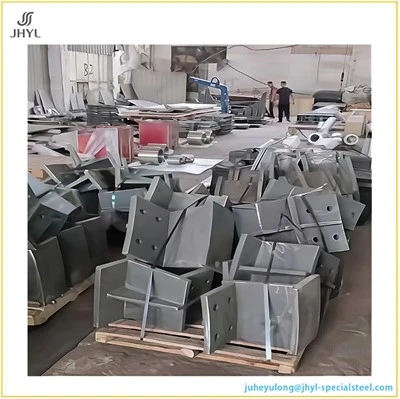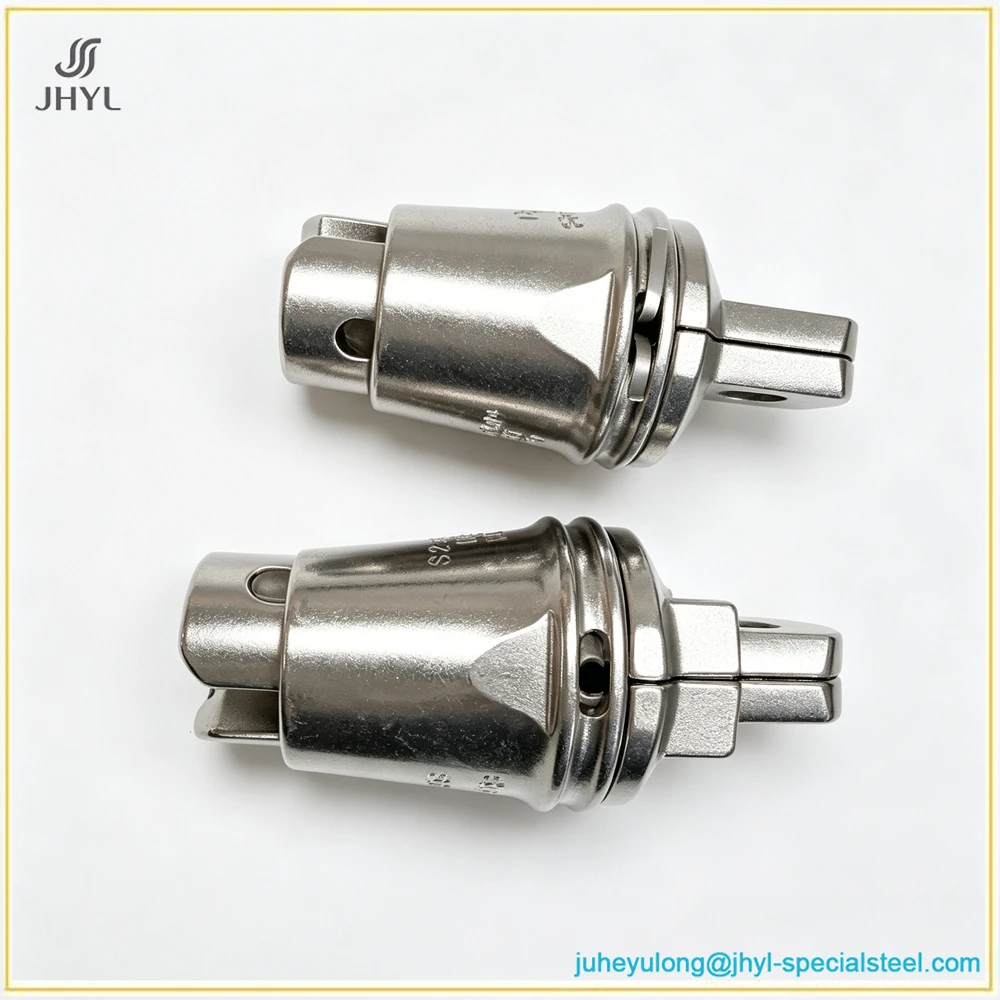
The production of Alloy Steel Casting Components is a comprehensive manufacturing process involving material preparation, metal melting, forming, cooling, and subsequent processing. Since alloy steel contains different types of alloying elements, chemical composition, melting conditions, pouring processes, and heat treatment procedures must be properly controlled during production. Each manufacturing stage affects the others and contributes to the final microstructure, mechanical properties, and surface quality of the castings.
First, raw material preparation is the foundation of Alloy Steel Casting Components manufacturing. Before production begins, appropriate steel raw materials, alloying materials, and other auxiliary materials must be prepared according to the material requirements of the product. The raw materials should undergo necessary inspection and classification to ensure that their composition and condition meet production requirements.
Second, batching and chemical composition calculation are carried out. Different types of Alloy Steel Casting Components have different material composition requirements. Therefore, the proportions of raw materials and alloying elements must be determined according to the target chemical composition. Proper batching helps control the molten steel composition and enables the material to achieve the expected microstructure and performance characteristics.
Third, metal melting is performed. The prepared raw materials are placed into melting equipment and heated until they gradually melt into molten steel. During melting, attention must be paid to temperature changes, molten steel flow conditions, and chemical composition variations. This ensures that the metal is fully melted and reaches a condition suitable for subsequent pouring. Depending on the manufacturing process, additional operations such as deoxidation, refining, and other metallurgical treatments may be performed to improve molten steel quality.
Fourth, pouring and casting are carried out. Once the molten steel reaches a suitable pouring condition, it is transferred into a prepared mold. The mold is generally designed according to the required shape and structure of the product. After entering the mold cavity, the molten steel gradually fills the different sections. During pouring, temperature, pouring speed, and operating procedures must be properly controlled to reduce problems such as incomplete filling, gas entrapment, and other casting defects.
Fifth, solidification and cooling take place. After the molten steel enters the mold, it gradually releases heat and changes from a liquid state into a solid state. During this process, the internal metal microstructure develops. Solidification and cooling have a significant influence on the casting's microstructure, internal defects, and final mechanical properties. Improper cooling conditions may lead to shrinkage cavities, shrinkage porosity, cracks, and other defects. Therefore, the cooling process should be arranged according to the casting structure and material characteristics.
Sixth, shakeout and casting cleaning are performed. After the casting has completely solidified and cooled to an appropriate condition, it is removed from the mold. Sand, oxide scale, and other surface residues are then removed. Excess material, such as gates and risers, is cut off and cleaned, allowing the casting to gradually achieve its required basic shape.
Seventh, heat treatment is carried out. Heat treatment is an important process for improving the microstructure and mechanical properties of Alloy Steel Casting Components. Depending on the material type and application requirements, processes such as annealing, normalizing, quenching, and tempering may be applied.
Eighth, machining and quality inspection are performed. After heat treatment, some castings may require turning, milling, drilling, or other machining operations to meet equipment assembly and application requirements. At the same time, the products should undergo necessary inspections covering appearance, dimensions, internal quality, and relevant mechanical properties.
In addition, the specific production processes may vary among different types of Alloy Steel Casting Components. For example, certain castings may require additional specialized metallurgical treatments or surface treatments, while products with relatively simple structures may require fewer subsequent processing operations.
Overall, the production of Alloy Steel Casting Components generally includes raw material preparation, batching, melting, pouring, solidification and cooling, cleaning, heat treatment, machining, and quality inspection. Every stage has an important influence on the final product quality and performance. Proper control of the entire manufacturing process helps ensure that the castings meet the requirements of their intended industrial applications.