


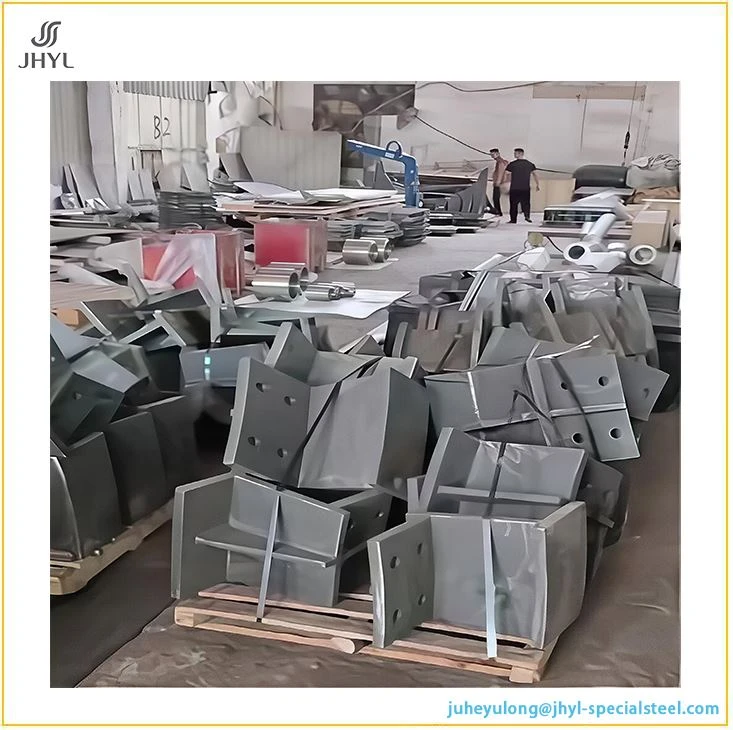
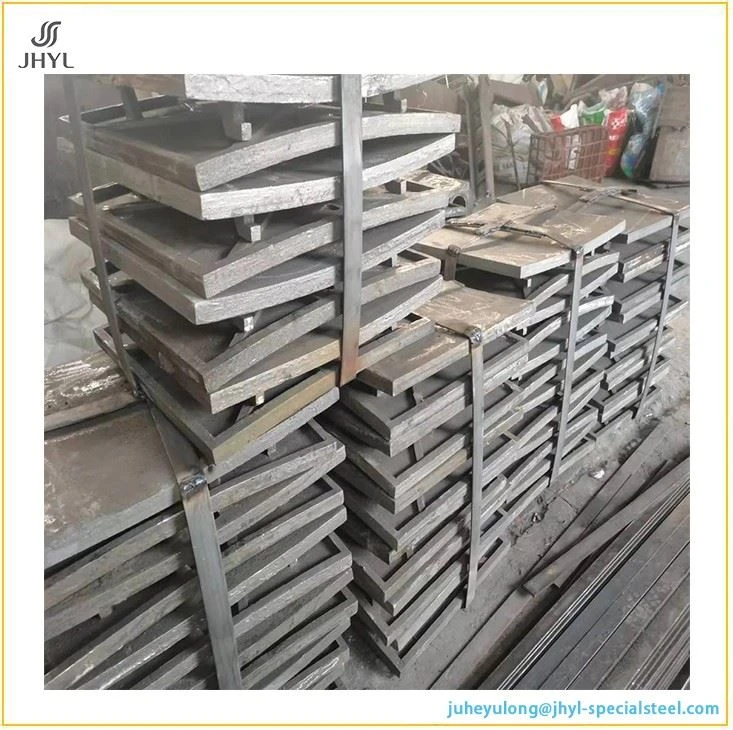


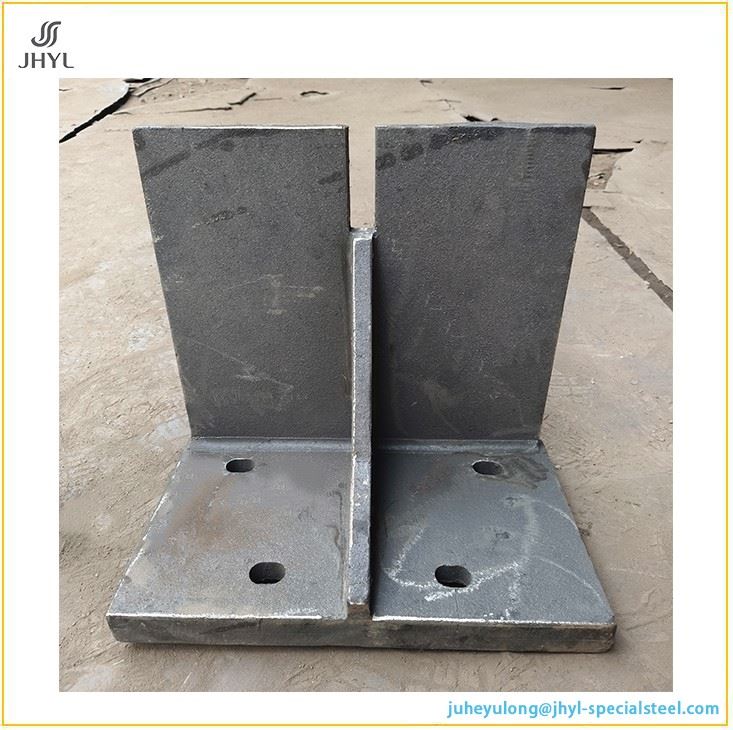

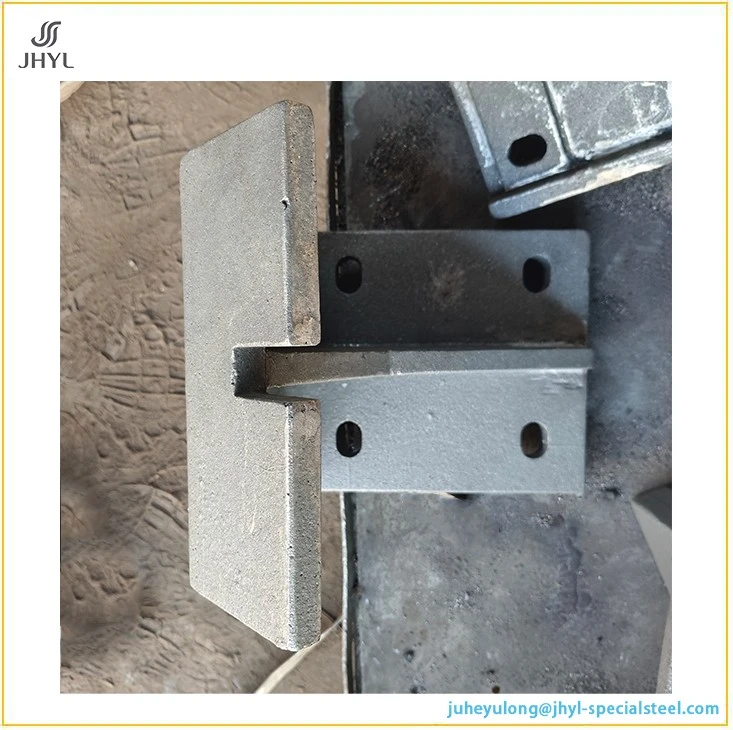
Why This Component Is Specified, Not Substituted
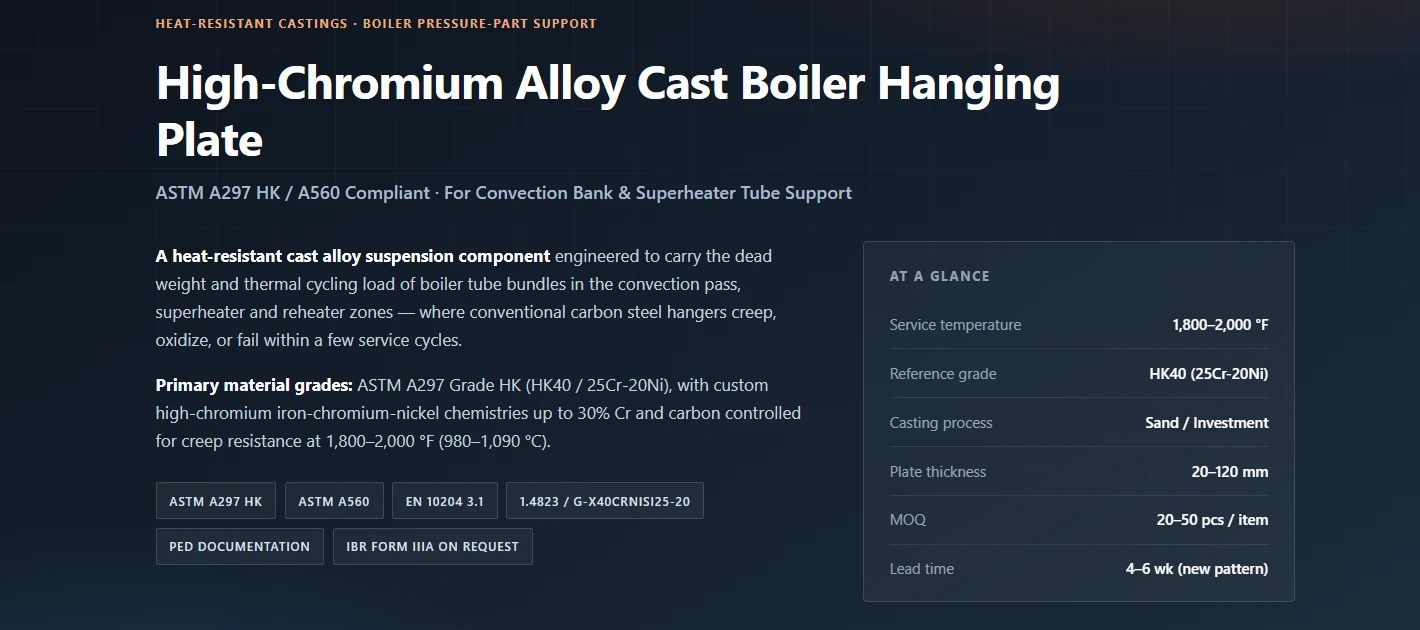
A boiler hanging plate is not a simple bracket. It operates under simultaneous tensile load, thermal fatigue, and flue-gas oxidation. In the radiation and convection zones of a utility or industrial boiler, a failed hanger means tube bundle displacement, unscheduled outage, and secondary damage to adjacent pressure parts. This product is cast and heat-treated to hold mechanical integrity through the designed service interval - not merely to meet a room-temperature tensile minimum.
Technical Data
Material & Specification Compliance
| Parameter | Specification / Capability |
| Primary casting standard | ASTM A297/A297M - Grades HK, HH, HT, HU available on request |
| Supplementary hanger / support standard | ASTM A560/A560M - explicitly covers chromium-nickel alloy castings for supports, hangers, spacers and structural members in elevated-temperature corrosive service |
| Typical chemistry (HK40 reference) | Cr 23–27%, Ni 18–22%, C 0.35–0.45% - carbon adjusted per creep vs. weldability requirement |
| Alternative EU / DE equivalent | 1.4823 / G-X40CrNiSi25-20 (DIN 17395 / EN 10295 alignment available for European OEM programs) |
| Microstructure | Austenitic matrix with primary chromium carbides; heat-treated per ASTM A297 to stabilize carbide morphology and optimize creep rupture life |
| Casting process | Electric-arc or induction-furnace melting; sand cast / investment cast per geometry and order quantity |
| Dimensional scope | Custom per drawing or sample. Typical plate thickness 20–120 mm; load-bearing lug and aperture features cast-in to reduce machining and lead time |
Performance Characteristics That Drive Specification
Engineering Rationale
Creep resistance under sustained hanger load
Boiler hanging plates do not experience a single overload event - they carry constant tube-bundle weight at temperature for tens of thousands of hours. High-chromium austenitic cast alloys such as HK40 are selected precisely because their creep rupture strength remains serviceable in the 1,800–2,000 °F band, where ferritic and low-alloy hanger materials have already entered tertiary creep.
Carbon content is treated as a design variable, not a "range to hit": higher carbon improves creep strength but must be balanced against castability and weld-repair tolerance.
Oxidation & flue-gas corrosion tolerance
Chromium level is the first line of defence against scaling and reducing or sulphidizing flue-gas atmospheres. For coal, biomass and waste-to-energy boiler environments, chemistry can be adjusted toward the higher end of the chromium range, with silicon and nickel balanced to maintain phase stability and avoid embrittling sigma-phase formation during long-term exposure.
Thermal fatigue resistance at attachment transitions
The geometric transition from the hanger body to the load-bearing aperture is the highest-stress location under thermal cycling. Casting the lug and aperture profile integral to the plate - rather than welding a separate attachment - eliminates a fatigue-sensitive weldment and distributes load through as-cast geometry.
Documentation & Inspection for Engineer Review
Every shipment for boiler pressure-part-adjacent service is released with a documentation package designed to survive third-party review.
|
|
Mill Test Certificate (MTC) per EN 10204 3.1, with heat number traceability to the poured lot. |
|
|
Chemical composition certification for Cr, Ni, C, Si, Mn, P, S - carbon and chromium reported to actual values, not just range conformance. |
|
|
Mechanical test report including tensile strength, yield strength and elongation from test bars cast with the production heat. |
|
|
Dimensional and visual inspection report with as-cast profile verification against the approved drawing. |
|
|
Optional third-party witness: SGS, BV, TÜV or buyer-designated inspector; UT and PT available on critical load-path features upon specification. |
|
|
Heat treatment record where thermal processing is specified by the purchase order. |

Commercial
Supply & Commercial Terms
| Mattress Size | Mattress Size/cm |
| MOQ | 20–50 pieces per line item - mixed grades / sizes negotiable for trial orders |
| Lead time | 4–6 weeks for new pattern; 2–3 weeks for repeat orders against retained pattern |
| Pattern ownership | Customer-owned patterns stored and maintained at no cost during an active supply relationship |
| Packaging | Sea-worthy export packing; load-bearing faces protected; heat number and part number marked on each piece and on the packing list |
| Incoterms | FOB / CIF / DAP per buyer preference |
| Documentation language | English as standard; German or French available for EU-bound shipments |
We offer a variety of transmission components
Specify This Hanger When - And When Not To
Right fit
- Boiler convection bank, superheater or reheater tube support where flue-gas temperature exceeds 1,700 °F (925 °C).
- Replacement of carbon-steel or low-alloy hangers that have exhibited creep elongation, oxidation scaling or attachment cracking.
- Biomass, waste-to-energy or recovered-fuel boilers where alkali and chlorine-bearing deposits accelerate hanger degradation.
- Utility or industrial boiler maintenance programs requiring a cast hanger installable without post-cast weld buildup on the load path.
Not the right fit
Low-temperature economiser or air-preheater zones where a standard carbon-steel bracket already achieves the designed service interval without creep allowance. In those cases a lower-alloy solution is more economical - and we will say so in the quotation.
Questions We Answer Before the PO
Buyer FAQ
Can you cast to a specific ASTM A297 grade beyond HK?
Yes. HH, HT and HU grades are available on request. Grade selection should be driven by actual metal temperature and load, not by "the strongest available alloy." For 1,800–2,000 °F hanger service, HK / HK40 is the established specification; for higher-temperature or more aggressive corrosion duty we will quote an alternative grade with a written rationale.
Do you supply for boilers originally built to ASME Section I or Section VIII?
Yes. Hanging plates are supplied as cast components to the material and testing requirements invoked by the original boiler OEM specification. We do not stamp ASME code symbols on cast non-pressure parts unless the purchase order and applicable code require it; we do supply full material certification to support the boiler manufacturer's or assembler's code compliance.
What happens if a hanger dimension does not match the existing field geometry?
For replacement and maintenance orders we work from a buyer-supplied drawing, field sketch or retained sample. Pattern modification at our foundry is handled as an engineering change - not as a new-tooling event - provided the core load-path geometry remains within casting feasibility.
Can you support IBR or PED documentation for projects outside the U.S.?
Yes. For EU-bound shipments, PED-compliant material documentation (EN 10204 3.1) is standard. For Indian projects, IBR Form IIIA and associated inspection documentation can be arranged through approved third-party inspection agencies. Certification requirements should be stated explicitly at inquiry stage so they are priced and scheduled correctly.
Hot Tags: high-chromium alloy cast boiler hanging plate, China high-chromium alloy cast boiler hanging plate manufacturers, suppliers, factory, 310S Vacuum Furnace Charging Basket, boiler parts, boiler sections, heat resistant steel casting parts, parts of a boiler, system boiler components


