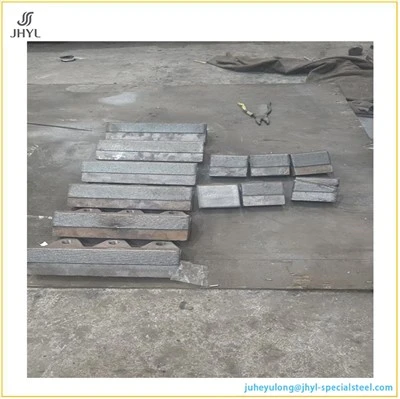
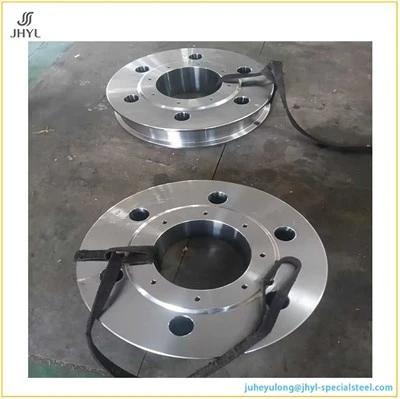
Mounted inside the crushing chamber, Crusher Wear‑Resistant Liner is the critical intermediate component between equipment and feed materials. More than a simple protective part, it determines crushing quality, operational stability and production efficiency throughout the whole crushing workflow. It delivers five core functions: protection, efficiency improvement, particle‑size control, vibration‑noise reduction and operating‑cost reduction.
Protection remains its most fundamental and vital role. During operation, feed materials continuously strike, rub and squeeze the crushing chamber. Hard mineral grains inflict severe abrasion and impact damage on metallic machine structures. As the component in direct contact with incoming materials, Crusher Wear‑Resistant Liner completely isolates raw materials from frames, housings and main‑shaft guards. It bears all impact and abrasive loads and prevents structural deformation, perforation, corrosion and premature wear of main machine parts, thus preserving equipment integrity and drastically cutting major‑component failure rates.
Secondly, it optimizes crushing processes and raises throughput. The tooth profile, curvature and overall geometry of the liner are engineered according to mechanical principles and crushing technology to form a well‑defined crushing chamber. Tooth profiles grip, compress and strike incoming rock to facilitate size reduction and avoid material slippage, accumulation and idle rotation. The well‑configured chamber controls material travel distance, compressive force and retention time for sufficient fragmentation. It minimizes oversized leftover particles and incomplete crushing, lifting single‑machine output and operational performance.
Thirdly, it regulates discharge particle size and improves aggregate shape. Liners with varied profiles and tooth patterns satisfy diverse particle‑size requirements. By replacing different liners, operators precisely adjust chamber clearance to control discharge dimension and uniformity. Optimized force distribution produces more cubic‑shaped aggregates while reducing flaky particles and excessive fines. Better finished‑product quality meets strict specifications for infrastructure and building‑material projects and increases commercial value of output materials.
Fourthly, it cushions shock, dampens vibration and stabilizes machine operation. High‑velocity rock impacts generate tremendous force and vibration. Thanks to high‑toughness material properties, Crusher Wear‑Resistant Liner absorbs impact energy and mitigates vibration amplitude. This lowers loosening and wear of mating mechanical parts and stabilizes equipment performance. It also cuts high‑decibel noise produced during crushing to improve working conditions and comply with environmental‑protection construction standards.
Finally, it reduces long‑term operating expenses and prolongs equipment service life. As a replaceable wear part, its cost is far lower than that of crusher main bodies and key assemblies. Timely liner replacement avoids irreversible wear on expensive main equipment and slashes capital repair‑and‑replacement expenditure. Stable machine performance reduces unplanned downtime, supports continuous production lines and eliminates production losses caused by shutdowns, laying a solid foundation for large‑scale regular manufacturing.