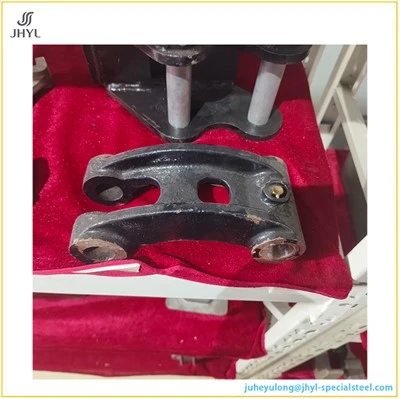
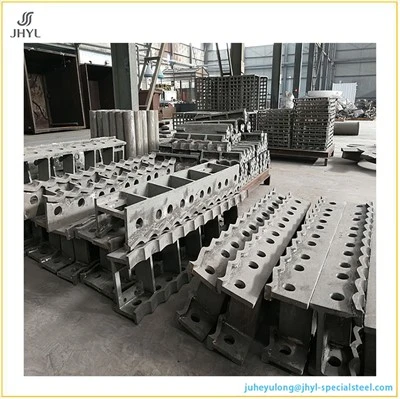
In various industrial boilers, metallurgical sintering machines, and waste-to-energy incinerators, the grate bar is a critical component that supports the fuel bed and ensures efficient combustion. The choice of grate material directly affects thermal efficiency, operational stability, and maintenance costs. Among the most commonly used materials for grate bars are high‑chromium cast iron and gray cast iron-yet they differ fundamentally in performance, service life, and application suitability. A thorough understanding of these differences is essential for making sound material‑selection decisions that enhance cost‑effectiveness and reliability.
1. Material Positioning: Economy vs. Performance
The primary distinction between high‑chromium cast iron and gray cast iron lies in their design philosophy. Gray cast iron is a traditional cast‑iron material widely adopted in general industrial applications owing to its low cost and excellent castability. High‑chromium cast iron, in contrast, is a high‑alloy wear‑resistant material specifically developed for demanding conditions. Its design objective is to deliver a service life far beyond that of conventional materials under high‑temperature and high‑abrasion environments, positioning it as a premium functional material.
2. Core Performance Comparison: Heat Resistance, Wear Resistance, and Oxidation Resistance
These are the most tangible differences between the two materials, and they originate from their distinct chemical compositions and microstructures.
Heat Resistance and Oxidation Resistance
Gray cast iron has a temperature limit of typically 200–300 °C. Beyond this range, the flake graphite within its structure accelerates oxidation, leading to severe scaling and spalling on the surface, a rapid decline in matrix strength, and eventual deformation or even collapse. In contrast, high‑chromium cast iron-containing 25–28% chromium-exhibits outstanding high‑temperature performance and can be safely used at temperatures approaching 1000 °C. The key lies in the chromium content, which enables the formation of a dense, stable chromium‑rich oxide film (e.g., Cr₂O₃) on the surface at elevated temperatures. This protective barrier effectively isolates the underlying material from oxygen, preventing further internal oxidation and imparting superior oxidation resistance far beyond that of gray cast iron.
Wear Resistance
The wear resistance of gray cast iron relies mainly on its matrix structure, but the flake graphite acts as internal discontinuities that weaken the matrix and limit its ability to withstand abrasive gouging and erosion. High‑chromium cast iron, by contrast, contains a large volume of finely dispersed M7C3‑type hard carbides. These carbides, with a micro‑hardness of HV 1200–1800, act as countless tiny wear‑resistant "skeletons" that effectively resist friction and abrasion caused by fuel and ash particles. In environments with both high temperature and abrasive media, the wear life of high‑chromium cast iron is several to tens of times that of gray cast iron.
3. Failure Modes: Inherent Brittleness vs. Processing Risks
When selecting grate materials, it is important to consider not only performance limits but also failure risks. Gray cast iron primarily suffers from thermal‑fatigue cracking, oxidative thinning, and thermal distortion under high‑temperature service. These failures are typically gradual, eventually rendering the grate unable to support the fuel bed effectively. High‑chromium cast iron, while offering superior properties, is a high‑alloy white cast iron with high carbide content and significant solidification shrinkage and brittleness. Its main risk therefore lies in the demanding casting process-if parameters such as pouring temperature and cooling rate are not carefully controlled, the castings are prone to cracks, shrinkage porosity, or inclusions, which may lead to sudden brittle fracture during installation or early operation. This is a more catastrophic, albeit avoidable, failure mode.
4. Cost and Value: Balancing Initial Investment and Long‑Term Benefits
In terms of cost structure, gray cast iron is the clear winner in initial procurement. Its raw materials are inexpensive, its casting process is well‑established and simple, and it generally requires no complex heat treatment. High‑chromium cast iron, on the other hand, involves costly ferrochrome alloys and a more intricate casting process, often followed by strict quenching and tempering to fully realise its performance potential. Its material and manufacturing costs are typically 20–30% higher than those of gray cast iron. However, when viewed from a total‑cost‑of‑ownership perspective, high‑chromium cast iron's exceptionally long service life (exceeding 15,000 hours for high‑quality products) in severe high‑temperature conditions significantly reduces downtime for maintenance, lowers labour costs for replacements, and ensures continuous production. For large‑scale, round‑the‑clock operations, these long‑term benefits easily offset the higher upfront investment.
5. Selection Guide: A Rational, Condition‑Based Approach
The key to proper material selection lies in accurately assessing the service conditions.
Choose Gray Cast Iron When:
The operating temperature is consistently below 300 °C, as in small‑ to medium‑sized conventional industrial boilers; when there are no extraordinary demands on grate life; when equipment utilisation is intermittent; and when cost sensitivity is paramount. In such cases, gray cast iron remains a pragmatic and economical choice that delivers adequate performance.
Choose High‑Chromium Cast Iron When:
The equipment operates continuously at temperatures above 800 °C with severe abrasive wear and an oxidising atmosphere-for example, in sintering machine pallets in the metallurgical industry, large‑scale power‑station boilers, and municipal solid‑waste incinerator grate systems. In these extreme thermo‑mechanical‑chemical environments, only high‑chromium cast iron can withstand the combined attack and ensure long‑term reliable operation.
6. Summary and Recommendations
In summary, neither gray cast iron nor high‑chromium cast iron is inherently superior; the right choice depends entirely on the specific application. They follow distinctly different design logics: gray cast iron offers a low‑cost solution for moderate conditions, while high‑chromium cast iron trades a higher initial outlay for exceptional durability and reliability under severe service.
We therefore recommend the following guiding principle: for low‑temperature, intermittent operation with a focus on minimising upfront costs, gray cast iron is suitable; for high‑temperature, continuous operation where long‑term economic efficiency and low maintenance frequency are priorities, high‑chromium cast iron is indispensable. For critical positions, particular attention should be paid to the casting quality of high‑chromium iron components. It is advisable to source from manufacturers with proven experience in casting and robust quality‑control measures to mitigate the risk of brittleness and fully exploit the performance advantages of this advanced material.