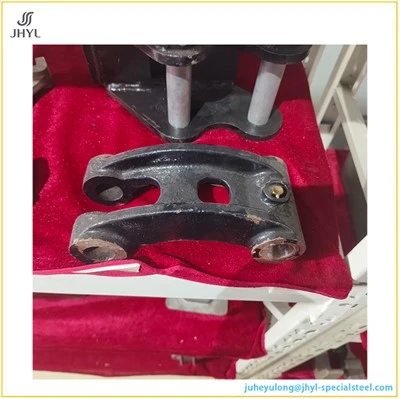
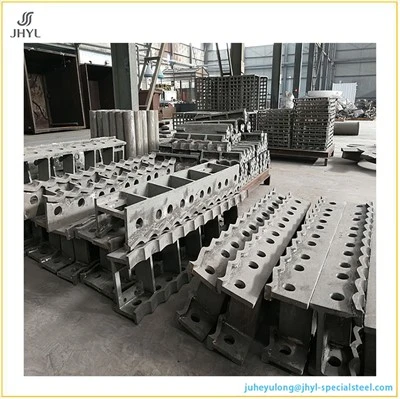
In the heavy industries of mining, building materials, and metallurgy, wear-resistant liners are critical components that withstand impact and abrasion. The choice of liner material directly affects equipment uptime and production costs. Among the most widely used options today-ZGMn13Cr2 high‑manganese steel and high‑chromium alloys (typically Cr15 and Cr26)-the performance principles and application scenarios are fundamentally distinct. Understanding these essential differences is the first step toward sound material selection.
1. Material Origins: Different Families of Metals
The fundamental divergence stems from their metallurgical classification. ZGMn13Cr2 belongs to austenitic manganese steel-a special alloy steel known for its exceptional toughness. It contains approximately 1.1–1.3% carbon and 12–14% manganese, with a small addition of chromium. In contrast, Cr15 and Cr26 are abrasion‑resistant white cast irons, with carbon contents ranging from 2.0% to 3.3% and chromium levels between 13% and 30%. This high carbon and chromium content leads to the precipitation of a large volume of hard carbides (of the M7C3 type) during solidification, which fundamentally determines their inherently high hardness.
2. Strengthening Philosophy: Completely Different Wear Mechanisms
This is the most critical point of difference between the two materials.
ZGMn13Cr2: "Overcoming hardness with toughness, growing harder as it works"
Its initial hardness is relatively low-only about 180–230 HB. Its remarkable feature is that when subjected to strong impact or compression, the surface layer undergoes severe work hardening, with hardness rising to above 500 HB, while the interior retains its highly tough austenitic structure. This "hard shell with a tough core" enables it to absorb significant impact energy without fracture; its impact toughness can exceed 150 J/cm². In essence, its wear resistance is gained through impact-the greater the impact, the better its performance.
High‑chromium alloys: "Overcoming hardness with hardness"
Their wear resistance does not rely on external impact. Instead, it comes from the abundant, uniformly dispersed M7C3‑type hard carbides within the microstructure. These carbides have micro‑hardness values of HV 1200–1800, acting like a rigid skeleton that directly resists cutting and gouging by abrasives. After quenching and tempering, the matrix transforms into martensite, giving a bulk hardness of HRC 58–65. They are genuinely "hard‑wear" materials. However, their impact toughness is far lower than that of high‑manganese steel-for Cr26, the impact energy is typically only 3–7.4 J/cm².
3. Critical Heat Treatment: Unlocking the Full Potential
The performance of each material is realized through specific heat‑treatment processes. ZGMn13Cr2 must undergo solution treatment (water quenching) -heating to 1050–1100°C followed by rapid water quenching-to obtain a single‑phase austenitic structure, which is essential for ensuring its toughness and work‑hardening capacity. Improper heat treatment, leading to carbide precipitation at austenite grain boundaries, will cause severe embrittlement. High‑chromium alloys, on the other hand, require strict quenching + low‑temperature tempering, with quenching temperatures between 950 and 1050°C, to fully transform the matrix into martensite; subsequent low‑temperature tempering relieves internal stresses and prevents brittle failure during service.
4. Service Performance: A Trade‑Off Between Wear Resistance and Risk
In actual operation, the two materials exhibit distinct behavior. High‑chromium alloys typically offer 2 to 3 times the wear life of high‑manganese steel, a significant advantage when processing strongly abrasive materials such as quartz sand or cement clinker. However, their greatest risk is brittle fracture-if they encounter severe impact from large ore pieces or abnormal equipment operation, the liners may shatter. Conversely, the wear resistance of ZGMn13Cr2 is directly proportional to the impact intensity it experiences. If used in low‑impact applications (e.g., fine‑grinding chambers or chutes), its work‑hardening effect is not fully activated, and its wear resistance may even fall below that of ordinary low‑alloy steels. Nevertheless, its absolute safety against fracture is an advantage that high‑chromium alloys cannot match.
5. Selection Guide: Rational Decision‑Making Based on Operating Conditions
The key to selection lies in balancing impact load and abrasion mode.
Prefer ZGMn13Cr2 when:
The equipment handles large feed sizes and severe impacts-for example, primary crushers or coarse‑grinding chambers of ball mills processing iron ore or granite. In these cases, the high impact fully exploits its work‑hardening capability, while its outstanding toughness provides reliable protection against breakage.
Prefer high‑chromium alloys (Cr26 over Cr15) when:
The application involves low impact and is dominated by sliding wear and grinding-such as fine‑grinding chambers, classifiers, or chutes. Here, the exceptionally high hardness and superior wear resistance significantly extend maintenance intervals. For medium‑to‑large mills where some impact is inevitable, Cr26 is recommended because it offers better toughness than Cr15, thus providing a higher safety margin.
6. Final Recommendations
A simple rule of thumb can guide your choice: if you fear impact breakage, choose high‑chromium; if you fear fracture, choose high‑manganese.
In practice:
If your service is dominated by high‑stress impact and safety is the primary concern, trust the toughness of ZGMn13Cr2.
If abrasion is the main wear mechanism and you seek maximum service life, high‑chromium alloys (especially Cr26) are the preferred option.
For extremely complex conditions involving both heavy impact and severe abrasion, consider bimetallic composite liners, where the working face is made of high‑chromium iron for wear resistance and the backing is high‑manganese steel for impact resistance.