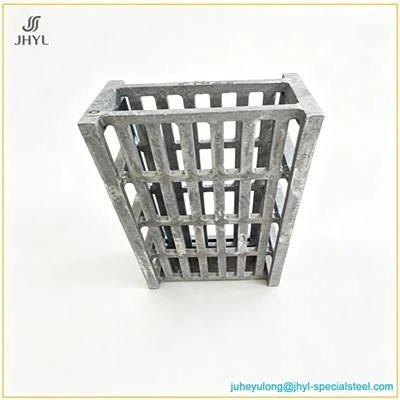
As core equipment in mining, metallurgy, building materials, and other industries, the cast wear parts of crushers-such as jaw plates, concave liners, mantle liners, and hammers-directly determine the operational efficiency and maintenance costs of the entire machine. Given the extremely harsh service environment, these components are continuously subjected to high-intensity impact, compression, and abrasive wear, making material selection a critical technical consideration.
Among the various wear-resistant materials, high manganese steel occupies a dominant position due to its unique work hardening characteristics. Austenitic high manganese steel, represented by ZGMn13, exhibits low initial hardness but excellent toughness. Under strong impact, its surface rapidly hardens, with hardness increasing from approximately HB200 to over HB500. This characteristic of "becoming harder with impact" makes it particularly suitable for key components in cone crushers and jaw crushers, especially when processing hard materials such as granite and basalt. However, when impact energy is insufficient, the work hardening mechanism cannot be fully activated, resulting in mediocre wear resistance.
For operating conditions where abrasion is the primary concern and impact is secondary, high chromium cast iron becomes an ideal choice. This type of material typically contains 12% to 26% chromium, with a microstructure featuring a large volume of high-hardness M7C3-type carbides, while the matrix achieves a tempered martensite structure through heat treatment, reaching an overall hardness of HRC60 or higher. Its resistance to abrasive wear significantly exceeds that of high manganese steel, making it widely used in components such as impact crusher blow bars and sand making machine wear parts. However, high chromium cast iron has relatively low toughness and is sensitive to impact loads, posing a risk of cracking under frequent heavy impacts from large materials.
Positioned between these two, low-alloy wear-resistant steel fills the performance gap. By incorporating alloying elements such as chromium, molybdenum, and nickel, followed by quenching and tempering, this material develops a tempered martensite or bainite structure, achieving a favorable balance between hardness and toughness. Its well-rounded mechanical properties make it suitable for crushing medium-hard materials and for complex conditions where both impact and abrasion are present.
In practical applications, no single material can address all crushing scenarios. High manganese steel excels in impact resistance, high chromium cast iron specializes in wear resistance, and alloy steel offers a compromise between the two. Reasonable material selection requires comprehensive consideration of material hardness, feed size, crusher type, and impact energy levels. As equipment continues to scale up and operating conditions grow more complex, technologies such as composite casting, bimetallic composites, and precise microstructure control are emerging as key development directions. The fundamental goal remains the pursuit of a better balance within the enduring trade-off between hardness and toughness.