The material designated as 1.4823, also known by its EN chemical designation GX40CrNiSi27-4, is a well-established grade of heat-resistant cast steel that plays a vital role in numerous industrial applications involving elevated temperatures. This numeric designation, following standards such as EN 10295, provides a clear reference to a material engineered to withstand the harsh conditions of high-temperature environments. It offers a specific combination of oxidation resistance, mechanical strength, and structural stability that makes it indispensable in sectors ranging from petrochemicals to industrial furnace construction and heat treatment facilities. The material is particularly valued for applications operating above 600 degrees Celsius, with a maximum service temperature of up to 1100 degrees Celsius in oxidizing atmospheres, though this can vary significantly depending on the specific environmental conditions .
The exceptional performance of 1.4823 is fundamentally rooted in its carefully balanced chemical composition. The specification mandates a carbon range of 0.30 to 0.50 percent by weight. This level of carbon is crucial for providing the material with adequate strength and creep resistance at high temperatures, ensuring that components maintain their structural integrity under prolonged mechanical stress. The most defining characteristic of this steel is its high chromium content, specified between 25.0 and 28.0 percent. This substantial presence of chromium is the primary reason for the steels outstanding resistance to oxidation and corrosion at elevated temperatures. When exposed to oxidizing atmospheres at elevated temperatures, chromium promotes the formation of a dense, adherent, and stable chromium oxide layer on the surface. This layer acts as a protective barrier, effectively shielding the underlying metal from further attack by oxygen, sulfur, and other corrosive combustion gases, thus preventing scaling and material degradation. Silicon, present in the range of 1.0 to 2.5 percent, works in synergy with chromium. It not only enhances the fluidity of the molten steel during the casting process but also contributes to the formation of a more effective and protective oxide scale, further bolstering the materials resistance to high-temperature oxidation. The nickel content, specified between 3.0 and 6.0 percent, is equally important as it promotes the formation of an austenitic microstructure, which provides improved high-temperature strength, better ductility, enhanced resistance to thermal fatigue, and superior performance in demanding environments compared to fully ferritic grades. Other elements are kept to controlled maximums to maintain the integrity of the base alloy. Manganese is limited to a maximum of 1.5 percent, and both phosphorus and sulfur are restricted to low levels, typically a maximum of 0.040 percent and 0.030 percent respectively, to ensure good castability and prevent issues like hot cracking. Molybdenum may also be present but only in residual amounts, with a maximum limit of 0.5 percent .
The mechanical properties of 1.4823 reflect its austenitic nature and its suitability for high-temperature service. Standard specifications define minimum values obtained from separately cast test pieces at room temperature to ensure quality and consistency. The yield strength, representing the stress at which the material begins to deform plastically, is typically specified with a minimum value of 250 megapascals, though some sources report values around 175 to 290 megapascals depending on the specific heat treatment condition. The tensile strength, representing the maximum stress the material can withstand before fracturing, is generally required to be at least 550 megapascals, with reported values ranging from 547 to 620 megapascals. Ductility, measured by the percentage of elongation after fracture, is specified with a minimum of 3 to 4 percent, though some sources indicate elongation values around 41 percent for reduction in cross-sectional area. The hardness of the material, often measured using the Brinell method, typically ranges around 180 to 232 HBW depending on the casting condition and any applied heat treatments. The elastic modulus is approximately 200 gigapascals, and the shear modulus is around 79 gigapascals. It is critical to note that these room-temperature properties, while useful for quality control, are not the primary design parameters for high-temperature applications. In service, the materials performance is governed by its resistance to creep, its ability to withstand stress over long periods at high temperatures without progressive deformation, and its long-term microstructural stability .
Physical properties further define the suitability of 1.4823 for its intended applications. Its density is approximately 7.6 grams per cubic centimeter, which is typical for high-alloy austenitic cast steels and essential for calculating the weight of cast components and for design purposes. Thermal properties are particularly important for components subjected to thermal cycling and high heat fluxes. The material exhibits a mean coefficient of thermal expansion of approximately 13 micrometers per meter per Kelvin, which is characteristic of austenitic steels and must be carefully considered in design to manage thermal stresses and ensure proper clearances between moving or adjacent parts. Thermal conductivity is approximately 16.7 to 17 watts per meter per Kelvin at room temperature, influencing temperature gradients within a component during heating and cooling. The specific heat capacity is approximately 490 to 500 joules per kilogram per Kelvin. The material exhibits a melting range with solidus around 1360 degrees Celsius and liquidus around 1400 degrees Celsius. A crucial specification for this material is its maximum service temperature. 1.4823 is rated for continuous operation up to 1100 degrees Celsius in oxidizing atmospheres, making it suitable for demanding high-temperature applications where both oxidation resistance and mechanical strength are required. However, this temperature limit applies specifically to clean air environments; in other atmospheres, such as reducing or sulfur-bearing conditions, the maximum use temperature may be significantly lower .
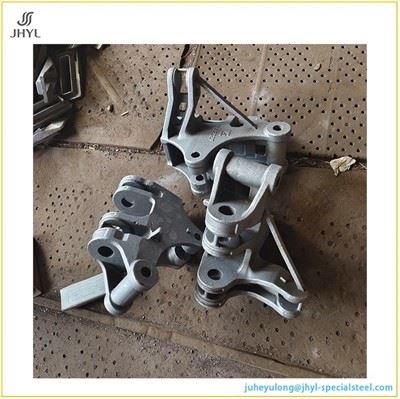
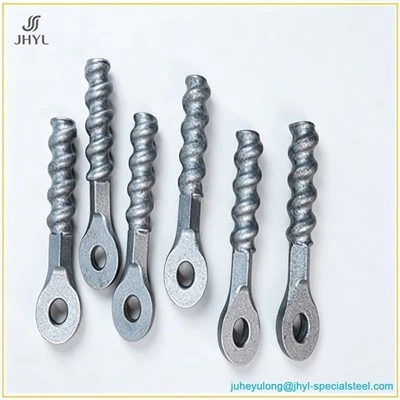
As a cast steel, 1.4823 is typically shaped into finished or near-finished components through various foundry processes. The G in its EN chemical designation emphasizes that its properties are optimized for the as-cast condition, though the material can also be supplied in solution-annealed or other heat-treated conditions depending on application requirements. This allows for the production of complex geometries such as furnace grids, hangers, radiant tube components, burner nozzles, tube support plates, and other intricate parts used in high-temperature equipment. These shapes would be difficult or impossible to fabricate through wrought processes like forging or rolling. The material is particularly valued for its application in annealing and heat treatment lines, where it is used for grids, fixtures, baskets, and rollers that must withstand high gas temperatures and creep loads. In petrochemical heaters, it serves for burner tiles, nozzles, and brackets where oxidation resistance and thermal cycling performance are critical. A significant consideration for this material is its castability. As a high-alloy heat-resistant steel grade, 1.4823 requires tight control over melting, feeding, and solidification processes. High chromium and silicon content raise the liquidus temperature and increase the risk of hot cracking. The nickel-rich austenitic matrix improves toughness but can also retain gas more easily if foundry practice is not carefully controlled. Proper casting simulation, gating system design, and heat treatment procedures are essential to produce sound castings free from defects like hot tears, shrinkage porosity, or gas porosity .
The selection of 1.4823 for a particular application is driven by its superior combination of high-temperature oxidation resistance, mechanical strength, and resistance to thermal cycling. One of its primary areas of use is in the construction of industrial furnaces and heat treatment equipment for various industries. It is commonly employed to fabricate components that must endure not only high temperatures but also mechanical loads and thermal cycling. The materials combination of strength, oxidation resistance, and thermal fatigue resistance makes it ideal for such tasks. In the petrochemical and refining industries, 1.4823 is used for components that require stability in high-temperature hydrocarbon processing environments. The material exhibits good resistance to oxidizing atmospheres, making it valuable in applications where gas compositions are predominantly oxidizing. Furthermore, it finds applications in various other high-temperature industrial processes including tunnel and shuttle kilns for rails and skid blocks, as well as in cement production, mineral processing, and waste incineration where combined oxidation resistance and mechanical strength are required. In waste and biomass incineration applications, however, where hot abrasion from solids and ash is a primary concern, other grades with higher carbon content may be preferred over 1.4823 .
When compared to other heat-resistant grades, 1.4823 occupies a specific niche within the family of austenitic heat-resistant cast steels. It belongs to the group of materials that bridge the gap between lower-alloy ferritic grades and fully austenitic grades with higher nickel content. Compared to ferritic grades like 1.4743, which contains approximately 18 percent chromium and 1.6 percent carbon, 1.4823 offers superior high-temperature capability up to 1100 degrees Celsius compared to 900 degrees Celsius, better oxidation resistance due to higher chromium content, and improved toughness from its austenitic structure. However, the ferritic 1.4743 offers higher hardness and better resistance to abrasive wear from solids and ash due to its much higher carbon content. Compared to higher-nickel austenitic grades such as 1.4848, which contains approximately 25 percent chromium and 20 percent nickel, 1.4823 offers a more cost-effective solution in applications where the ultimate in high-temperature strength and corrosion resistance is not required. Its lower nickel content makes it more economical while still providing good oxidation resistance and mechanical stability up to 1100 degrees Celsius. The relevant international standards provide comprehensive guidance on the properties and applications of different heat-resistant cast steel grades, allowing engineers to make informed comparisons based on specific service conditions, weighing factors such as temperature, atmosphere composition, mechanical loads, and economic considerations .
In conclusion, 1.4823 is a proven and reliable heat-resistant cast steel whose value lies in its robust combination of high chromium content for oxidation resistance and sufficient nickel addition to provide an austenitic structure with enhanced mechanical properties. Its carefully specified chemical composition ensures the formation of a protective oxide layer that guards against high-temperature corrosion, while the austenitic microstructure provides improved strength and thermal fatigue resistance. As a casting alloy, it offers design flexibility for producing complex, durable parts that must withstand the combined effects of heat, stress, and oxidizing atmospheres in demanding industrial environments. While it may not possess the extreme wear resistance of higher-carbon ferritic grades or the ultimate high-temperature strength of higher-nickel austenitic grades, its excellent performance-to-cost ratio and its proven track record in furnace construction, heat treatment equipment, and petrochemical applications ensure its continued and essential use. For engineers and designers tasked with selecting materials for high-temperature service up to 1100 degrees Celsius, understanding the specific properties and capabilities of 1.4823 is key to specifying a material that will deliver safe, long-lasting, and economical performance. Its formal recognition in international standards like EN 10295 solidifies its status as a valuable workhorse material in the field of high-temperature engineering .