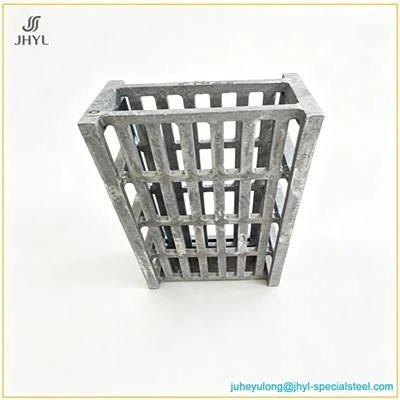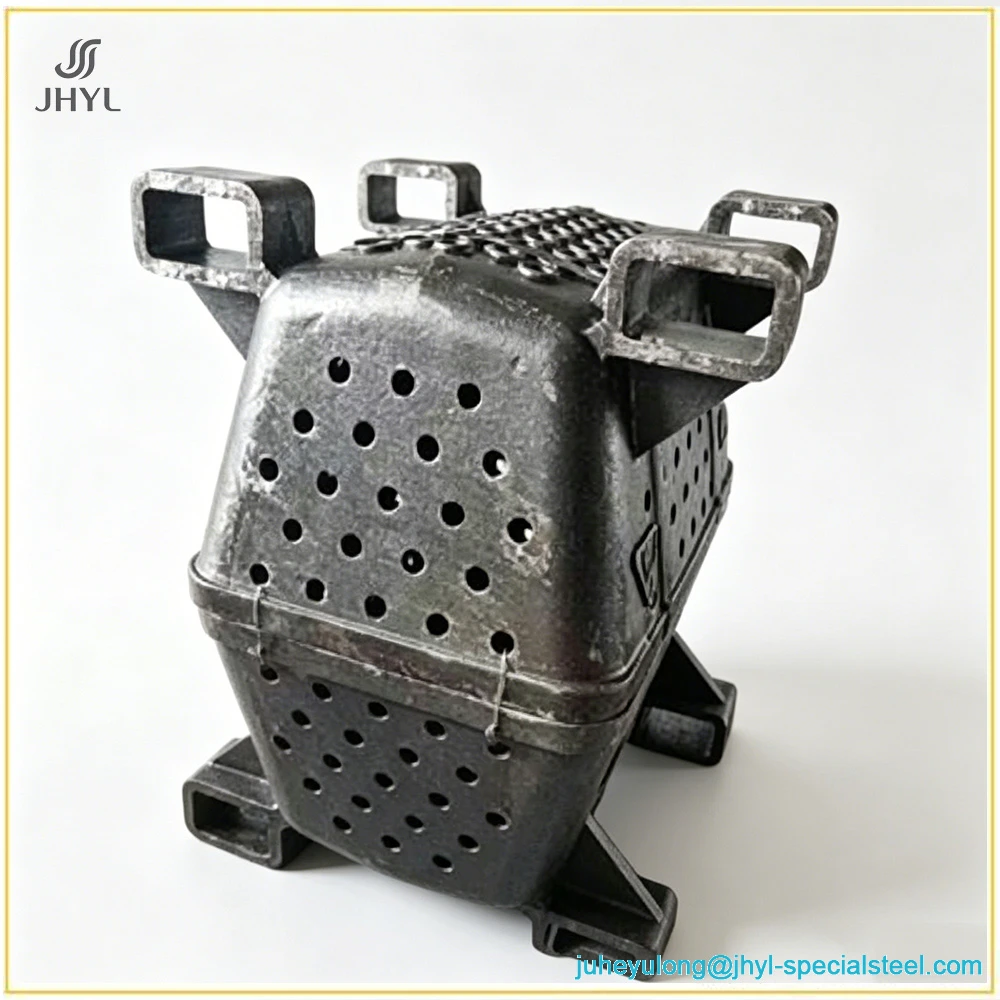
In industrial production, a material basket must not only support loading and handling operations but may also be exposed to high temperatures. For example, during metal heat treatment, industrial furnace heating, and casting processes, baskets may need to enter heating equipment together with the workpieces and be reused throughout different production stages. Therefore, the material used to manufacture a basket directly affects its performance. Heat-resistant steel is an important material for industrial baskets because of its ability to withstand suitable high-temperature working environments.
First, heat-resistant steel offers good high-temperature resistance. Ordinary steel may experience reduced strength, increased oxidation, or structural changes when exposed to sustained high temperatures. Suitable heat-resistant steel can maintain better material performance under the corresponding working conditions. This allows a Heat-Resistant Steel Material Basket to work with industrial furnaces and heat treatment equipment while carrying materials in high-temperature environments.
Second, heat-resistant steel provides resistance to oxidation. Under high-temperature conditions, metals can react with oxygen in the air, gradually forming oxide layers on their surfaces. The oxidation resistance of the material affects the performance of a basket during high-temperature operations. Heat-resistant steel generally uses an appropriate combination of alloying elements to improve its performance in high-temperature oxidizing environments, helping reduce the adverse effects of oxidation on the basket structure.
Third, heat-resistant steel helps maintain the structural stability of a material basket. During actual use, an industrial basket must support not only its own weight but also the weight of the loaded materials and forces generated during handling. If the basket is prone to significant deformation under high temperatures, it may affect material placement, loading, unloading, and subsequent use. Selecting suitable heat-resistant steel helps improve the structural stability of the basket under high-temperature working conditions.
In addition, heat-resistant steel is suitable for production environments involving repeated heating. Many industrial heat treatment processes are not one-time operations. Instead, baskets may need to enter heating equipment repeatedly as production continues. During heating and cooling, the basket experiences temperature changes, so its material must be capable of adapting to the relevant thermal cycling conditions. Depending on the material type and operating environment, heat-resistant steel can meet the requirements of various high-temperature applications.
Heat-resistant steel also offers good manufacturing flexibility for industrial applications. Manufacturers can process the material through cutting, welding, and structural assembly to produce industrial baskets suitable for loading and handling different materials. With an appropriate structural design, a basket can provide a practical balance between loading space, structural support, and ease of material access.
In the metal heat treatment industry, Heat-Resistant Steel Material Baskets are commonly used to hold workpieces awaiting processing. In the casting industry, they can support relevant high-temperature manufacturing operations. In mechanical manufacturing, they are useful for centralized loading and material transfer between production stages. All these applications place specific demands on the high-temperature performance of the basket material.
It is important to note that different types of heat-resistant steel have different characteristics in terms of high-temperature performance, oxidation resistance, and suitable operating environments. Actual performance also depends on factors such as working temperature, heating duration, material weight, temperature change frequency, and operating conditions. Therefore, the steel material should be selected according to the actual production requirements.
Overall, material baskets are made of heat-resistant steel primarily to meet industrial requirements for material performance and structural stability under high-temperature conditions. With appropriate material selection and structural design, a Heat-Resistant Steel Material Basket can better support industrial heating, heat treatment, and related material handling operations.