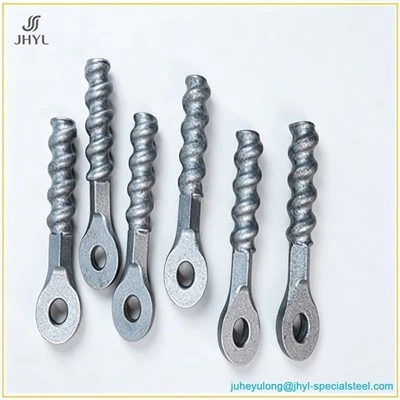
Alloy Steel Forged Rings may develop a certain amount of surface wear during long-term operation due to friction, mechanical loads, vibration, and environmental conditions. Minor and relatively uniform wear does not necessarily mean that the product can no longer be used. However, if the wear rate increases significantly, localized wear becomes severe, or abnormal surface damage appears, the condition should be inspected and addressed promptly to prevent the problem from becoming more serious.
When surface wear is discovered, the first step is to observe the specific condition of the worn area. Check whether the wear is uniform or concentrated in a particular location, and look for obvious scratches, dents, peeling, or other abnormal surface conditions. If the wear is relatively minor and uniform, further maintenance can be considered according to the actual operating condition of the equipment. If localized wear is present, however, the installation and mating conditions should be examined more carefully.
The lubrication condition of the Alloy Steel Forged Rings should also be checked. In applications involving relative movement, insufficient lubrication can significantly increase friction between contact surfaces and accelerate material loss. If insufficient lubrication is identified, the relevant area should be cleaned before appropriate lubrication is applied according to the actual equipment conditions. Care should also be taken to prevent dust, metal particles, and other contaminants from entering the friction area, as they can further accelerate surface wear.
Installation is another important factor to inspect. If an Alloy Steel Forged Ring is not installed correctly or is misaligned with other mechanical components, the mechanical load may become unevenly distributed. During long-term operation, areas subjected to higher loads may experience significantly more wear than other areas. Therefore, if wear is concentrated on one side or in a particular area, the installation position and mating condition of the related components should be checked.
The condition of the mating components should also be examined. If another mechanical component that contacts the Alloy Steel Forged Ring has already developed severe wear, surface damage, or operating deviations, the original contact relationship may change, causing abnormal wear of the ring. Therefore, simply replacing or servicing the ring without addressing problems in the mating components may not solve the underlying issue.
For equipment operating in environments containing significant amounts of dust, sand, metal particles, or other contaminants, it is also important to determine whether these materials have entered the working area of the Alloy Steel Forged Ring. Contaminants trapped between contact surfaces can act as abrasive particles, creating scratches and accelerating wear. In such environments, regular cleaning and inspection should be strengthened to reduce the accumulation of contaminants.
If the Alloy Steel Forged Ring has only minor surface wear and there are no obvious cracks, deformation, or operating abnormalities, appropriate lubrication, cleaning, and regular inspection may be sufficient, depending on the actual condition. However, if severe wear, obvious deformation, cracks, surface peeling, abnormal noise, or significant vibration is present, the issue should not be ignored. The equipment should be stopped when necessary and the relevant components should be inspected further.
Therefore, when surface wear appears on Alloy Steel Forged Rings, the decision to continue using or replace the component should not be based solely on the visible wear. The extent of wear, lubrication condition, installation, mating components, and working environment should all be considered. Identifying the underlying cause and taking appropriate corrective measures can help prevent further damage and maintain stable equipment operation.