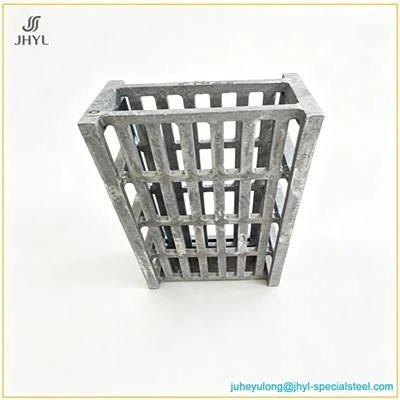
As core outputs of modern precision‑forging processes, Fast Forging Components are indispensable fundamental parts for high‑end industrial‑equipment systems, widely adopted in key sectors including aerospace, new‑energy vehicles, wind‑power equipment and construction machinery. Their core values lie in upgrading equipment performance, safeguarding operational safety, prolonging service life and optimizing working‑condition adaptability, forming vital support for quality improvement and efficiency gains within high‑end manufacturing. From a material‑property perspective, fast forging applies controllable high‑frequency, high‑speed forging force to drive uniform plastic deformation in metal blanks. It thoroughly reshapes internal grain arrangements of raw metal stock, eliminates inherent defects such as porosity, blowholes, segregation and microcracks present in cast or rolled blanks, produces finer, more regularly oriented metal grains, and aligns metal‑fiber flow lines to fully match component stress contours. This fundamentally enhances material mechanical properties - a core advantage unavailable in parts produced via conventional forming methods.
In equipment operation, Fast Forging Components mostly fulfill critical roles including load bearing, power transmission, pressure resistance and impact resistance. Typical examples include automotive crankshafts, wind‑power main shafts, aerospace landing‑gear structural parts and construction‑machinery pin shafts, all manufactured through fast forging. These components operate continuously under harsh service conditions: heavy loads, alternating stress, high‑frequency vibration, and fluctuating high‑low temperatures. Parts from traditional forming techniques are prone to fatigue fracture, deformation failure, and stress‑concentration‑induced damage. By contrast, Fast Forging Components deliver outstanding comprehensive mechanical properties, stably sustaining intense continuous loads, greatly reducing unexpected‑failure probabilities during equipment operation, and ensuring continuous, safe and stable operation of complete equipment sets.
From a structural‑design perspective, fast forging enables integral forming of complex structures without segmented casting or welding‑splicing conventional machining workflows. It fully eliminates structural weaknesses such as welding seams, splicing‑induced stress concentration and weld brittleness, and greatly improves overall structural integrity and rigidity of components. These integral‑forming advantages prevent component separation and cracking under extreme impact and heavy extrusion, substantially raising equipment safety redundancy. Meanwhile, precisely controlled fast forging achieves near‑net shaping with high dimensional accuracy and small machining allowances, perfectly satisfying assembly requirements for precision‑grade equipment and matching the development trend of miniaturization, lightweight design and high precision for high‑end hardware.
For industrial applications, Fast Forging Components effectively offset performance shortcomings of conventionally formed parts and resolve long‑standing industry pain points: reliance on imported core high‑end equipment components, insufficient performance and short service cycles. By consistently delivering high‑performance, highly consistent forged parts, they supply critical component‑level support for domestic substitution and technical upgrading of strategic industries such as new‑energy and aerospace high‑end‑equipment manufacturing. They also cut downstream equipment operation‑and‑maintenance costs and mitigate production‑halt losses, delivering safety‑related, economic and industrial value, and forming an essential foundation for modern industry's progression toward high‑end, precise and reliable operation.