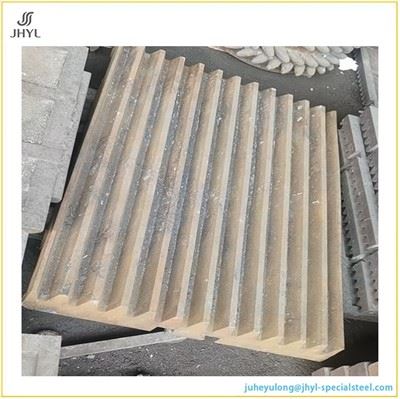
A High Manganese Steel Jaw Plate is subjected to repeated impact, compression, and friction during prolonged operation in a jaw crusher. Although gradual wear is expected during normal use, the appearance of cracks requires prompt investigation because cracks may compromise the structural integrity of the component and expand under continued loading. High manganese steel has a degree of toughness, but this does not mean that it is immune to cracking under all operating conditions. Common causes include abnormal loading, installation problems, material condition, and equipment operating abnormalities.
First, abnormal impact may cause cracks in a High Manganese Steel Jaw Plate. During jaw crusher operation, the plate repeatedly experiences impact from incoming materials. If the feed contains oversized pieces that exceed the crusher's intended capacity, or foreign objects such as metal debris that are unsuitable for crushing, the jaw plate may experience sudden loads beyond normal operating conditions. These loads can create high localized stress, potentially leading to cracks or other forms of damage.
Second, prolonged equipment overloading can increase the risk of cracking. Excessive feeding, blockages in the crushing chamber, or operation outside the equipment's intended conditions may cause the jaw plate to withstand abnormal loads over an extended period. Continued operation under unsuitable conditions can accelerate normal wear and allow localized damage to develop further. Feed quantities should therefore be managed according to the equipment instructions, and blockages or abnormal operating conditions should be addressed promptly.
Improper installation is another important factor. If the contact surfaces are uneven, the fastening components are loose, or the jaw plate is misaligned, the plate may experience uneven loading during operation. Certain areas may be subjected to persistent localized stress, creating stress concentrations that increase the likelihood of crack initiation or propagation. Before installation, the jaw plate and its mounting surfaces should be inspected to ensure proper contact, and all fastening components should be secured as instructed.
Material quality and heat treatment can also affect crack resistance. The toughness and work-hardening characteristics of high manganese steel depend on factors such as chemical composition, casting quality, and heat treatment. If internal defects are present or the material structure and properties are unsuitable, the jaw plate may be more susceptible to localized damage during use. However, the cause of a crack cannot usually be determined from its appearance alone. A proper assessment should consider the crack's location and shape, the component's operating history, and the results of any necessary professional inspection.
In addition, the operating condition of the crusher can influence the loads experienced by the jaw plate. Abnormalities in the movable jaw mechanism, supporting components, or fastening system may cause unstable movement or uneven loading, increasing localized stress. Unusual vibration, abnormal noise, or loose mounting components should be investigated promptly in accordance with the equipment's operating procedures.
In summary, cracks in a High Manganese Steel Jaw Plate may be caused by abnormal impact, equipment overloading, improper installation, material condition, or operating abnormalities. Prompt detection, investigation of the underlying cause, and appropriate corrective action help prevent further damage and maintain safe crusher operation.