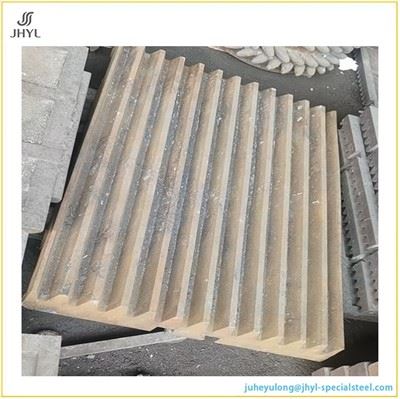
Both High Manganese Steel Jaw Plates and regular steel jaw plates can be used as wear-resistant components in crushing equipment. However, they may differ in material composition, mechanical properties, wear mechanisms, and suitable operating conditions. Selecting an appropriate jaw plate material affects not only component service life but also equipment stability and maintenance planning.
First, the two types of jaw plates differ in material composition. High manganese steel is a category of alloy steel characterized by its relatively high manganese content. With appropriate heat treatment, it can exhibit good toughness and work-hardening characteristics. Regular steel jaw plates may be manufactured from different types of carbon steel or other steel materials. Their performance depends on the specific composition, manufacturing process, and heat treatment. Therefore, the strength, hardness, and wear resistance of a jaw plate cannot be determined solely by describing it as regular steel.
Second, a major characteristic of a High Manganese Steel Jaw Plate is its ability to work-harden. During jaw crusher operation, the plate surface is repeatedly subjected to impact, compression, and friction from the feed material. Under suitable working conditions, the surface layer of high manganese steel may gradually harden, increasing its local hardness and resistance to wear. At the same time, the interior can retain a degree of toughness, helping the plate withstand impact loads generated during crushing. This combination of properties makes high manganese steel suitable for certain crushing applications involving significant impact.

By comparison, the wear resistance and impact resistance of a regular steel jaw plate depend on its specific material type and processing condition. Some steels can achieve high hardness through heat treatment. However, if the balance between hardness and toughness is unsuitable for the actual operating conditions, the material may be more vulnerable to impact damage. On the other hand, properly designed and processed alternative steels may perform well in specific crushing environments. Therefore, it is not accurate to assume that high manganese steel is superior under every operating condition.
Regarding suitable applications, High Manganese Steel Jaw Plates are commonly used in crushing operations involving substantial impact loads, including the primary crushing of certain ores and rocks. Under these conditions, appropriate impact helps activate the material's work-hardening characteristics. If the operating environment produces insufficient impact, the surface may not harden adequately, and the expected wear-resistance benefits may not be fully realized.
Regular steel jaw plates should likewise be selected according to their specific material properties and operating conditions. Certain steels may meet the requirements of applications involving lower impact levels or other specialized performance requirements. The final selection should consider feed characteristics, crushing methods, loading conditions, and maintenance requirements rather than relying on the material name alone.
In summary, the main advantages of a High Manganese Steel Jaw Plate are its ability to work-harden under suitable impact conditions and its combination of toughness and wear resistance. Regular steel jaw plates encompass a broader range of materials, and their performance depends on the specific steel grade and processing method. Businesses should select the appropriate material according to actual crushing conditions rather than relying solely on the material name.