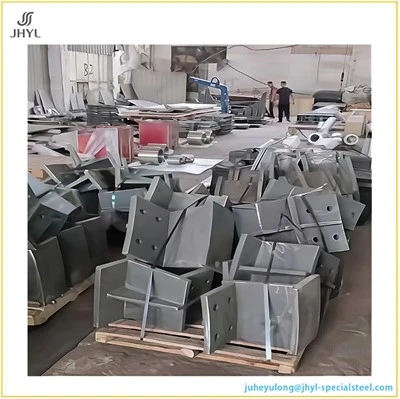
The service life of Crusher Wear‑Resistant Liner is not a fixed value. It is jointly affected by material characteristics, working‑condition loads, product quality and equipment maintenance. Service‑life gaps under different operating conditions can reach several times. Understanding relevant influencing factors helps optimize application schemes, prolong liner service cycles and reduce production‑maintenance costs. Mechanisms of each key factor are explained as follows.
Material property constitutes the primary objective influencing factor. Hardness, abrasiveness, moisture and impurity content of feed materials directly govern wear speed. Harder rock exerts stronger compressive and abrasive force on liners. Highly abrasive ores such as iron ore and basalt quickly wear down liner teeth and surfaces, while soft materials including limestone and coal generate far milder wear. Impurities such as quartz sand, metallic fragments and hard rock chunks aggravate frictional loss and impact damage. Besides, wet and clay‑rich feedstock sticks to liner surfaces and causes adhesive wear, accelerating material degradation and shortening usable time.
Operational load and working modes also exert major influences. Feed rate, lump‑size distribution, daily running hours and crushing technologies affect liner consumption. Larger feed lumps generate stronger impact force and may cause tooth chipping and deformation. Sustained over‑feeding keeps liners working beyond designed load limits and accelerates fatigue wear. Non‑stop 24‑hour continuous operation accumulates material fatigue without intermittent relaxation compared with periodic operation. Improper process configuration, for example applying fine‑crushing liners to coarse‑crushing tasks, will bring about rapid liner failure and scrapping.
Liner material grade and production technology lay the foundation for service performance. The market supplies liners of uneven quality. Inferior products use recycled scrap steel and primitive smelting techniques, containing abundant impurities, uneven hardness and insufficient toughness with internal pores and hidden cracks, which result in fast wear and fracture during operation. Qualified Crusher Wear‑Resistant Liner uses high‑purity alloy raw materials and undergoes water‑toughening, quenching and tempering to achieve dense metallographic structure and balanced hardness‑toughness performance. Different materials show distinct durability. Plain‑carbon‑steel liners have the shortest lifespan. High‑manganese‑steel variants suit coarse‑crushing tasks, and high‑chromium‑alloy liners fit impact‑crushing scenarios. Material and craftsmanship quality fundamentally determine baseline service life.
Human‑controlled installation, operation and daily maintenance are critical variables. Poor fitting, loose fastening bolts and misalignment during mounting create uneven force distribution, resulting in localized excessive abrasion, cracking or detachment. Operator mistakes such as feeding uncrushable iron scraps cause direct heavy impact and liner breakage. Lack of routine inspection, neglected bolt tightening, accumulated chamber debris and delayed replacement of worn‑out liners aggravate wear and may even damage host equipment. Correct installation, standardized operation and periodic maintenance can extend liner service life by more than 30 percent.
Secondary elements including machine rotational speed and chamber clearance settings also produce minor effects. Excessive rotating speed and too‑small clearance intensify friction between rock and liner. High‑dust and corrosive surroundings speed up material aging. Operators should coordinate multiple variables in daily practice to maximize the working value of Crusher Wear‑Resistant Liner.