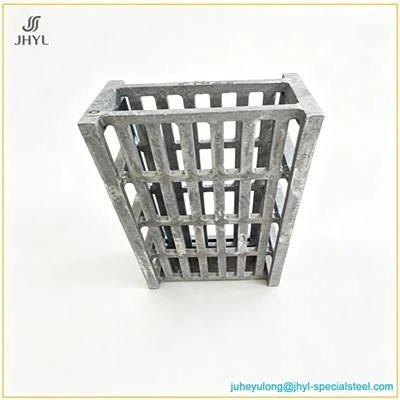
Investment casting, often referred to as the lost wax process, stands as one of the oldest and most sophisticated metal forming techniques still in widespread use today. This manufacturing method has evolved from ancient artisanal practices into a cornerstone of modern industrial production, enabling the creation of complex metal components with exceptional precision and surface quality. From aerospace turbine blades to medical implants and automotive parts, investment casting plays a vital role in delivering high-performance components that would be difficult or impossible to produce through other means.
The fundamental principle behind investment casting is elegantly simple yet remarkably effective. A disposable pattern, traditionally made of wax, is created in the exact shape of the desired final part. This pattern is then coated or invested with a refractory ceramic material to form a mold. Once the ceramic has hardened, the pattern is melted and drained away, leaving behind a cavity that precisely replicates the original pattern. Molten metal is poured into this cavity, and after solidification, the ceramic shell is broken away to reveal a finished casting that requires minimal additional processing.
The history of investment casting stretches back thousands of years, with evidence of its use found in ancient Egypt, Mesopotamia, and the Indus Valley civilization where artisans created intricate jewelry and bronze sculptures. These early metalworkers discovered that by modeling a form in beeswax, coating it with clay, and heating the assembly, they could produce detailed metal objects that captured the finest details of their original design. The process remained primarily an artistic technique for centuries, used by sculptors and goldsmiths throughout history, including the great artists of the Renaissance who employed it to cast bronze statues.
The transformation of investment casting from an artistic method to an industrial manufacturing process occurred during World War II when the demand for precision components for military aircraft outstripped the capabilities of traditional machining. The need for complex turbine blades and other critical parts led to the adaptation of investment casting for high-volume production, and the modern investment casting industry was born. Since then, continuous advancements in materials, equipment, and process control have expanded its capabilities and applications enormously.
The investment casting process begins with the creation of a wax pattern. For production runs, a metal die is machined with the negative shape of the desired component, and wax is injected into this die under pressure to form a precise replica. The die must be carefully designed to account for the multiple shrinkages that will occur throughout the process, including the contraction of the wax as it cools, the expansion and contraction of the ceramic shell during firing, and the solidification shrinkage of the molten metal. For prototype or low-volume production, patterns can also be created directly through 3D printing or rapid prototyping technologies, eliminating the need for expensive tooling.
Once the wax patterns are produced, they are assembled onto a central wax sprue to form a tree-like structure. This assembly allows multiple castings to be produced in a single cycle, significantly improving efficiency and reducing costs. The wax components are attached using heated tools that melt the wax locally to create strong bonds, ensuring the assembly remains intact through subsequent handling and processing.
The assembled wax tree then undergoes the investment or shell building stage. The tree is first cleaned to remove any contaminants and then dipped into a liquid ceramic slurry. This slurry typically consists of fine refractory particles such as fused silica, zircon, or alumina suspended in a binder, often colloidal silica. After the initial dip, the wet assembly is coated with fine ceramic sand or stucco to build thickness and strength. This sequence of dipping and stuccoing is repeated multiple times, usually between five and ten layers, until a sufficiently robust ceramic shell has been built around the wax tree. Each layer must be thoroughly dried before the next is applied, a step that can take several hours or days depending on environmental conditions and the specific materials used.
After the ceramic shell has been built and fully dried, it moves to the dewaxing stage. The assembly is placed in a high-pressure steam autoclave or a flash firing furnace where intense heat is rapidly applied. The wax melts and flows out of the ceramic shell, leaving behind a hollow cavity that precisely replicates the shape of the original wax patterns. This step gives the process its traditional name lost wax, as the wax pattern is sacrificed to create the mold. The recovered wax can often be reconditioned and reused for future patterns, contributing to the sustainability of the operation.
The hollow ceramic shell is then fired in a kiln at temperatures typically reaching 1000 to 1100 degrees Celsius. This firing serves multiple critical purposes it burns away any residual wax that may remain in the shell, it sinters the ceramic particles together to give the mold its final mechanical strength, and it preheats the mold in preparation for receiving molten metal. The firing process transforms the relatively fragile green shell into a rigid, thermally stable mold capable of withstanding the intense heat and pressure of the casting operation.
With the mold prepared and preheated, the actual casting takes place. Molten metal of the desired alloy is prepared in a furnace, with careful attention paid to composition, temperature, and cleanliness. The preheated ceramic shell is transferred to the casting station, and the metal is poured into it. Pouring may be accomplished through simple gravity for many applications, but for more complex parts or reactive alloys, specialized techniques such as vacuum casting or centrifugal casting are employed to ensure complete filling of intricate cavities and to prevent contamination or porosity. The preheated mold offers the important advantage of allowing the molten metal to flow more easily into thin sections and fine details without prematurely solidifying, ensuring faithful reproduction of the pattern geometry.
After pouring, the filled molds are allowed to cool, and the metal solidifies within the ceramic cavities. Cooling rates must be carefully controlled for some alloys to achieve desired microstructures and mechanical properties. Once solidification is complete and the metal has cooled sufficiently, the ceramic shell is no longer needed and is removed in the knockout operation. This is typically achieved through mechanical means such as vibration, hammering, or high-pressure water jets that break the brittle ceramic away from the metal tree. The individual castings are then separated from the central sprue using abrasive saws, plasma torches, or other cutting methods.
The separated castings enter the finishing department where remaining ceramic particles are removed through blasting with steel shot, sand, or water. Gates and risers where the metal entered the part are ground flush, and any minor surface imperfections are addressed. Depending on the requirements, castings may then undergo heat treatment to achieve desired mechanical properties such as hardness, strength, or ductility. For parts requiring extremely tight tolerances or features that cannot be cast directly, CNC machining is employed as a secondary operation to finish critical surfaces. Additional surface treatments such as plating, painting, or passivation may be applied to enhance corrosion resistance or appearance.
The unique capabilities of investment casting derive from several key characteristics of the process. Because the mold is formed around a smooth wax pattern and is destroyed to release the casting, there is no need for draft angles as required in permanent mold processes, allowing for truly parallel walls and complex internal geometries. The fine ceramic slurry reproduces the surface of the wax pattern with great fidelity, resulting in as-cast surface finishes that typically range from 125 to 250 microinches and can be even smoother for critical applications. This exceptional surface quality often eliminates the need for extensive machining, reducing both cost and production time. Dimensional tolerances are correspondingly tight, with typical linear tolerances of plus or minus 0.01 inches for dimensions up to one inch, making investment casting a true near-net-shape manufacturing process.
Perhaps the most significant advantage of investment casting is its remarkable material versatility. The process imposes no inherent metallurgical limitations and can accommodate virtually any metal that can be melted. This includes a comprehensive range of ferrous alloys such as carbon steels, low alloy steels including grades like 4140 and 4340, tool steels that are notoriously difficult to machine, and stainless steels spanning the austenitic 300 series and martensitic 400 series. For high-performance applications, investment casting is the preferred method for producing components from nickel-base and cobalt-base superalloys used in the hottest sections of jet engines, as well as vacuum-melted alloys containing reactive elements like titanium and aluminum that would oxidize if cast in air. Non-ferrous alloys are equally well represented, with aluminum alloys such as A356 and A357 being widely used for their excellent castability and strength-to-weight ratio, along with copper-base alloys including various brasses and bronzes.
The applications that rely on investment cast components span virtually every sector of modern industry. Aerospace and defense represent some of the most demanding uses, with investment casting being essential for producing turbine blades with complex internal cooling passages, structural brackets, and components for aircraft engines and airframes that must withstand extreme temperatures and stresses. The automotive industry utilizes investment casting for turbocharger wheels, gearbox components, and rocker arms where precision and reliability are paramount. Medical technology benefits from the process through the production of orthopaedic implants, surgical instruments, and dental components that require biocompatible materials and intricate geometries. General industrial applications are equally extensive, including valve bodies, pump impellers, machinery components, and fittings for oil and gas exploration where corrosion resistance and mechanical strength are essential. Even the worlds of art and jewelry continue to rely on investment casting for creating detailed sculptures and precious metal pieces, maintaining the ancient connection to the process's origins.
While investment casting offers exceptional benefits, it is not without its considerations. The process involves higher initial costs than some alternative methods due to the need for metal dies to produce wax patterns, which can range from one thousand to ten thousand dollars or more depending on complexity. This makes investment casting most economically attractive for medium to high production volumes where the per-part savings from reduced machining can amortize the tooling investment, though low-volume runs are feasible using rapid prototyping techniques to create patterns directly without hard tooling. The process is also generally limited to smaller part sizes compared to sand casting, with most production focused on components weighing up to twenty pounds, although capabilities exist for significantly larger castings. The multiple steps involved, from pattern assembly to shell building and finishing, require skilled labor and careful process control to achieve consistent quality.
Modern investment casting continues to evolve through technological innovation. Solidification modeling software now allows engineers to simulate metal flow and cooling patterns in a virtual environment, identifying potential defects before any metal is poured. Rapid prototyping technologies, including 3D printed patterns, have revolutionized prototyping and low-volume production by eliminating the need for hard tooling and compressing lead times from weeks to days. Advanced ceramic formulations and automated shell building systems have improved process consistency and reduced production times. These developments ensure that investment casting remains not merely a historical curiosity but a dynamic and essential manufacturing technology. For engineers seeking to produce complex, high-quality metal components with excellent material properties and minimal waste, investment casting offers a proven pathway from concept to finished part, honoring an ancient legacy while meeting the most demanding requirements of modern industry.