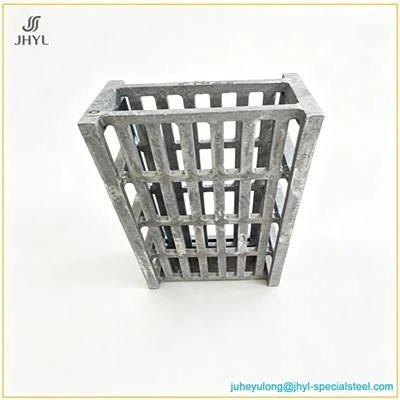
Alloy steel castings offer numerous advantages in high-temperature applications. They maintain excellent mechanical properties in high-temperature environments. Compared to ordinary steel, they exhibit a smaller decrease in strength and hardness, allowing them to withstand greater pressure and loads, and are less prone to deformation and fracture, ensuring stable operation of equipment under high-temperature conditions.
They possess excellent oxidation resistance. In high-temperature air, certain elements in the alloy steel, such as chromium, form a dense oxide film that prevents further oxygen penetration, slowing down the oxidation rate and extending the service life of the casting.
They also have good thermal fatigue resistance. During repeated thermal cycles, they can resist the effects of thermal stress, reducing the generation and propagation of cracks. This allows the castings to operate reliably in environments with frequent temperature changes. In high-temperature corrosive environments, alloy steel castings have a certain degree of corrosion resistance, resisting the erosion of some chemical substances and adapting to more complex working conditions.
Furthermore, alloy steel castings have good high-temperature stability. Their microstructure remains relatively stable at high temperatures, without significant phase transformations, ensuring consistent and reliable performance.