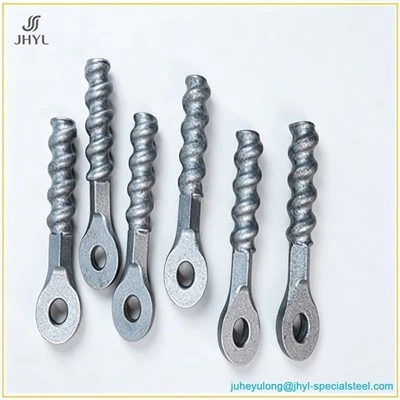
Whether Alloy Steel Casting Parts require lubrication mainly depends on their specific function within the equipment. If a component is used as a fixed support and does not experience relative movement or friction, it generally does not require dedicated lubrication. However, if Alloy Steel Casting Parts are installed in mechanisms involving rotation, sliding, oscillation, or other forms of relative movement, maintaining proper lubrication is generally important.
When relative movement occurs, friction is continuously generated between the contacting surfaces. If lubrication is insufficient for a long period, friction may increase and gradually cause surface wear. As wear accumulates, the original fit between the components may change and may eventually affect the operation of the entire equipment. Therefore, one of the main purposes of proper lubrication is to reduce direct friction between contacting surfaces.
Lubrication can also help reduce heat generated during operation. When components move continuously, friction produces a certain amount of heat. If lubrication is inadequate, increased friction may generate more heat, which can cause the temperature of the contact area to rise during prolonged operation. For equipment that operates continuously or has frequent movement, maintaining appropriate lubrication can help reduce the effects caused by friction.
However, more lubricant is not necessarily better. Excessive lubricant may cause unnecessary waste and can also attract dust, metal particles, and other contaminants. These contaminants may accumulate around the contact area and affect normal operation. In certain working environments, excessive lubricant may also affect the cleanliness of surrounding equipment. Therefore, an appropriate amount of lubricant should be maintained according to the actual structure and operating conditions.
The condition of the lubricant should also be checked regularly. If the lubricant becomes noticeably deteriorated, contaminated, dried out, or mixed with a significant amount of foreign matter, it should be cleaned and replaced or replenished as appropriate. In environments with high levels of dust, humidity, or corrosive media, lubrication areas may be more easily affected by external factors and therefore require closer attention.
The surrounding area should also be considered during lubrication. Before applying lubricant, dust and contaminants around the lubrication point should be removed whenever possible. This helps prevent foreign particles from entering the moving contact area together with the lubricant. For equipment operating continuously over long periods, a reasonable inspection and maintenance schedule should be established based on actual operating conditions rather than waiting until abnormal noise, sticking, or excessive wear occurs.
If Alloy Steel Casting Parts experience increased operating resistance, abnormal noise, localized heating, or accelerated wear, the lubrication condition should be checked. However, these symptoms are not necessarily caused by lubrication problems alone. They may also result from improper installation, wear, deformation, or other mechanical issues. Therefore, the actual cause should be determined based on the overall operating condition.
In general, proper lubrication is beneficial for Alloy Steel Casting Parts that operate under friction or relative movement. Appropriate lubrication practices can help reduce friction and wear and maintain stable operation. Selecting a suitable lubrication method, keeping lubrication areas clean, and regularly checking the lubrication condition can help reduce unnecessary wear and keep the components in good working condition.