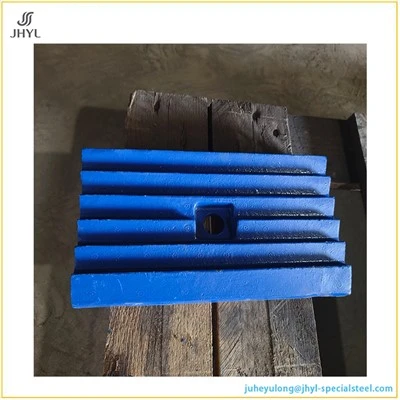
A coal pulverizer is a core piece of equipment in thermal power generation, coal chemical industry, and other fields. Its function is to grind raw coal into pulverized coal that can be efficiently burned in a boiler. The static and dynamic rings are key components that have a decisive influence on grinding efficiency, operational stability, and service life of the pulverizer. This article analyzes their structure, working principle, failure mechanisms, and technological development.
1.Basic Structure and Installation Position
The static and dynamic rings, also known as the stationary ring and the rotating ring, are the core components of the grinding zone of a coal pulverizer.
Static ring: Fixedly installed on the base or housing of the pulverizer, remaining stationary. It is usually an annular component with special tooth profiles or grooves.
Dynamic ring: Connected to the rotating part of the pulverizer, such as the grinding table or rotor, rotating at high speed together with it.
The two rings are assembled one above the other or inside and outside, leaving an adjustable gap. Coal particles are crushed in this gap.
2.Working Principle and Core Functions
The core function of the static and dynamic rings is to form an efficient grinding zone. The working principle is as follows.
Guidance and distribution: Raw coal from the coal feed pipe first lands on the rotating dynamic ring. Under centrifugal force, it is thrown toward the gap between the two rings. The teeth or grooves on the static ring guide the coal to ensure uniform entry into the grinding surface.
Initial crushing: Larger coal lumps are first subjected to strong compression and shearing when entering the narrow gap, undergoing initial crushing.
Grinding: This is the most critical step. As the dynamic ring continues to rotate, the coal in the gap is continuously crushed and sheared by the relative motion between the static and dynamic rings. This action, similar to a stone mill, continuously grinds the coal particles into fine powder.
Air mixing and transport: The pulverized coal is carried by hot drying air, escaping from the periphery of the rings and rising to a classifier for size separation. The qualified fine powder is discharged.
3.Main Failure Mechanisms and Challenges
The static and dynamic rings operate in a harsh environment of high temperature, high dust, and severe wear. Their failure is one of the most common faults in coal pulverizers.
Abrasive wear: This is the dominant failure mode. Coal, especially hard minerals such as quartz and pyrite, acts as an abrasive that continuously cuts and erodes the surface material, causing gradual wear, deformation, and loss of tooth profiles.
Fatigue cracks: Under periodic mechanical stress from impact loads and vibration, as well as thermal stress, micro cracks easily initiate at stress concentration points such as tooth roots and groove bottoms, gradually growing and possibly leading to fracture.
Erosion and corrosion: High velocity coal dust airflow causes erosion. Additionally, sulfur and moisture in coal can create a mildly corrosive environment at high temperatures, accelerating material loss through synergy with wear.
Consequences of performance degradation: After wear, the gap increases, grinding efficiency drops sharply, leading to reduced pulverizer output, higher power consumption, and insufficient coal fineness, directly affecting boiler combustion efficiency. Severe wear may increase vibration, threatening equipment safety.
4.Material and Manufacturing Technology Development
To cope with severe wear, materials and manufacturing techniques for static and dynamic rings have continuously evolved.
Traditional materials: Early designs used high manganese steel, wear resistant alloy steel, relying on hardness and toughness to resist wear.
Surface strengthening technologies: The current mainstream solution applies a hard wear resistant layer on a tough base material such as cast steel. Main processes include:
Hardfacing wear resistant beads: Depositing strip or mesh hardfacing beads of high chromium alloy on key areas to form a wear resistant framework.
Composite casting: Using bimetallic composite casting to achieve metallurgical bonding between the base material and the working layer, which is often made of extremely hard materials such as high chromium cast iron.
Wear resistant liner embedding: Prefabricated wear resistant alloy plates are bolted onto the base, allowing local replacement after wear.
Application of advanced ceramic materials: This is an important development direction. Wear resistant blocks or complete rings made of high performance ceramics such as alumina, zirconia toughened alumina, and silicon carbide offer extremely high hardness and wear resistance, far exceeding metals, greatly extending maintenance intervals. However, ceramics are brittle, requiring higher standards for installation and impact resistant design.
5.Maintenance and Selection Guidelines
Regular monitoring and adjustment: During operation, monitor pulverizer current, vibration, output, and coal fineness to indirectly assess wear. Periodically shut down for inspection and adjust the gap as specified.
Pair replacement: The static and dynamic rings form a friction pair. It is recommended to replace both at the same time to ensure the best grinding match and operational stability.
Scientific selection: Based on the abrasiveness index of the coal being ground, such as Hardgrove Grindability Index and mineral content, pulverizer type, and operating conditions, select the most economical wear resistant material and process. For highly abrasive coal, composite casting or ceramic materials should be given priority.
In summary, the static and dynamic rings of a coal pulverizer are critical components for coal grinding. Their performance directly affects the economy and reliability of the entire equipment. The core technical challenge is how to resist extreme wear. From wear resistant alloy steel to surface strengthening technologies and the emerging application of ceramic materials, technological progress has always focused on extending service life. Correct selection, installation, and maintenance are key to ensuring long term stable operation and reducing life cycle costs.