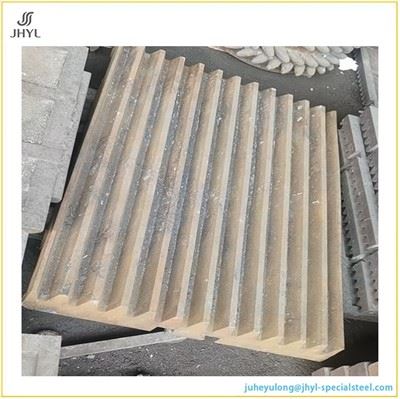
A High Manganese Steel Jaw Plate is an important working component in a jaw crusher that directly withstands impact, compression, and friction from feed materials. During prolonged operation, the surface gradually wears down, and its shape and working condition may change. Regularly inspecting the wear of a High Manganese Steel Jaw Plate is therefore an essential part of equipment maintenance. It helps identify potential problems early and maintain normal crusher operation.
First, regular inspections help operators understand the actual wear condition of the jaw plate. During operation, the plate continuously contacts rocks, ores, and other materials, causing its working surface to wear gradually. Without timely inspections, it can be difficult to determine whether the plate has reached a condition that requires replacement. By observing wear depth, changes in the tooth profile, and localized damage, operators can better assess the condition of the component and make informed decisions about maintenance and replacement.
Second, inspecting the jaw plate helps maintain crushing performance. The shape of the working surface affects how material is loaded and moves within the crushing chamber. When the jaw plate becomes excessively worn, its original tooth profile and the geometry of the crushing chamber may change, affecting the crushing process. In some cases, this can lead to reduced crushing efficiency, changes in the discharged material, or restricted material flow through the crushing chamber. Identifying wear in a timely manner helps reduce its impact on production.

Regular inspections can also reveal uneven wear. Factors such as feed distribution, material characteristics, equipment operating conditions, and installation quality may cause different areas of the jaw plate to wear at different rates. If one area wears significantly faster than others, this may indicate uneven material loading, improper feeding practices, or another equipment operating issue. Examining the wear pattern helps operators investigate potential causes and take appropriate measures to improve operating conditions.
In addition, inspecting a High Manganese Steel Jaw Plate helps identify cracks, chipped areas, and loose mounting conditions. Because the plate is subjected to repeated impact and compression, it may develop localized damage under abnormal loading or improper installation, in addition to normal wear. If these problems go undetected, continued operation may worsen the damage and potentially affect supporting structures or fastening components. Inspections should therefore focus not only on the degree of wear but also on cracks, breakage, loose fasteners, and other visible abnormalities.
Regular inspections also help businesses plan maintenance more effectively. A jaw plate is a wear part, and its replacement schedule can affect overall crusher operation. If replacement is delayed until the plate can no longer function properly, unexpected shutdowns may occur and disrupt production plans. By establishing routine inspections and a regular maintenance schedule, businesses can plan maintenance according to the actual condition of the jaw plate and reduce production interruptions caused by unplanned downtime.
Overall, regularly inspecting the wear of a High Manganese Steel Jaw Plate helps operators monitor component condition, maintain crushing performance, identify abnormal damage, optimize maintenance schedules, and reduce the risk of unexpected downtime. Incorporating wear inspections into routine equipment management helps improve the reliability of jaw crusher operation and the efficiency of production management.