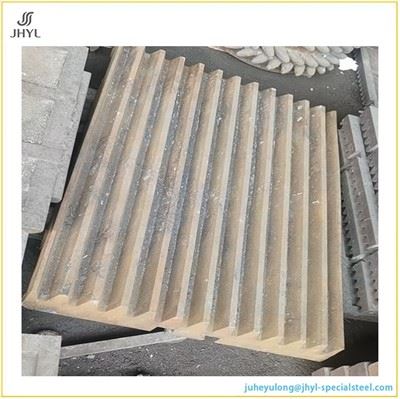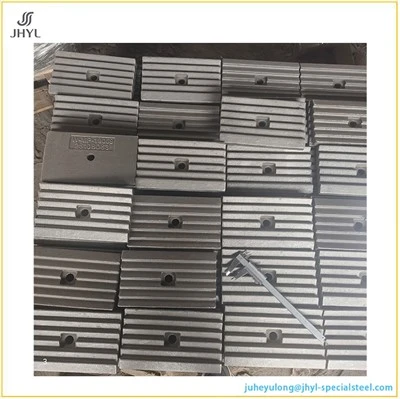
A High Manganese Steel Jaw Plate is an important wear-resistant component in a jaw crusher. When the plate develops severe wear, cracks, chipped areas, or other damage that affects safe operation, replacement may be necessary according to the equipment requirements. The replacement process involves shutdown, removal, lifting, installation, and restarting. These stages must be carried out according to established procedures to protect personnel and ensure reliable equipment operation.
First, proper safety preparations must be completed before replacing a High Manganese Steel Jaw Plate. The crusher and related auxiliary equipment should be stopped according to the operating procedures. Electrical power and other relevant energy sources must be isolated. Measures should then be taken to prevent accidental startup, and the movable jaw and associated moving components must be confirmed to be in a safe condition. Any residual mechanical energy, gravitational potential energy, or other hazardous energy must be reliably controlled according to the work procedure. Removal work must never begin while the equipment is operating or before the required energy isolation has been completed.
Second, appropriate tools and lifting equipment should be prepared. High Manganese Steel Jaw Plates can be heavy, and improper handling during removal or installation may cause components to fall, crush objects, or strike personnel. Before work begins, the condition of lifting equipment, slings, and other tools should be checked. Personnel with the appropriate training and qualifications should carry out lifting operations in accordance with established procedures. The work area should be kept orderly, and unauthorized personnel should remain outside the hazardous zone.
When removing the old jaw plate, operators should follow the equipment structure and the manufacturer's instructions. Before loosening fastening components, they must ensure that the jaw plate is securely supported to prevent unexpected movement or falling when the fasteners are released. If connecting parts have become corroded, worn, or seized during prolonged use, they should not be forcibly removed using methods that could damage the equipment structure. Appropriate tools and approved procedures should be used when necessary.
After removing the old plate, the mounting surfaces and related supporting structures should be inspected. Particular attention should be paid to obvious wear, deformation, cracks, and other damage. Residual material and accumulated dust should be removed from the mounting area. If abnormalities are found on the mounting surfaces or supporting components, they should be assessed and addressed before the new plate is installed. Otherwise, uneven loading or insecure mounting may cause problems again after replacement.
When installing a new High Manganese Steel Jaw Plate, operators should confirm that it is suitable for the specific crusher and check the installation direction and positioning method according to the equipment instructions. The mounting surfaces should be clean, and the plate should fit properly against the corresponding support surfaces without obvious gaps or misalignment. Fastening components should be installed and tightened in the prescribed sequence and manner. Required fasteners must not be omitted, and unsuitable fastening methods should not be used without confirming the equipment requirements.
In summary, replacing a High Manganese Steel Jaw Plate requires particular attention to safety isolation, proper removal, inspection of mounting surfaces, correct installation, verification of fasteners, and pre-startup checks. Following the equipment's operating procedures helps protect personnel and ensures that the replacement jaw plate can perform its intended function safely and reliably.