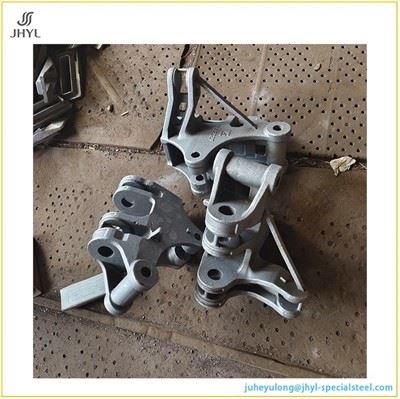
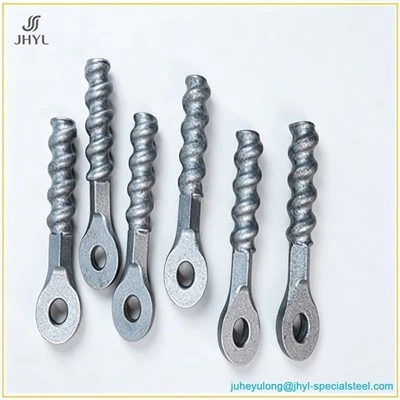
High Mn Steel Crusher Hammer is made of austenitic high‑manganese steel. Its standout performance lies in powerful impact‑induced work‑hardening, which serves as the precondition for its advantages. Its superior properties can only be fully brought into play under specific working conditions. In low‑impact scenarios, its strengths disappear and performance drawbacks may even occur. Its most favorable operating environments focus on high‑impact, high‑hardness‑material and heavy‑load primary and secondary crushing applications, which can be divided into three major working‑condition categories.
First, crushing of high‑hardness brittle ores. For granite, basalt, iron ore, quartz stone, river cobblestone and other brittle materials above Mohs hardness grade 6, High Mn Steel Crusher Hammer delivers remarkable performance. These hard brittle materials generate frequent intense instantaneous impact loads during crushing. Conventional alloy‑steel and carbon‑steel hammers tend to suffer surface abrasion, collapse, corner chipping or fracture. By contrast, under persistent heavy impacts, the surface metal of High Mn Steel Crusher Hammer undergoes plastic deformation and develops a dense hardened layer with hardness above HB500. Its inner matrix retains high toughness. The hardened surface provides scratch‑and‑wear resistance while the tough matrix prevents impact cracking, perfectly meeting crushing requirements for hard rock.
Second, primary crushing of large‑size feed materials. In primary crushing of large‑sized mine run‑of‑mine ore, bulky construction waste and big ore lumps, material particle size is large and impact force concentrates, producing peak impact loads in every crushing cycle. Conventional wear‑resistant hammers lack sufficient toughness and are prone to brittle fracture under concentrated impacts. High Mn Steel Crusher Hammer features excellent matrix toughness and strong resistance to impact and fatigue. It withstands violent blows from large lumps without chipping or block shedding. Continuous impacts keep hardening its surface, improving wear resistance in service and enhancing equipment stability in primary‑crushing operations.
Third, stationary crushing with continuous high‑frequency impacts. Fixed‑site stone crushing plants, sand‑making production lines and ore‑dressing production lines with steady material feeding and frequent crushing impacts constitute ideal working conditions for High Mn Steel Crusher Hammer. Stable repeated impacts continuously activate its work‑hardening effect and maintain high‑surface wear resistance. Wear proceeds evenly and slowly, and service life can reach two to three times that of ordinary hammers. In contrast, intermittent operations with unstable impacts fail to build up stable hardened layers, so wear‑resistance advantages drop sharply.
It should be emphasized that the performance of High Mn Steel Crusher Hammer relies entirely on impact loading. Under zero‑impact, low‑wear and soft‑material conditions, no hardened layer can be formed. Its surface stays soft and wears rapidly, performing worse than alloy or high‑chromium hammers. To sum up, only high‑intensity, sustained and frequent impact‑crushing conditions can maximize its core strengths including impact resistance, wear resistance and fracture resistance. This explains why this hammer is widely selected in mining and aggregate industries.