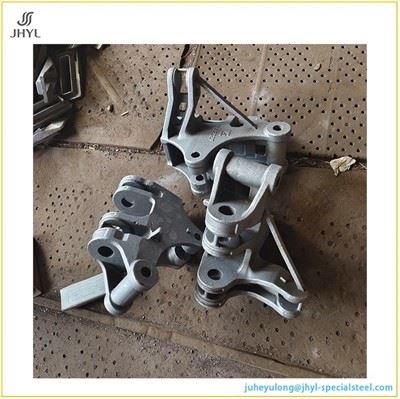
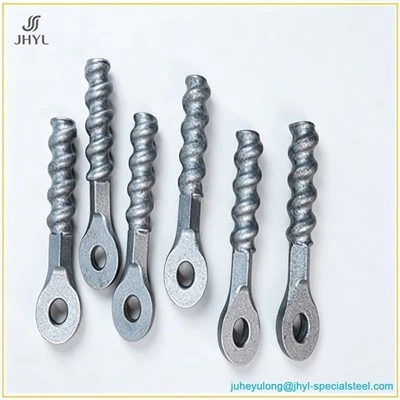
Metal forging is a processing technique that uses forging machinery to apply pressure to metal blanks, causing them to undergo plastic deformation to achieve specific mechanical properties, shapes, and dimensions. As one of the oldest and most fundamental technologies in the metalworking field, the forging process eliminates internal defects such as porosity and shrinkage cavities generated during casting, refines the grain structure, and significantly improves the density and mechanical properties of the metal.
From a process classification perspective, open die forging is the most traditional forging method, relying on simple tools or hammers to apply localized deformation to the blank, making it suitable for single-piece, small-batch production and the manufacture of large forgings. Die forging involves the plastic forming of blanks within specialized dies, enabling high-precision, high-efficiency production of complex-shaped forgings, widely applied in automotive components, engineering machinery, and the aerospace sector. With technological advancements, advanced processes such as precision forging, isothermal forging, and cold warm forging have gradually become prevalent, improving material utilization and dimensional accuracy while effectively reducing subsequent machining costs.
From an application perspective, the forging process occupies an irreplaceable position in industries such as mining machinery, petrochemicals, rail transportation, and aerospace. Key load-bearing components in mining machinery, such as gears, shafts, picks, and crusher rotors, are mostly formed through forging to ensure their reliability under heavy loads and strong impact conditions. Critical safety components in the automotive industry, including crankshafts, connecting rods, steering knuckles, and wheel hubs, are also commonly produced using die forging, leveraging the favorable grain flow distribution of forged metal to enhance fatigue strength and impact resistance.
From a material applicability standpoint, carbon structural steel, alloy structural steel, stainless steel, aluminum alloy, titanium alloy, and high-temperature alloys can all be formed through the forging process. Compared to casting, forged metal materials exhibit significant advantages in strength and toughness, as the forging process breaks up coarse as-cast structures, eliminates segregation, and results in a more uniform and dense internal structure. Particularly for components subjected to alternating loads and impact loads, the forging process is almost an irreplaceable processing method.
In terms of performance advantages, the forging process imparts excellent grain flow orientation to metal materials, enabling forgings to have higher load-bearing capacity in the direction of force. Additionally, forging effectively closes internal pores and significantly improves material density and fatigue resistance. With appropriate heat treatment, forgings can achieve a favorable balance of properties including strength, toughness, and wear resistance. In summary, the forging process is one of the most effective processing methods for enhancing the comprehensive mechanical properties of metal materials, widely used in the manufacturing of various key components that bear heavy loads, strong impacts, and high stresses.