


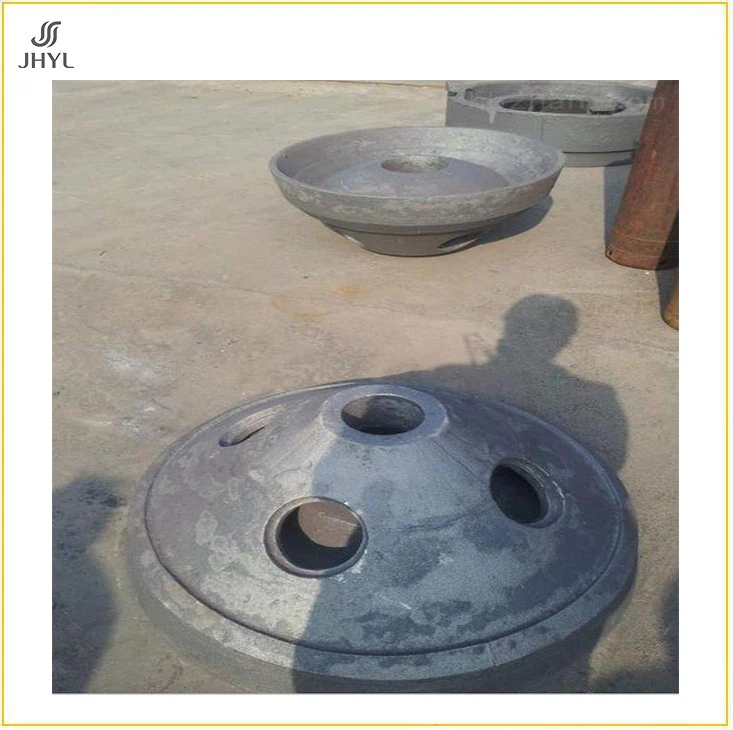

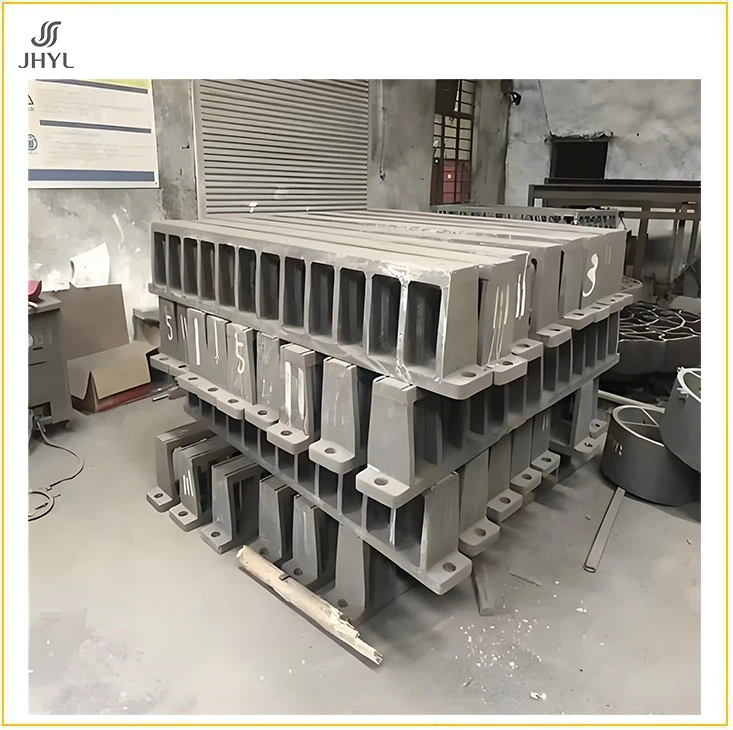


GX130CrSi29 Heat-Resistant Steel Castings
Precision Lost Foam Casting – Maximum Service Temperature Up to 1100°C
GX130CrSi29 is a premium heat-resistant casting steel that combines excellent high-temperature strength with outstanding oxidation resistance, making it an ideal material choice for demanding thermal processing environments. As a professional casting manufacturer, we produce high-quality GX130CrSi29 (EN 1.4777) castings that deliver reliable performance in industrial furnaces, heat treatment equipment, and other extreme high-temperature production applications.
With a chromium content of 27%–30% and a carbon content of 1.20%–1.40%, GX130CrSi29 ranks among the most robust heat-resistant steel grades available, maintaining structural integrity even under prolonged thermal stress.
What Is GX130CrSi29 Heat-Resistant Steel?
GX130CrSi29 is a high-chromium heat-resistant casting steel that complies with the European standard EN 10295:2002 for heat-resistant steel castings, with material number 1.4777. This martensitic-ferritic heat-resistant steel is specifically designed for applications involving prolonged exposure to high temperatures, corrosive atmospheres, and thermal cycling.
The unique alloy design featuring high chromium and high silicon content enables GX130CrSi29 to form a dense, protective oxide layer on its surface, significantly slowing down oxidation and scaling at elevated temperatures. Compared to lower-grade heat-resistant materials such as GX40CrSi13, GX40CrSi17, and GX40CrSi28, GX130CrSi29 is a superior choice when components require higher temperature resistance in their operating environment.
Chemical Composition of GX130CrSi29 (1.4777)
| Element | Composition Range (wt.%) | Function in Alloy |
| C | 1.20 – 1.40 | Enhances strength and hardenability; forms stable carbides |
| Si | 1.00 – 2.50 | Improves oxidation resistance and high-temperature stability |
| Mn | 0.50 – 1.00 | Acts as deoxidizer; improves hot workability |
| Cr | 27.00 – 30.00 | Primary element for oxidation and corrosion resistance |
| Ni | ≤ 1.00 | Adds toughness and improves high-temperature strength |
| Mo | ≤ 0.50 | Enhances creep resistance and high-temperature hardness |
| P | ≤ 0.035 | Kept low to maintain ductility |
| S | ≤ 0.030 | Kept low to prevent hot cracking |
- Source: EN 10295:2002 heat-resistant steel castings specification
High-Temperature Performance – Up to 1100°C
According to DIN EN 10295:2003-01, GX130CrSi29 has a confirmed maximum service temperature of 1100°C in air, making it one of the highest-rated heat-resistant casting steels available. At this extreme temperature range, the material maintains its structural integrity through:
Oxidation Resistance
The high chromium content (27-30%) promotes the formation of a dense, adherent chromium oxide (Cr₂O₃) layer on the component surface. This protective barrier significantly reduces scaling and material loss, even in oxidizing atmospheres common in industrial furnaces.
Creep Resistance
The carbon and chromium carbides within the microstructure provide exceptional resistance to creep deformation under sustained high-temperature loading. This is critical for components like furnace trays, support beams, and heat treatment fixtures that carry heavy loads at elevated temperatures.
Thermal Fatigue Resistance
GX130CrSi29 exhibits good resistance to thermal cycling, making it suitable for applications involving repeated heating and cooling without developing catastrophic cracking.
Corrosion Resistance in High-Temperature Environments
Beyond simple oxidation, this grade also offers protection against sulfur-containing combustion atmospheres and other corrosive industrial gases commonly encountered in heat treatment operations.

Lost Foam Casting Process for GX130CrSi29
As a professional lost foam casting manufacturer, we utilize advanced Expendable Pattern Casting (EPC) technology to produce GX130CrSi29 components with exceptional dimensional accuracy and surface finish. Lost foam casting, also known as full mold casting or evaporative pattern casting, uses expanded polystyrene (EPS) foam patterns that are vaporized when molten GX130CrSi29 steel is poured, leaving behind a precise metal replica.
Typical Applications of GX130CrSi29 Lost Foam Castings

Industrial Furnace Components. Radiant tubes, furnace rollers, hearth plates, burner nozzles, combustion chambers, and retorts for continuous and batch furnaces operating up to 1100°C.
Heat Treatment Fixtures. Trays, baskets, grids, support posts, muffles, and retorts used in carburizing, nitriding, and annealing furnaces. The combination of high-temperature strength and oxidation resistance makes GX130CrSi29 ideal for long-term service in heat treatment environments.
Power Generation Parts. Components in coal-fired boilers, biomass power plants, and waste-to-energy facilities including grate bars, air nozzles, and heat exchanger elements.
Petrochemical Equipment. High-temperature valves, fittings, and piping components for refinery heaters, cracking furnaces, and chemical reactors.
Cement and Lime Kilns. Preheater components, kiln inlet cones, cooler parts, and burner tips exposed to high-temperature abrasive environments.
Glass Manufacturing. Lehr rolls, gob distributors, and other glass-handling components that require both thermal stability and oxidation resistance.
Aerospace & Automotive Heat Shields. High-temperature protective components where weight reduction and thermal management are critical.
Why Choose Our Lost Foam Casting for GX130CrSi29?
Specialized Experience
Long-term focus on GX130CrSi29 and EN 10295 series heat-resistant alloys, with deep expertise in high-chromium material casting and heat treatment.
Advanced Process
Lost foam casting – no parting lines, zero draft, dimensional accuracy CT8-9, smooth surface finish, ideal for complex thin-walled components.
Strict Quality Control
Spectrometer analysis, mechanical testing, NDT; third-party inspection accepted (SGS, BV, TÜV).
Design Flexibility
Near-net shape, part consolidation, rapid prototyping – reduces downstream machining costs.
Lead Time & Pricing
Low tooling cost, short production cycles, flexible batch sizes, factory direct.
Export Experience
Stable exports to Europe, America, Southeast Asia, and the Middle East; full customs documentation provided.
Products Description


faq
What is the maximum operating temperature for GX130CrSi29 castings?
According to DIN EN 10295:2003-01, GX130CrSi29 (material number 1.4777) has a confirmed maximum service temperature of 1100°C in air. Above this temperature, accelerated oxidation and loss of mechanical properties may occur. For applications exceeding 1100°C, we recommend evaluating higher-grade heat-resistant alloys or nickel-based superalloys.
What dimensional tolerances can you achieve with lost foam casting?
Our lost foam process consistently achieves CT8-9 dimensional tolerances per ISO 8062. For reference, this is comparable to water glass investment casting (CT7-8) and better than sand casting (CT10-13), though silica sol investment casting (CT5-6) offers tighter tolerances for smaller components.
Can GX130CrSi29 be welded?
Yes, GX130CrSi29 exhibits good weldability when proper procedures are followed. Preheating and post-weld heat treatment are generally recommended to prevent cracking in the heat-affected zone. Our team can provide welding procedure specifications (WPS) for repair welding of castings if needed.
How do I request a quotation?
Please send your part drawings (including material specification, dimensional tolerances, and any special requirements) to our sales team. We will respond within 24-48 hours with a quotation covering tooling cost, unit pricing, lead time, and shipping options.
Do you provide custom designs and non-standard sizes?
Absolutely. Lost foam casting is ideal for custom, non-standard components. We can work from your 2D drawings, 3D CAD models, or physical samples to produce EPS foam patterns and final castings. Small batch sizes and one-off prototypes are welcome.
Is heat treatment required for GX130CrSi29 castings?
GX130CrSi29 can be supplied in either as-cast or heat-treated condition. However, solution annealing at 800-850°C followed by air cooling is recommended to achieve optimal mechanical properties and carbide distribution. Some grades under EN 10295 may be supplied as-cast depending on service requirements.
Hot Tags: lost foam casting manufacturers of gx130crsi29 heat-resistant steel, China lost foam casting manufacturers of gx130crsi29 heat-resistant steel manufacturers, suppliers, factory


