


Product Overview
When you need mechanical parts that can handle extreme loads without compromising dimensional precision, 40CrNiMo investment casting delivers the best of both worlds. This medium-carbon alloy structural steel-often referred to as a quenched and tempered steel-combines high tensile strength, excellent toughness, and deep hardenability, making it the material of choice for critical components across heavy machinery, automotive drivetrains, aerospace systems, and energy equipment.
Unlike conventional carbon steel casting that often requires extensive secondary machining, investment cast 40CrNiMo parts come out of the process near-net-shape, with fine surface finishes and tight tolerances that significantly reduce post-processing time and material waste. Whether you're sourcing 40CrNiMo alloy steel castings for gearboxes, shafts, fasteners, or high-load transmission components, our lost wax casting process ensures consistent quality from first article to full production run.
Why 40CrNiMo?
The material's performance speaks for itself. With a chemical composition of carbon 0.37–0.44%, chromium 0.60–0.90%, nickel 1.25–1.65%, and molybdenum 0.15–0.25%, 40CrNiMo alloy steel delivers mechanical properties that far exceed standard carbon steel grades. After proper heat treatment-typically oil quenching at 850°C followed by tempering at around 600°C-the final microstructure becomes tempered sorbite, yielding:
| Property | Value |
| Tensile Strength (σb) | ≥ 980 MPa |
| Yield Strength (σs) | ≥ 835 MPa |
| Elongation (δ5) | ≥ 12% |
| Section Shrinkage (ψ) | ≥ 12% |
| Impact Toughness (Akv) | ≥ 78 J |
| Hardness (HB) | 274–303 |
- These figures represent real-world performance standards, not theoretical maximums. The high nickel content enhances toughness, while molybdenum improves hardenability and reduces temper embrittlement-critical for components that undergo cyclic loading or operate in fluctuating temperature environments
Process Advantages
Investment casting delivers tighter tolerances (CT5–CT7 per ISO 8062, vs. CT8–CT10 for sand casting) – as close as ±0.10 mm on small parts, slashing machining needs. Surface finish is far smoother: Ra 1.6–6.3 µm vs. sand casting's 12.5–50 µm, ideal for hydraulic or rotating components. Complex shapes (thin walls, undercuts, internal passages) cast as one piece, no costly secondary ops. For 40CrNiMo, deep hardenability ensures uniform properties even in thick sections – something lower-alloy steels can't match.
Applications Across Industries
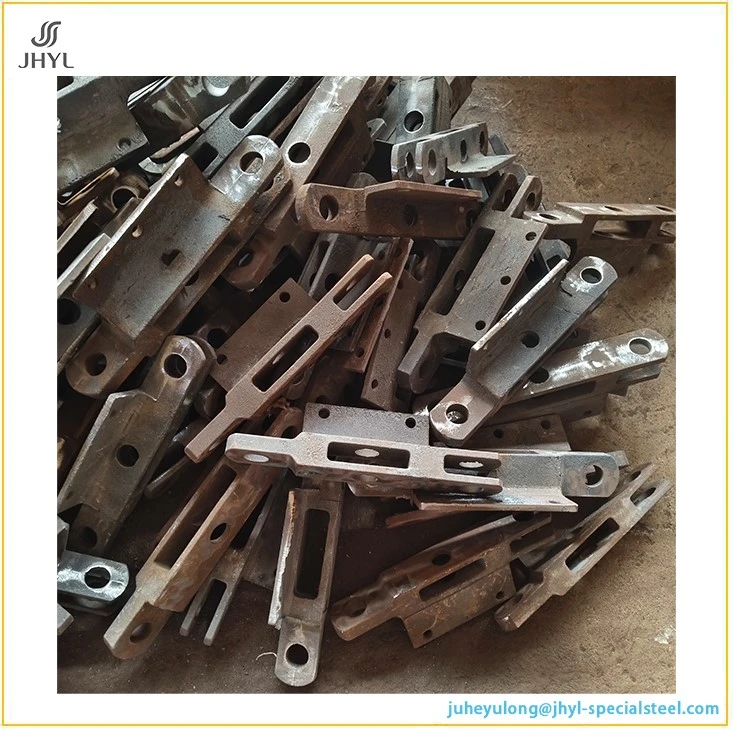
40CrNiMo investment cast parts serve demanding roles where failure is not an option. Common applications include:
Automotive & Heavy Trucks
Transmission gears, differential components, axle shafts, and high-strength fasteners for commercial vehicles. The alloy's combination of wear resistance and impact toughness makes it especially suitable for drivetrain components that must survive millions of load cycles.
01
Aerospace & Defense
Aircraft engine shafts, landing gear components, structural brackets, and high-strength fasteners. Investment casting produces near-net-shape airframe and engine parts with the metallurgical integrity required for flight-critical applications.
02
Heavy Machinery & Mining
Large gear blanks, eccentric shafts, crankshafts, and high-load transmission parts for excavators, crushers, and material handling equipment.
03
Power Generation & Energy
Turbine shafts (diameters exceeding 250 mm), generator components, and valve bodies for oil and gas systems.
04
Industrial Equipment
Hydraulic system components, pump housings, impellers, and general high-strength mechanical parts where reliability is paramount.
05
Manufacturing Process & Quality Control
Our investment casting workflow follows industry best practices:
Precision tooling produces wax patterns with dimensional accuracy that directly transfers to the final casting.
Multiple coats of refractory slurry and stucco create a shell capable of withstanding high-temperature steel pouring.
Wax is removed (recycled), and the ceramic shell is fired to full strength.
40CrNiMo alloy is melted under controlled conditions and poured into the preheated shell.
Shell knockout, cutoff, grinding, and heat treatment (quenching + tempering).
Dimensional verification, surface finish evaluation, and optional NDT methods including magnetic particle inspection (MPI) or ultrasonic testing per customer requirements.
Products Description
| Feature | Capability |
| Linear Tolerance | CT5–CT7 per ISO 8062 |
| Linear Tolerance | 1.6–6.3 µm as-cast |
| Minimum Wall Thickness | 1.5–2.0 mm (design-dependent) |
| Minimum Wall Thickness | Up to 50 kg per single piece |
| Heat Treatment | Up to 50 kg per single piece |
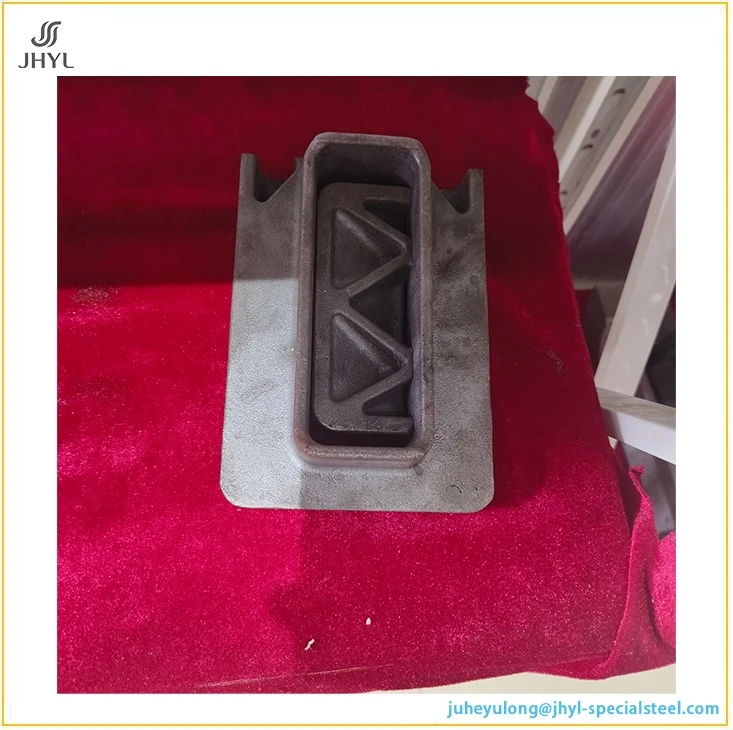
Products Description
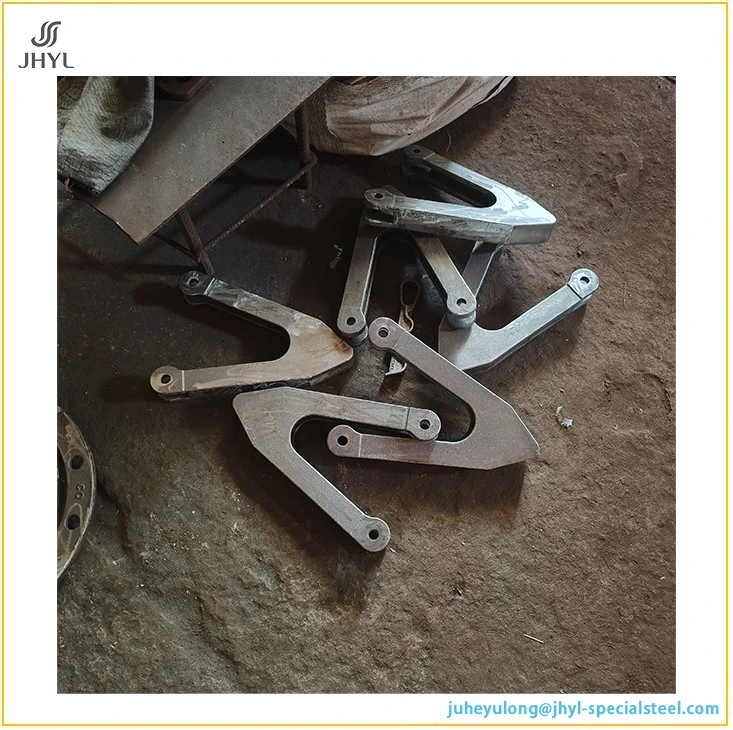
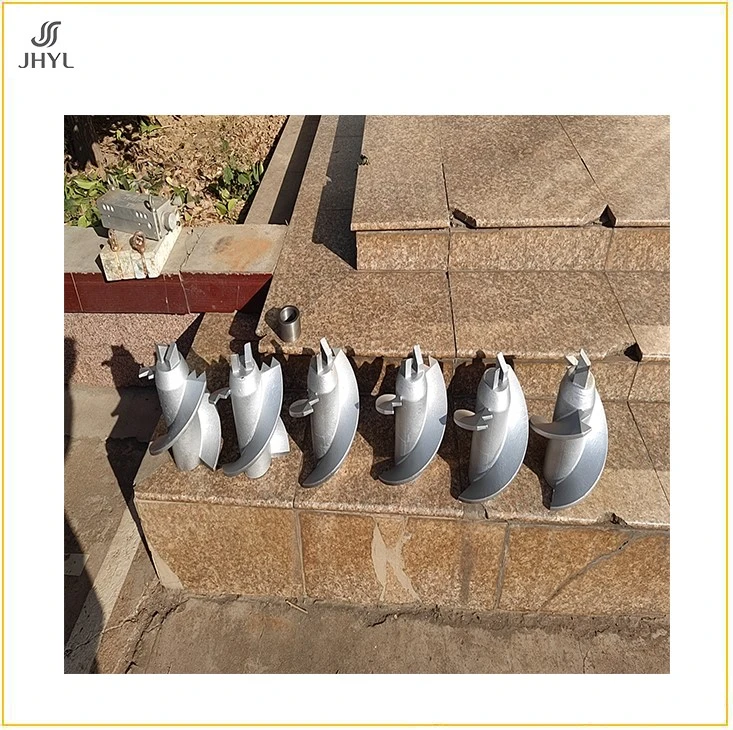
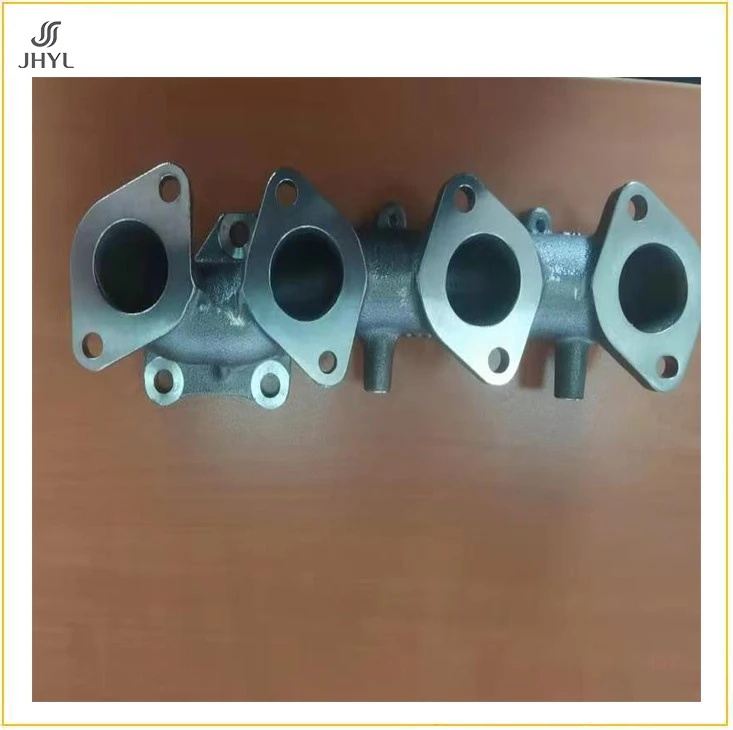
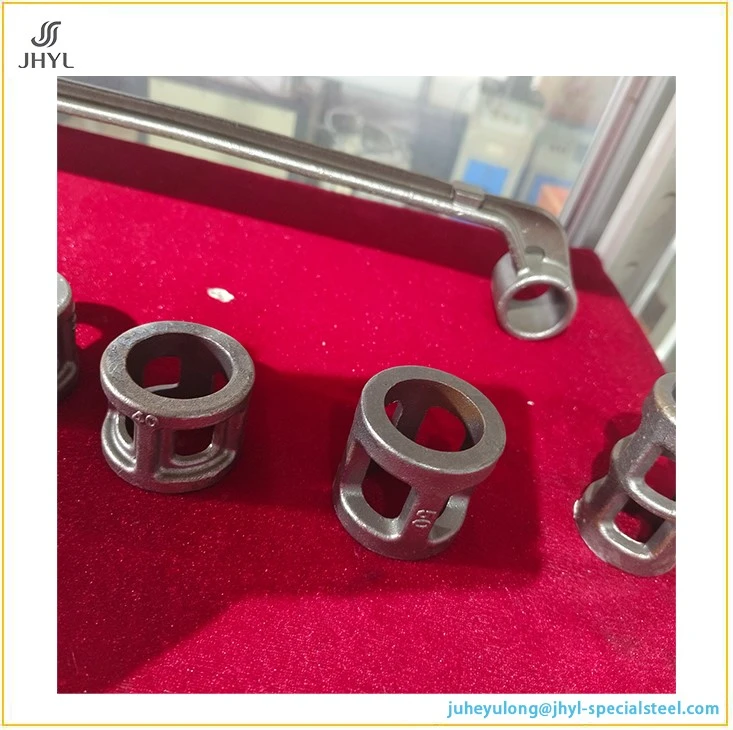
Frequently Asked Questions
What is your export packaging method?
-
Internal anti-rust oil + plastic bag sealing, outer packaging using export-grade plywood cases or steel racks, with cushioning materials inside. Suitable for sea or air freight. Vacuum packaging or VCI paper is also available upon request.
What is your standard lead time?
-
First article samples: 20 days after tooling completion. Mass production: 30–40 days after order confirmation (including casting, heat treatment, and machining). Actual lead time depends on order quantity and current production schedule.
Can you guarantee hardness uniformity after machining?
-
Yes. Test coupons are placed in each heat treatment batch to check surface and core hardness. For long shaft-type parts, we take multiple measurements at both ends and the middle. Hardness deviation is typically ≤ 3 HRC.
Can you machine finished parts according to drawings? That is, one-stop service including casting, machining, and heat treatment?
-
Yes. We offer a full process from investment casting, heat treatment, precision machining (turning, milling, grinding) to surface finishing, delivering ready-to-assemble finished parts.
Who owns the tooling?
-
The tooling cost is paid by the customer, so the tooling belongs to the customer. We store the tooling free of charge and perform annual maintenance. The customer can request to transfer the tooling to another facility at any time.
Hot Tags: 40crnimo investment casting carbon steel mechanical parts, China 40crnimo investment casting carbon steel mechanical parts manufacturers, suppliers, factory, boiler pieces, steel casting parts, Ball Mill Wear Resistant Liner Board, cast alloy steel part, stainless steel casting parts, Silica Sol Investment Casting


