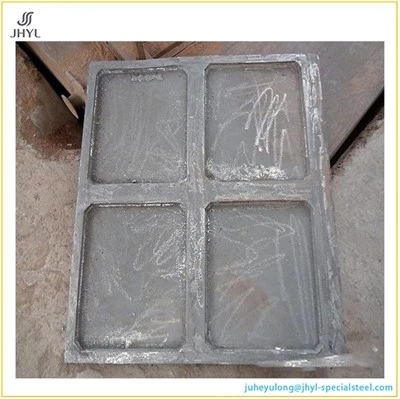
Most purchasers worry that highly wear-resistant materials tend to be brittle and crack easily under heavy impacts. Traditional wear-resistant castings carry a common industry flaw: strong wear resistance paired with poor impact tolerance. Though their hardness meets industrial standards, they lack sufficient toughness, leading to edge chipping, corner spalling, cracking and even full fracture upon mild impacts from large materials, equipment vibration or material extrusion. These issues severely disrupt normal equipment operation and raise failure risks and maintenance expenditures. Wear Resistant Alloy Steel Castings fully eliminate this defect and strike an optimal balance between hardness and toughness, with vastly enhanced resistance to impact, fracture and fatigue shock.
During production of Wear Resistant Alloy Steel Castings, precise proportioning of chromium, manganese, molybdenum and other alloy elements, combined with professional quenching and tempering heat treatment processes, reorganizes the steel's internal metallographic structure. This creates a dense, stable casting matrix that retains the high hardness required for superior abrasion resistance while adding sufficient material toughness, completely erasing the brittleness and poor impact resistance of regular wear-resistant castings. The one-piece integrated casting structure has no splicing gaps or weak stress-bearing points, delivering uniform overall structural strength. It evenly disperses impact force under load and avoids local cracking and breakage caused by stress concentration, suiting all industrial working conditions with impact loads.
High-frequency impact scenarios such as mine crushing, stone processing, material transportation and mill operation frequently involve falling large ore lumps, high-speed impacts from hard materials, repeated vibration during equipment startup and shutdown, and extrusion collisions between materials. Wear Resistant Alloy Steel Castings can steadily withstand these conventional industrial impact loads without hidden internal cracks, surface chipping or full fracture. They resist fatigue damage under long-term repeated impacts and deliver excellent long-lasting impact resistance. Compared with ordinary wear-resistant castings, their anti-fracture stability is multiplied several times, fully adapting to high-intensity, high-frequency impact production environments.
Objectively speaking, Wear Resistant Alloy Steel Castings fit all conventional industrial impact working conditions but cannot withstand extreme violent external force damage. Extreme external forces such as collisions and extrusion from overweight objects far exceeding standard working loads, plus violent hammering, may cause minor surface damage, yet will never trigger full fracture or complete functional failure. Standard impacts, vibration and extrusion in daily production will not damage the casting structure. Overall, Wear Resistant Alloy Steel Castings thoroughly solve the brittleness issue of traditional wear-resistant castings. Combining reliable abrasion resistance and impact resistance with stable structure and low failure rates, they drastically reduce equipment shutdown and maintenance frequency, serving as premium industrial castings applicable to most heavy-duty working conditions with combined impact and abrasion loads.