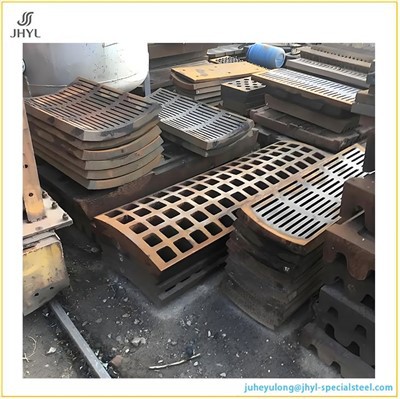
GX40CrSi28, also designated by the material number 1.4776, is a well-established grade of heat-resistant cast steel that plays a critical role in numerous industrial applications involving elevated temperatures. Its designation, following the EN 10295 standard, provides a concise description of its nature and composition. The G indicates its status as a casting material, while X signifies it is a high-alloy steel. The subsequent elements, 40 and CrSi28, point to its approximate carbon content of 0.40 percent and its significant chromium and silicon alloying elements, with chromium content targeted around 28 percent. This material is engineered to withstand the harsh conditions of high-temperature environments, offering a combination of oxidation resistance, mechanical strength, and durability that makes it indispensable in sectors ranging from petrochemicals to power generation and heat treatment.
The exceptional performance of GX40CrSi28 is fundamentally rooted in its carefully balanced chemical composition. The specification allows for a carbon range of 0.30 to 0.50 percent by weight. This level of carbon is crucial for providing the material with adequate strength and creep resistance at high temperatures, ensuring that components maintain their structural integrity under prolonged mechanical stress. The most defining characteristic of this steel is its high chromium content, which is specified between 27.0 and 30.0 percent. This substantial presence of chromium is the primary reason for the steel's outstanding resistance to oxidation and corrosion at high temperatures. When exposed to oxidizing atmospheres at elevated temperatures, chromium promotes the formation of a dense, adherent, and stable chromium oxide layer on the surface of the steel. This layer acts as a protective barrier, effectively shielding the underlying metal from further attack by oxygen, sulfur, and other corrosive combustion gases, thus preventing scaling and material degradation. Silicon, present in the range of 1.0 to 2.5 percent, works in synergy with chromium. It not only enhances the fluidity of the molten steel during the casting process but also contributes to the formation of a more effective and protective oxide scale, further bolstering the material's resistance to high-temperature oxidation. Other elements are kept to controlled maximums to maintain the integrity of the base alloy. Manganese is limited to a maximum of 1.0 percent, and both phosphorus and sulfur are restricted to low levels, typically a maximum of 0.04 percent and 0.03 percent respectively, to ensure good castability and prevent issues like hot shortness. Nickel and molybdenum may also be present, but only in residual amounts, with maximum limits of 1.0 percent and 0.5 percent respectively, as they are not primary alloying additions for this grade.
The mechanical properties of GX40CrSi28 are tailored to meet the demands of high-temperature service, although standard specifications often define minimum values obtained from separately cast test pieces at room temperature to ensure quality and consistency. The yield strength, which is the stress at which the material begins to deform plastically, is generally expected to be above 400 MPa in certain interpretations, though more conservative data from steel databases suggest a value around 122 MPa. This wide range often depends on the heat treatment condition and the specific testing standard applied. The tensile strength, representing the maximum stress the material can withstand before fracturing, is typically substantial, with values reported around 947 MPa or higher, such as the minimum 1000 MPa found in some supplier data. Ductility, measured by the percentage of elongation after fracture, is also an important parameter, and for GX40CrSi28, it is typically around 15 to 21 percent. The hardness of the material, often measured using the Brinell method, is another key indicator of its mechanical state. Values can vary but are often reported to be around 122 HB or up to a maximum of 229 HB depending on the condition and source of the data. It is critical to note that these room-temperature properties, while useful for quality control, are not the primary design parameters for high-temperature applications. In service, the materials performance is governed by its resistance to creep, its ability to withstand stress over long periods at high temperatures without progressive deformation, and its long-term microstructural stability, which prevents it from becoming brittle or weak over time.
Physical properties further define the suitability of GX40CrSi28 for its intended applications. Its density is approximately 7.6 g/cm, which is typical for a high-alloy ferritic steel. This value is essential for calculating the weight of cast components and for design purposes. Thermal properties are particularly important for components subjected to thermal cycling and high heat fluxes. The material exhibits a mean coefficient of thermal expansion, which dictates how much it expands and contracts with temperature changes. This factor is critical to consider in design to manage thermal stresses and ensure proper clearances between moving or adjacent parts. Its thermal conductivity governs how efficiently heat is transferred through the material. While specific values for GX40CrSi28 are available in specialized databases, they generally show that the material has moderate thermal conductivity, which influences temperature gradients within a component during heating and cooling. The modulus of elasticity, which measures the materials stiffness, also decreases with increasing temperature, a factor that engineers must account for in structural calculations at high temperatures.
As a cast steel, GX40CrSi28 is typically shaped into finished or near-finished components through various foundry processes. The G in its designation emphasizes that its properties are optimized for the as-cast condition. This allows for the production of complex geometries, such as tube supports, grates, rollers, and other intricate parts used in furnaces and heaters, which would be difficult or impossible to fabricate through wrought processes like forging or rolling. The material is generally supplied in the as-cast state, meaning that after solidification and cooling from the foundry, it is ready for use or for machining to final dimensions. However, certain heat treatments may be applied if agreed upon between the manufacturer and the purchaser. For instance, a stress-relief annealing treatment might be performed to reduce internal stresses generated during cooling of complex castings, thereby enhancing dimensional stability during subsequent machining or high-temperature service. The ISO standard for heat-resistant cast steels, ISO 11973, notes that some grades, including those in the GX40CrSi family, may be annealed at temperatures in the range of 800 to 850 degrees Celsius to achieve a specific microstructure or improve certain properties, but this is not a mandatory requirement for all applications.
The selection of GX40CrSi28 for a particular application is driven by its superior performance in aggressive, high-temperature environments where other materials would rapidly fail. One of its primary areas of use is in the construction of industrial furnaces and heat treatment equipment. It is commonly employed to fabricate components such as skid rails, beams, and hearth plates that support heavy workpieces as they travel through a furnace. These components must endure not only high temperatures but also the abrasive wear from the hot materials sliding over them. The materials combination of strength, oxidation resistance, and surface stability makes it ideal for such tasks. In the petrochemical and refining industries, GX40CrSi28 is used for tube sheets and supports in fired heaters, where process fluids are heated to high temperatures inside coils of tubing. The cast supports must hold these tubes securely in place while being exposed to the direct heat of the furnace burners and the corrosive products of combustion. Its resistance to carburization, the unwanted absorption of carbon into the metal which can lead to embrittlement, is also a valuable attribute in hydrocarbon processing environments. Furthermore, it finds applications in power generation, particularly in coal-fired boilers, where it can be used for burner nozzles, ash chutes, and other components exposed to high temperatures and abrasive fly ash.
When compared to other heat-resistant grades, GX40CrSi28 occupies a specific niche. It belongs to the family of ferritic heat-resistant steels, which are characterized by their ferritic microstructure at room temperature and up to their service temperature limit. This differentiates it from the more highly alloyed austenitic stainless steels, such as the 300 series, which contain significant amounts of nickel to stabilize an austenitic structure. While austenitic grades often offer higher strength and better fabricability, GX40CrSi28 provides excellent oxidation resistance at a generally lower material cost due to the absence of costly nickel as a primary alloying element. Compared to lower-chromium heat-resistant steels, its chromium content of around 28 percent offers a higher level of protection against oxidation, allowing it to be used at higher temperatures, often up to around 1150 degrees Celsius in oxidizing atmospheres. This high-temperature capability makes it a direct competitor to more expensive nickel-based superalloys in certain applications where the ultimate in high-temperature strength is not the primary requirement, but where superior resistance to environmental attack is paramount. The ISO 11973 standard provides guidance on the maximum use temperature for different grades, allowing engineers to make informed comparisons based on their specific service conditions.
In conclusion, GX40CrSi28 is a proven and reliable heat-resistant cast steel whose value lies in its robust combination of high chromium content, balanced carbon level, and beneficial silicon addition. Its carefully specified chemical composition ensures the formation of a protective oxide layer that guards against high-temperature corrosion, while also providing the necessary mechanical strength for load-bearing components in furnaces, heaters, and similar equipment. As a casting alloy, it offers design flexibility for producing complex, durable parts that must withstand the combined effects of heat, stress, and corrosive atmospheres. While it may not possess the extreme strength of some nickel-rich alloys or the room-temperature toughness of wrought austenitic steels, its excellent performance-to-cost ratio and its proven track record in some of the most demanding industrial environments ensure its continued and essential use. For engineers and designers tasked with selecting materials for high-temperature service, understanding the specific properties and capabilities of GX40CrSi28 is key to specifying a material that will deliver safe, long-lasting, and economical performance. Its presence in international standards like EN 10295 and ISO 11973 solidifies its status as a workhorse material in the field of high-temperature engineering.