




Product Description
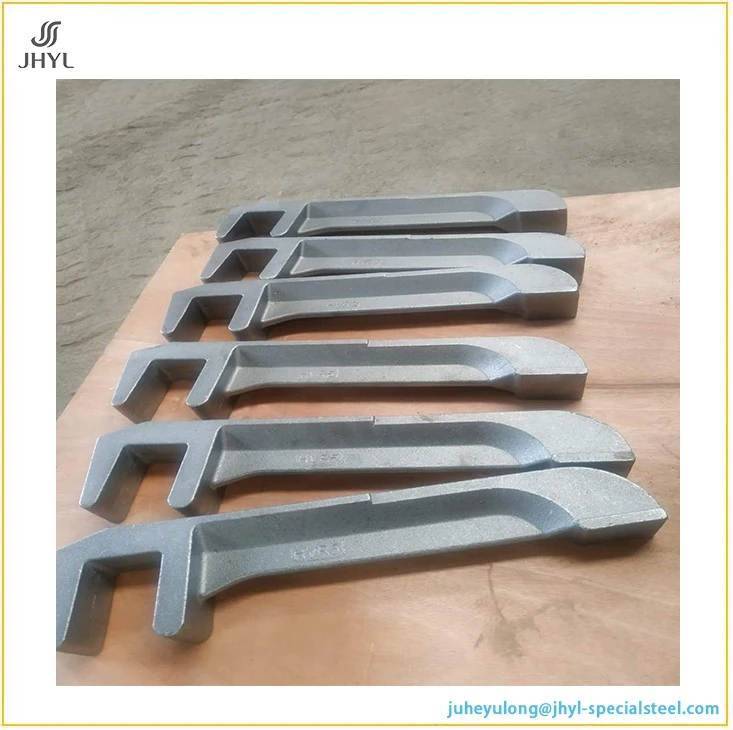
Our 1.4777 heat-resistant steel grate can be manufactured using either investment (lost wax) casting or sand casting, and is capable of withstanding extreme thermal cycling and aggressive oxidizing atmospheres in production environments. The cast grate made from this material is produced from the recognized European grade GX130CrSi29 (material number 1.4777), achieving an excellent balance among high-temperature strength, sulfur resistance, and cost-effective durability. It is widely used as grate bars, heat treatment grids, burner grates, incinerator grate segments, and cement cooler grate plates in industrial furnaces, heat treatment lines, waste incineration plants, and petrochemical heaters. Our delivered finished grates are fully heat-treated, ready for immediate installation, and can be provided with optional CNC machining and surface treatment according to your drawings.
Chemical Composition
The 1.4777 heat-resistant steel is characterized by its high carbon and chromium content, which together provide outstanding high-temperature strength and oxidation resistance.
| Element | C | Si | Mn | Cr | Ni | P | S | Mo |
| wt.% | 1.20 – 1.40 | 1.0 – 2.5 | 0.5 – 1.0 | 27.0 – 30.0 | ≤ 1.0 | ≤ 0.035 | ≤ 0.030 | ≤ 0.5 |
- Data source: EN 10295-2002 / DIN EN 10295 Heat resistant steel castings
Mechanical & Physical Properties
| Property | Value |
| Tensile Strength (Rm) | ≥ 769 MPa |
| Yield Strength (Rp0.2) | ≥ 191 MPa |
| Elongation (A) | ≥ 11% |
| Impact Toughness (KV) | ≥ 12 J |
| Hardness (HBW) | ~ 113 |
| Density | 7.6 g/cm³ |
| Thermal Conductivity | 18.8 W/(m·°C) |
| Specific Heat Capacity | 500 J/(kg·°C) |
| Maximum Service Temperature | ~ 1100°C |
Material Characteristics & Castability
Superior High-Temperature Performance
The 1.4777 heat-resistant steel grate exhibits excellent oxidation resistance and high-temperature strength, maintaining structural integrity even under prolonged thermal exposure up to 1100°C. The high chromium content (27-30%) promotes the formation of a dense, adherent Cr₂O₃ oxide layer that protects against scaling, spalling, and corrosive attack in furnace environments.
Excellent Castability
Unlike many high-alloy heat-resistant steels that are difficult to deform or forge due to their high alloy content, 1.4777 casting steel is specifically optimized for foundry production. Casting not only enables complex grate bar geometries but also results in higher creep rupture strength compared to wrought equivalents. Available casting methods include:
- Sand casting – Cost-effective, suitable for large-volume production
- Investment casting (precision casting) – Superior surface finish, tighter dimensional tolerances, ideal for intricate grate designs
Good Machinability & Weldability
1.4777 steel offers balanced hardness (∼113 HBW) that allows for standard machining operations, including drilling, grinding, and surface finishing. It also exhibits good weldability when appropriate procedures are followed, facilitating field repairs or component modifications.
Thermal Fatigue & Thermal Shock Resistance
Proper heat treatment-typically annealing at 800-850°C to achieve a hardness below 300HB-enhances the microstructure stability of 1.4777 grate bars and improves resistance to thermal cycling and thermal shock, which are common failure modes in furnace grate applications.
Why Choose the 1.4777 Heat-Resistant Steel Grate?
Superior Cost-Performance Ratio
With nickel content limited to ≤1%, 1.4777 grate bars offer excellent high-temperature performance without the premium cost associated with nickel-rich austenitic heat-resistant steels. This makes them a highly economical choice for large-scale boiler and incinerator installations.
Extended Service Life Under Extreme Conditions
The combination of high chromium content and optimized casting microstructure ensures superior resistance to:
- High-temperature oxidation and scaling
- Thermal cycling fatigue
- Corrosive flue gas attack (including sulfidation)
- Abrasion from moving fuel bed
These characteristics directly translate to reduced downtime, lower maintenance costs, and increased productivity for your facility.
Consistent Quality & Dimensional Accuracy
Our 1.4777 heat-resistant steel grates are produced using advanced casting techniques. Each production batch undergoes:
- Spectrometer chemical analysis – ensuring material compliance with EN 10295-2002
- Mechanical property testing – tensile strength, yield strength, elongation verification
- NDT inspection – X-ray, dye penetrant, and magnetic particle inspection as required
Customized Solutions
We offer fully customized 1.4777 grate bars based on your engineering drawings, including:
- Moving grate bars / traveling grate bars
- Fixed grate bars / stationary grates
- Chain grate bars for chain grate stokers
- Reciprocating step grates
- Grate blocks for waste incineration systems

Typical Applications
The 1.4777 heat-resistant steel grate is widely used across multiple heavy industries:
Power Generation: steam boiler grate bars, hot water boiler grates, biomass boiler grates
Waste-to-Energy: waste incinerator grate blocks, municipal solid waste (MSW) combustion grates, moving grates
Metallurgy: sintering machine grate bars, pelletizing furnace grates, steel plant furnace components
Heat Treatment: heat treatment furnace trays, fixtures, furnace rollers, radiant tubes
Chemical Processing: high-temperature furnace components, catalyst support grates
Cement & Lime: kiln grate plates, preheater grates
Hot Tags: 1.4777 heat-resistant steel grate, China 1.4777 heat-resistant steel grate manufacturers, suppliers, factory, Biomass Boiler Grate Bar, boiler grates, boiler system components, Reciprocating Grate, Sinter Grate Bar, Sinter Mechanical Alloy Grate Bar


